

16 Kitchen Items You Should Never Put In The Dishwasher
As tempting as it can be to put everything in the dishwasher for the sake of convenience, there are many kitchen items that simply don't belong. Sure, you could put them in anyway, but don't come crying to us after you've ruined them. Some things simply require good, old-fashioned elbow grease to clean.
Many of the items on our list are ones that you may be guilty of washing the wrong way all your life, while others are ones you've been handwashing all along. Some of the items we have on our list are ones you've likely heard that you should always handwash. Still others are ones you know you should have been handwashing, but without knowing the reason why, you've stuck them in the dishwasher anyway. Now, we have all the reasons for you, and they're quite valid, ranging from prolonging the life of your kitchenware and dishwasher to food safety reasons. While a dishwasher can be a source of convenience when it comes to cleaning kitchen items, these 17 items are regrettably ones that need to be cleaned another way besides with your dishwasher for best results.
1. Cast iron cookware, including enameled cookware
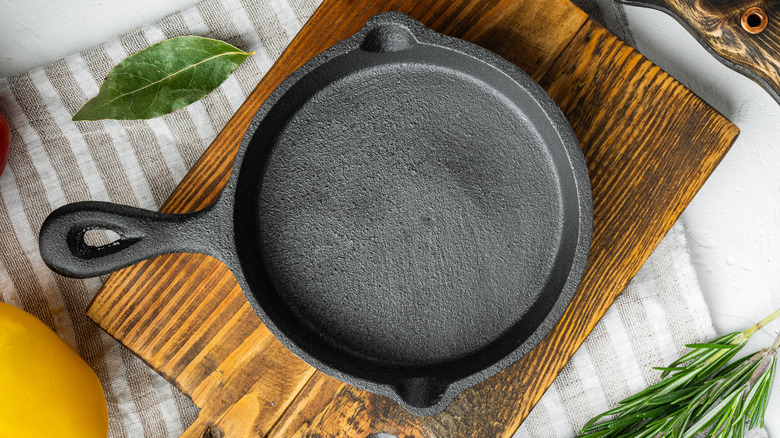
People make a lot of mistakes with cast iron cookware, including washing them in the dishwasher. Not only should you avoid putting cast iron skillets in the dishwasher, but you should also keep enameled cast iron like Le Creuset out of the dishwasher, too. These types of cookware are both ones that should last you a lifetime and should end up being heirloom pieces, but washing them incorrectly can hasten their demise.
The reasons to handwash instead are multi-fold. For non-coated skillets, intense machine washing with strong detergents will remove the layer of oil that helps keep iron skillets non-stick. Plus, all that water exposure can cause rust, especially when water pools in it and it sits inside a humid machine. Meanwhile, jostling next to other dishes and intense cleaning cycles can chip away the enamel on enameled iron cookware. While some manufacturers claim you can machine-wash enameled cookware, it's best to err on the side of caution to extend their lifespan.
2. Nonstick pans
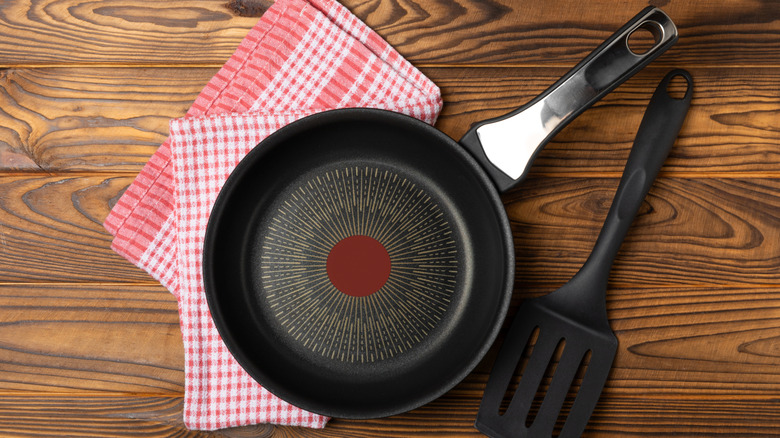
Non-stick pans are another dish type that is best to keep out of the dishwasher, even if the manufacturer's instructions say that it's dishwasher safe. If you want a longer life from your non-stick pan, it's best to handwash it. Of course, the pan manufacturer would be happy to sell you a new one sooner if you decide to go the easy machine-washing route.
The problem comes from how intense the water jets are, how strong the soap is, and the chances for scratching. As the water beats against the cookware, it can end up peeling back the non-stick layer. Plus, the enzymes in the soap can ruin and dissolve the coating in some cases. The tighter you pack your machine for washing, the more likely other dishes are to scratch the surface you've been meticulous about not using metal utensils on. Once the coating starts to peel and flake, it can end up in your food next time you cook with the pan. We probably don't have to tell you that you don't want to season your food with non-stick coating flakes.
3. Wooden utensils, cutting boards, and kitchenware
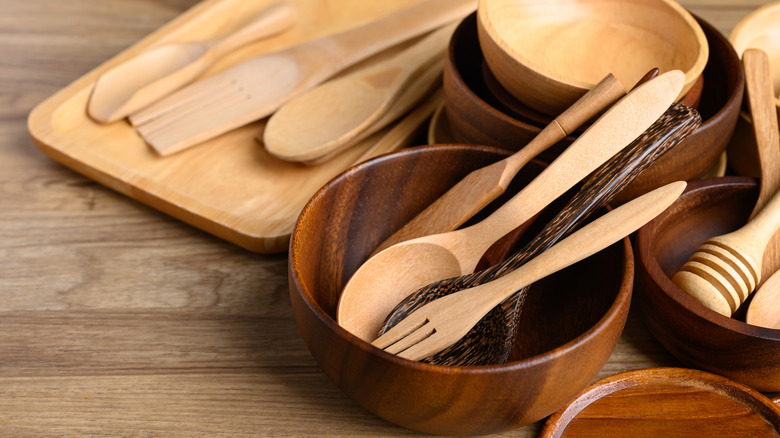
While it's tempting to put wooden items in the dishwasher for ease and thoroughness of cleaning, they definitely should be handwashed. The list of items extends to cutting boards, wooden utensils like spoons, bowls, and even chopsticks. It also includes items like spatulas that only have wooden handles.
The nature of wood makes these items more likely to become ruined by the hot and humid conditions you find inside a dishwashing machine. Perhaps you could get away with machine washing them a few times, but the permeable surface of the wood expands in the heat and water. So, sooner or later, the shape of the item will warp. And, especially with brittle items or ones made from wood pieces that are glued together like cutting boards or items with wooden handles, you're likely to see them dry out and crack open. The dried handle of a wooden spoon or other wooden items could even become splintery, putting you in danger of getting a splinter in your finger or hand when you hold it.
4. Copper cookware and other copper items
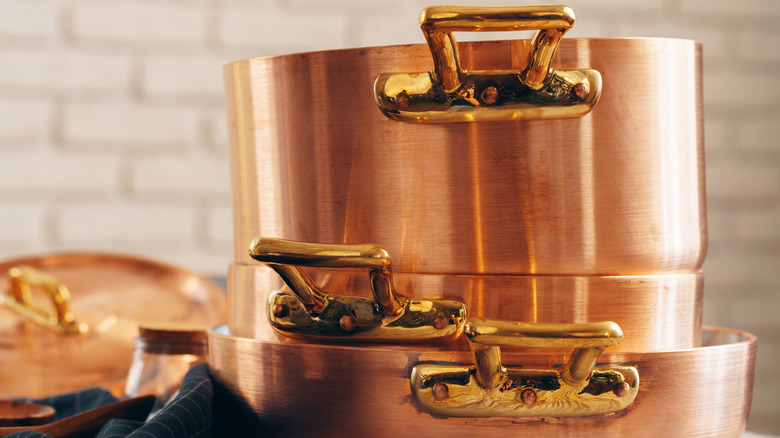
The easily-tarnished nature of copper makes it a bad candidate for the dishwasher. In fact, it can just best to not put metal cookware in the dishwasher at all, regardless of the type. However, some types like copper need special washing care.
The reason you should be handwashing copper cookware and other copper kitchen items is about aesthetics, lifespan, and food safety. Keep in mind that copper tarnishes from intense heat and detergents. Putting your beautiful copper pieces through the dishwashing machine can lead to them becoming dull, discolored, and even green. Plus, it will shorten the item's lifespan. Another point of concern is that interior scratches they can get from contact with other dishes can cause the copper to leach into your food and cause copper poisoning. Keep in mind that cooking acidic foods like tomatoes in copper cookware that has lost its coating is more likely to cause copper toxicity issues. Thus, any scratches on the interior will either lead to the expense of having to have the copper cookware re-tinned or you'll need to stop using it altogether.
5. Delicate glassware and crystal

Finer glassware and crystal should be handwashed to prolong their lifespan and keep them looking as nice and unblemished as possible. While sturdy wine glasses and drinking glasses can go into the dishwasher as long as they're loaded properly, more delicate pieces may not survive the experience.
There are a few reasons to handwash your delicate glassware and crystal. One reason, of course, is how strong the wash cycles can be, with the heat and constant clinking of the glass against other surfaces resulting in breakage and chipping. Crystal is especially susceptible to chipping, with its porous surface also prone to absorbing odors, including soap odors. Additionally, painted glass surfaces can lose their paint. Another reason to handwash glassware and crystal is that being bombarded so long with hard water inside a dishwashing machine can turn the surface cloudy from mineral deposits. While this damage can be removed from some surfaces, etched glass may become permanently damaged. Even more alarming, it turns out that lead-glazed vintage crystal can cross-contaminate other dishes or the machine's interior with lead.
6. Pressure cooker lids
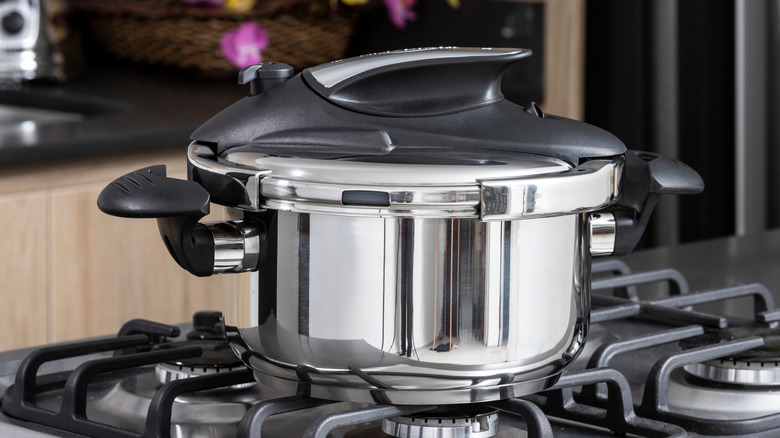
While non-stick metal pressure cooker pans don't have to be handwashed, pressure cooker lids aren't dishwashable. This mandate for handwashing the lids goes for both electric pressure cooker lids and stovetop versions.
There are various parts on a pressure cooker lid that make them better for washing by hand. First of all, there are several valves and pressure vents on the inside of a lid with narrow passageways. Both soap and the food debris floating around during the wash cycle from other dishes can easily get lodged inside these small holes without the pressure of cooking to push them out. Depending on what it's made from, the gasket inside the lid of the pressure cooker may not need to spend time inside the steamy and hot interior of a dishwashing machine either. While it's true that you can put a silicone gasket in the top rack of the dishwasher, heat gradually weakens and damages it, shortening the amount of time before you'll need to replace it.
7. Sharp knives
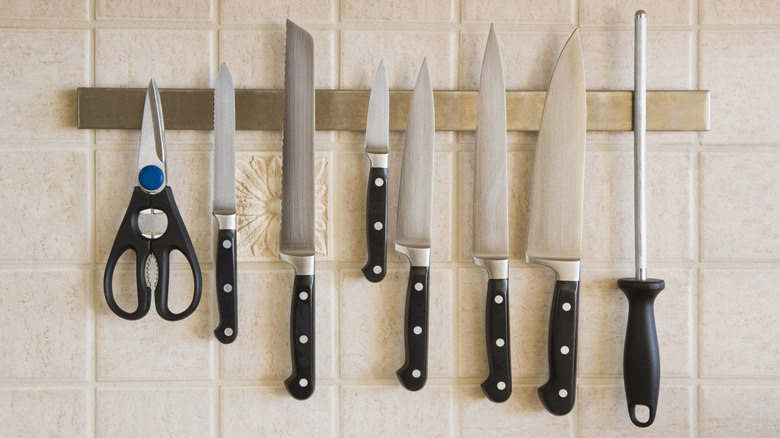
If you've been putting your sharp knives in the dishwasher all your life, it's time to stop. Not only can placing them in the dishwasher ruin your knives, but it can also damage your dishwasher.
One of the reasons becomes obvious when you think about it. The sharp edges on knives don't just cut food. When they're in the wash rack, they can also cut into any protective coating on the rack or utensil baskets, too. Once cut, you'll end up exposing the metal underneath which will eventually rust, thus requiring a rack replacement.
The high heat from the washing and drying cycles can also damage the knives themselves, especially wooden handles, which we've already mentioned have the capacity to split and splinter. Plus, if the blades get knocked against other dishes, they can become dull or even become chipped. They can also damage other items in the dish rack with them. So, err on the side of caution and use just a little soapy water to clean your sharp knives for a longer life for both your dishwashing machine and knives.
8. Thin plastic, acrylic, or melamine
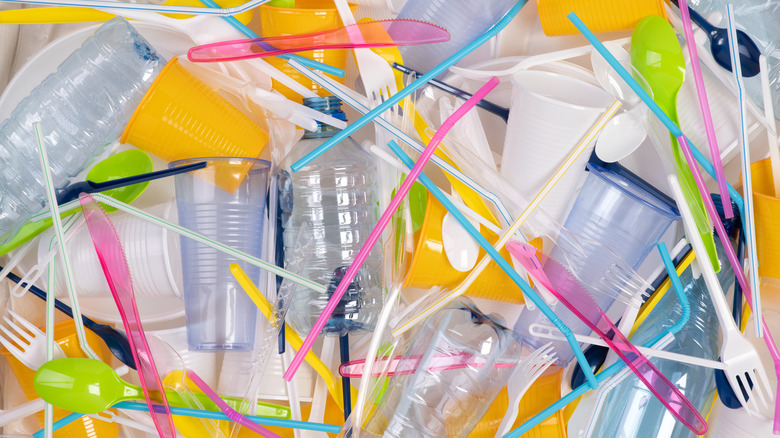
While hard plastic often tends to be dishwasher safe, items like thin plastic, acrylic, and melamine are not. Keep in mind that you still need to check your hard plastic items to ensure they're labeled as being dishwasher safe. Although, they'd probably be better off just washing with warm soapy water instead.
Containers that are meant to be reusable will often be labeled as dishwasher safe, disposable ones usually won't be since they're likely to warp or may have unsafe ingredients. Meanwhile, soft, pliable plastics aren't generally made to endure heat and harsh detergents well, and they're likely to warp in shape or even come out melted. Acrylic and melamine items don't do well in a machine washing environment either, as they often fade, end up with small cracks, or break.
Keep in mind that even plastic items that are dishwashable need to go in the top rack. Plus, when you're washing plastic, you should use gentler cycles and never more intense ones like sanitizing or deep cleaning cycles.
9. Air fryer baskets
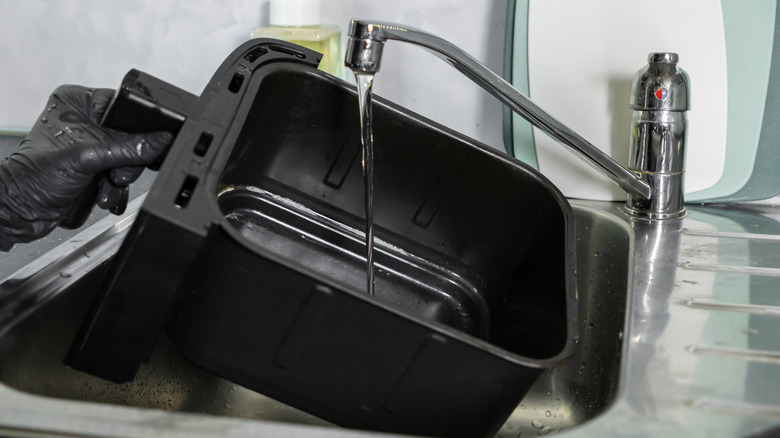
While one of the things you probably like most about your air fryer is how easy it is to clean, you really shouldn't be putting most air fryer baskets in the dishwasher. Yes, we know that many do say that they are dishwasher safe, but there are some reasons to rethink that cleaning strategy.
The main reason to handwash an air fryer basket comes down to the same reason that you shouldn't dishwash non-stick pans. The non-stick coating has a tendency to flake off from contact or in the high heat and intense detergent environment. These flakes get into your food. Even if you only place food on a metal rack or liners within your air fryer, a damaged non-stick coating can produce toxins when you heat up your air fryer. It's always better to hand wash your air fryer basket and anything inside your air fryer that's not straight metal. Another option is to get an air fryer with a glass basket or one with a ceramic or silicone coating so that you don't have to worry about the chemicals in a non-stick coating at all.
10. Silver and sterling silver cutlery and kitchenware
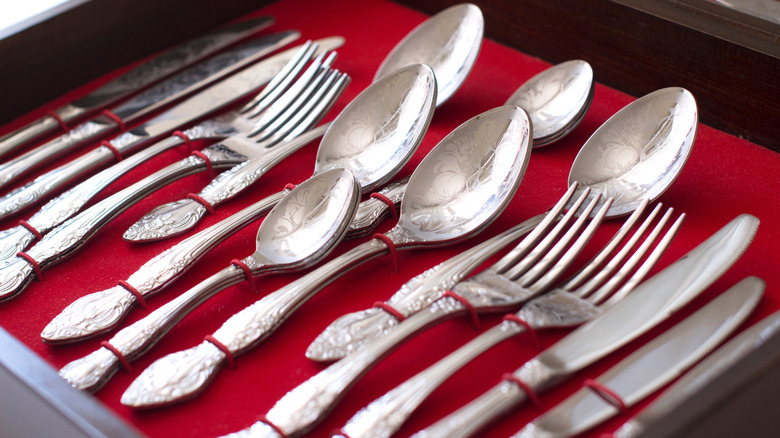
Considering the intense labor of cleaning silver cutlery and other silver kitchenware by hand, it might be tempting to try putting them in the dishwasher. While some types of silver are dishwasher-safe, they require very strict washing parameters. So, pay attention to which type of silver you have.
Pure silver and sterling silver items are the ones you want to clean by hand no matter what. There's no doubt that they'll tarnish and react to the chemicals not only in your detergent but with other metals you're washing as well. While you can wash some silver-plated and sterling silver items, you still have to watch for chemical reactions. For example, you'll need to check the ingredient list on the detergent to ensure there's no citric acid in it. Additionally, they'll oxidize and become discolored if you wash them in the same load as something made with stainless steel, including standard cutlery.
11. Aluminum cookware and kitchenware
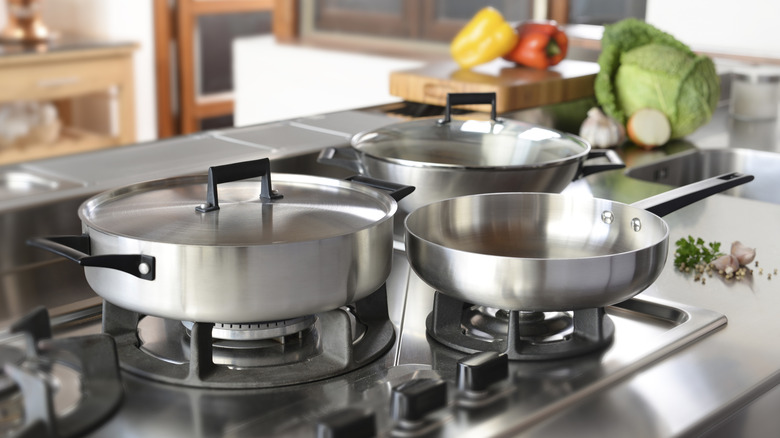
Like copper and pure silver, aluminum cookware and kitchenware isn't dishwasher safe. So, be sure to know what type of metal your cookware is before deciding how to wash it.
Aluminum doesn't do well with harsh detergents. At first, they may just look dull. However, with subsequent cycles, they're likely to get darker and darker until they start pitting, corroding with rust. Sometimes, they'll get a coating of grey powder on them, too. So, if you're wondering why your aluminum baking sheets are looking rough, it's because they should be hand washed. Even hard-anodized aluminum items won't last long after too many cycles in a dishwashing machine. If they're listed as being dishwasher-safe cookware, you're going to end up reducing their lifespan every time you give in to machine washing them. While there are some aluminum-safe dishwasher detergents, they're not easy to source and tend to come with warnings about being caustic and not being for home use.
12. Fine china and certain types of earthenware
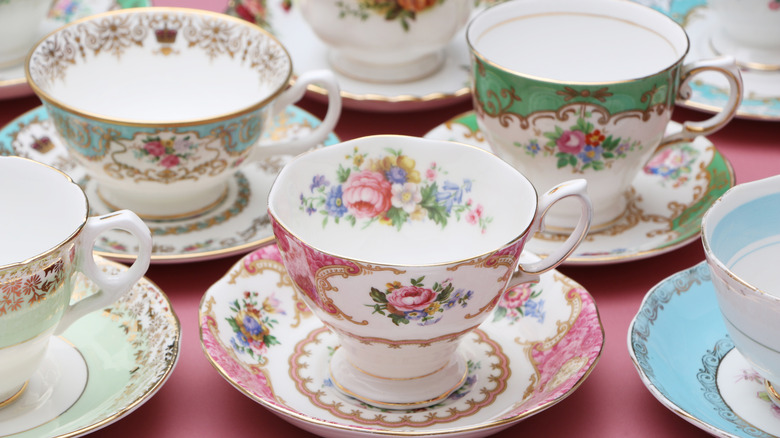
While everyday china and most ceramic dishware will say they're dishwasher safe and leave you with no worries on that account, don't assume that all dishware is dishwashable. Certain types of fine china, ceramics, and pottery need handwashing.
There are several categories of dishes that don't do well outside of being hand washed, even in gentler cycles like a dedicated china cycle. For example, you want to take special care of antique ones that may not hold up to the rigors of being machine washed with such intense water pressure or strong detergent. Even ones that are 15-20 years old may not hold up, which makes it an antique in china years. Likewise, older earthenware pottery or crockery may not fare well in the dishwasher either. You'll especially want to avoid machine washing if there's weblike cracking in the glaze. Other dishes that may not hold up well are ones that are hand-painted and can fade or have metal trim that can tarnish or wear off in the wash.
13. Graters
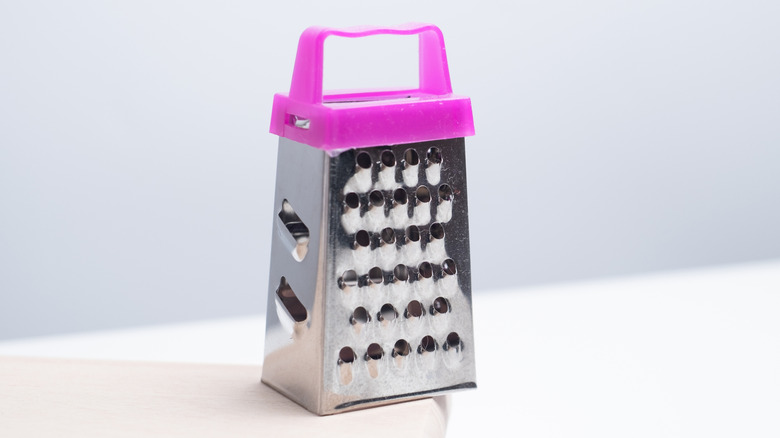
We know you're probably going to balk at this one, but it's best not to put graters like cheese graters or zesters in the dishwasher. Sure, it can be difficult to get cheese or other food items off of one when handwashing, but there are some negatives that are worth avoiding.
If you think about the nature of graters, you'll realize that they're made of many sharp scallops to cut into food and do it well. In the same way that they can cut into your food, they can grate the plastic coating off of dish wracks inside your washer and eventually cause them to rust. Some people find that their jet streams aren't powerful enough to thoroughly clean the graters anyway, resulting in cooked-on cheese, garlic, or other grated food after the heat of the drying cycle is done with it. While we've used plenty of dishwashers that had no problem removing the food from the holes, some just can't handle it.
14. Insulated mugs and containers
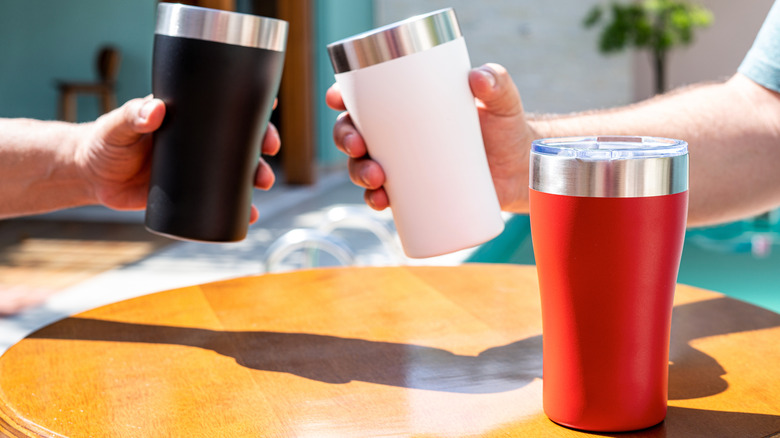
Some insulated mugs and containers are constructed well enough to be dishwasher safe, but that's not true for all of them. So, unless you find markings on the bottom that indicate otherwise, it's best to wash them by hand.
The main problem is that the heat from machine washing can damage the seal that keeps the container insulated from outside temperatures. Once that seal is broken, a variety of problems can occur. For one, water from washing can seep inside and get stuck, which is annoying to hear as well as eventually sometimes annoying to smell. Even the ones that are listed as being machine wash safe may lose its insulating performance over time if you always machine wash them. Especially if you've spent a lot of money on a fancy insulated mug or other container, you're not going to want to find it ruined or less effective because you decided you didn't have time for handwashing.
15. Woks
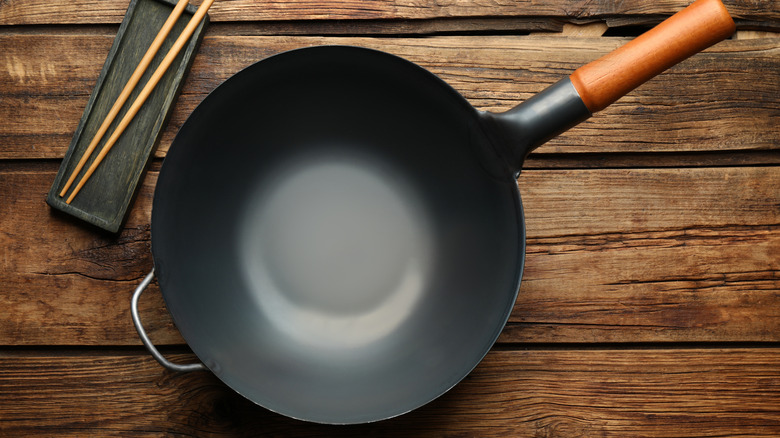
There's a very specific way to clean a wok, and it never involves using a dishwasher. Like with iron skillets, washing woks the wrong way can remove their non-stick surface built up with seasoning and time. Thus, you'd need to start over fresh with the seasoning process.
There's a lot that can go wrong inside a dishwashing machine. One problem is that cleaning a wok with soap can be a big mistake, and dishwasher soap can be especially harsh. If you have a carbon steel wok, it can handle a small bit of mild soap, but dishwasher soap would remove the seasoned surface in a heartbeat. Carbon steel woks are also easy to oxidize and rust when they encounter moisture, which is why you don't want an overly wet cleaning environment for one. Add a wooden handle to the mix, and you have a pan that's going to get ruined on every front. Instead, a wok needs a special cleaning regimen that involves washing and scrubbing it in the sink and using oil and heat to keep it well seasoned and non-stick.
16. Potatoes
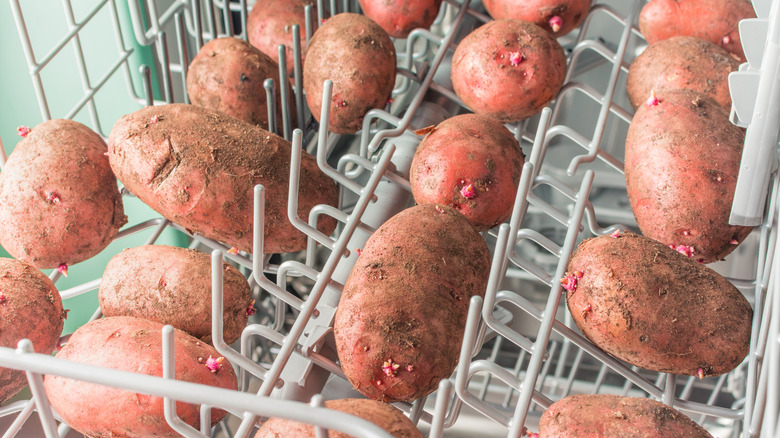
As crazy as it sounds, some people have started putting potatoes in the dishwasher to wash them, and that's really a horrible idea. Social media might be full of people doing it, but that doesn't mean that you should, even in the rinse cycle without detergent.
The problem comes with all the soap residue that's still inside your dishwashing machine, and the soap is certainly not meant to be eaten. A main concern is that, with the potatoes being porous, there's a chance of consuming the soap when you eat the potatoes. At the very least, it can make your potatoes taste soapy. However, according to Poison Control, consuming enough dishwasher soap can cause skin irritation or tissue damage in your mouth, throat, or stomach, as well as vomiting. While you may not ingest enough for those symptoms to occur, it's best to not chance it. So, as tempting as it is to machine-wash potatoes, it's much safer to get out your scrub brush and wash your potatoes in the sink with water the old fashioned way.