

8 IKEA Food Court Rules Every Shopper Should Know
Even if you've never set foot in an IKEA store, you probably know the store is famous for its flat-pack furniture. For those loyal IKEA fans, you'll know the food court is as much a part of the experience as any furniture you can buy. After taking a long walk around the store, you often need to refuel with those famous Swedish meatballs or any other of its culinary delights. However, with its cafeteria-style restaurant, you need to appreciate how this dining experience is much different from many other food establishments. There are some unwritten rules that all shoppers should know to ensure the experience goes as smoothly as possible.
As someone who's had the fine honor of growing up with an IKEA in my hometown, it's a set of rules that I know all too well. Sometimes it may seem like chaos, but you'd be surprised at how much order is behind it. Unless you want to appear rude or disrespectful, there are certain behaviors you want to avoid. Don't worry, all these rules are easy enough to follow. And once you know them, you'll feel like an IKEA expert who can impart your wisdom to anyone new to the unique IKEA experience.
Grab a tray and follow the line
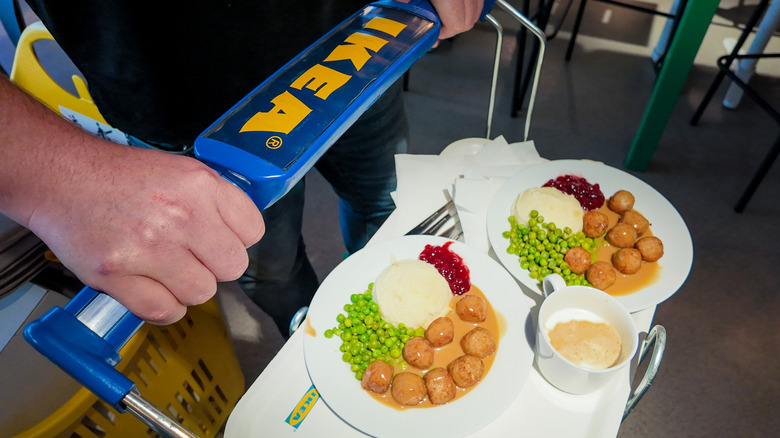
When you get to the food court, you may be wondering how best to select your food. In practice, it's as simple as it can be. All you need to do is grab a tray and follow the line. The first thing you want to do is grab a tray (along with a trolley if needed) and pick up any utensils you require. Even if you only plan on picking up one item, a tray just makes everything easier. Then, you get to the back of the food queue, regardless of what you want. If you only want one item that's at the end, it still doesn't matter. The system is designed so that those trays can uniformly move along the metal railings.
If you try and cut the line, you will most likely reach over other customers with a tray in hand, probably pushing between them. If everyone did this, there would be a constant stream of people bumping into each other. Even if it were quicker for you, it would soon turn into chaos if everyone went rogue. Even if the queue looks long, it will always move quickly because of this order. With just a tiny piece of patience, you'll see how this flow takes you to your food of choice in no time.
Don't touch what you're not buying
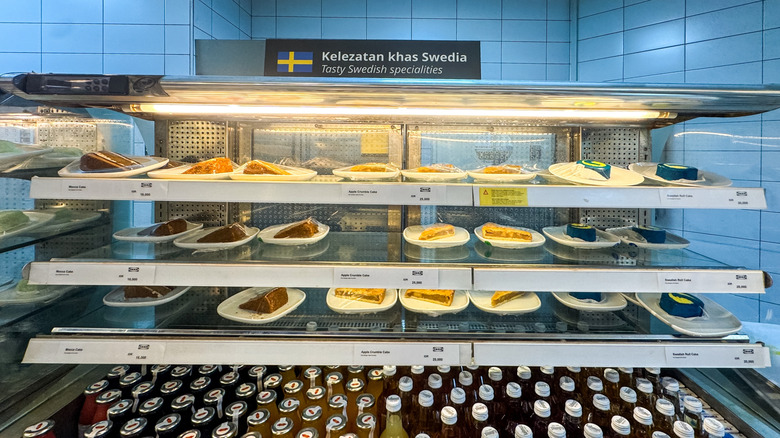
The set-up of an IKEA food court may seem casual, but it's still a food environment where the store needs to adhere to strict standards. Don't be fooled by thinking the low price means low quality, either. IKEA food is cheap because it wants to draw and keep you in store, not because it's low-quality food that can be discarded. When you're browsing food items. It's tempting to want to take a closer look. Also, sometimes a person may pick something up, only to have another thing catch their eye and choose that instead. For these reasons, it's important to think before you pick anything up.
When on display, these food items are only meant to be handled by the people who are going to eat them. I know I'm not alone in not wanting anyone else touching my food. Not only that, but when someone touches or picks up an item and puts it back, you presume something was wrong with it. If there was something wrong with a food item, then someone should alert a member of staff instead of putting it back on display. There is a level of inherent trust with the IKEA system. You don't want to be wondering if your piece of cake has already been poked at by someone else. If you pick it up, pay for it.
Know the menu before you get to the front
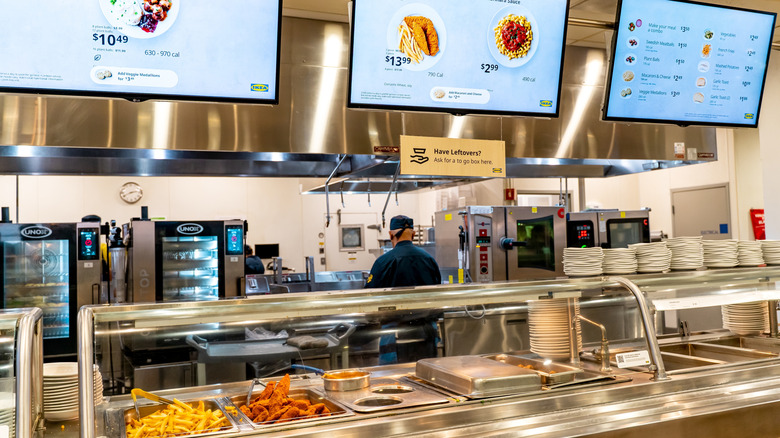
If you're a frequent visitor to IKEA, then you probably already know the menu like the back of your hand. Perhaps you love mashed potatoes or find the chicken tenders irresistible. If, like me, you're a little particular, you may even order the same thing every time without even looking at what's on offer. However, if you're new to the IKEA food court, it's a different story. At a sit-down restaurant, you would enter, sit down, check the menu, and then call the waiter over when you're ready to order. What you wouldn't do is enter, sit down, and then expect the waiter to stand there the whole time while you browse the menu. The same principle needs to be applied to the IKEA line, but instead of just being considerate of staff, you are also being considerate of your fellow diners.
There are several spots in a food court where you can check the mouth-watering range of IKEA menu items, usually on overhead menus or display cases. You may be tempted to make a quick change as you are moving along, and that's fine. However, you want to have at least a solid idea of what you want. If everyone only decided when they got there, it would clog up the whole process. Anyone who does this will be stressing out staff and annoying customers. The first three rules here boil down to the same principle: Don't be the reason the line stops flowing.
Don't hog a table before you've paid
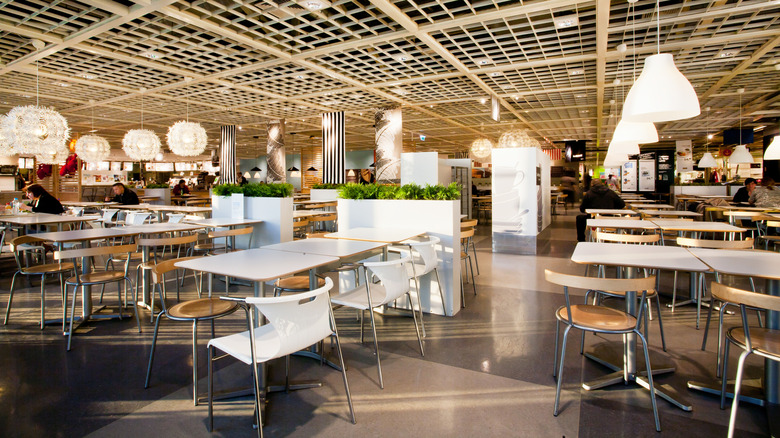
You've decided to see what these famous meatballs are all about and what's the story with the intriguing lingonberry sauce. You turn around, only to see there are no tables available. On closer inspection, you see some of these tables are taken up by people who are not even eating. The level of acceptability here is case dependent. If you have children or a member of your group has mobility issues, that's different. But unless you have a good reason that someone needs to be seated, then wait until after you've paid to find your spot.
The priority should be to those who have just paid and potentially have hot food on their trays. Hogging tables can cause unnecessary delays and disrupt the flow. It's also important not to hang around for too long after your meal, either. That's not saying that you should rush, but don't stay chatting for 20 minutes after you've eaten when people around you are trying to find somewhere to sit. If the cafeteria is super busy and you have room on your table, don't be unkind. Let people know they can sit down and don't block empty seats with the likes of bags and coats.
Only eat in the designated area
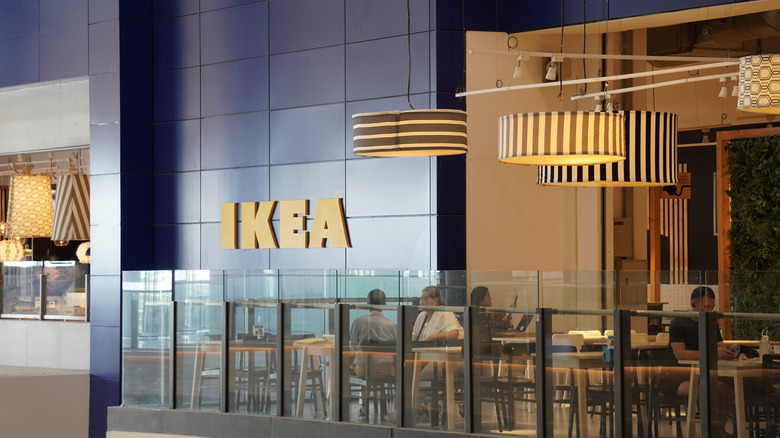
Another reason you shouldn't hog a table in the seating area is that IKEA tables usually turn over very quickly. If you are waiting, it won't be long. This is why it's also important to avoid the temptation to eat outside of the designated area. This applies whether you have a whole tray of food or have just picked up one item. The food court area will be carefully laid out, including sections for the bins and cleaning. I've seen some people wandering off back into the showroom, seemingly looking for a quieter place to eat their food, which is not a good idea.
It would be chaotic if everyone just ate wherever they felt like it. This is especially unfair on the cleaning staff. They'll be busy enough as it is without needing to check around the store for crumbs people have left behind or plates they've abandoned. The whole IKEA experience works because of respect. Not only respecting the unwritten rules of the food court, but the store as a whole. Anyone that goes against these isn't being clever or a free spirit, they are just being rude.
Don't sneak food into the store
I often feel that due to its more relaxed and casual nature, some shoppers don't have the same respect for IKEA as they do for other stores. You wouldn't sneak food into a local furniture store, right? Equally, you shouldn't go into a restaurant and grab food from your bag. However, at IKEA, it seems to happen more often than it should. Of course, this rule is an understandable part of a company protecting its business. But it's also about hygiene, safety, and ensuring the whole experience remains as pleasant as possible for every shopper.
Bringing food with you would make it harder for the staff to manage and clean the store. This is especially true in showroom areas where greasy or dirty hands can ruin displays. The store doesn't want to have to pull something off display because it needs to be cleaned. As for the food court, IKEA doesn't want people taking up tables by eating their own food when its customers are eagerly waiting for a seat. It may seem harmless in isolation, but the same can be said for many rules. If everyone decided the rules didn't apply, the whole experience would stop being enjoyable for everyone.
Don't abuse the refill policy
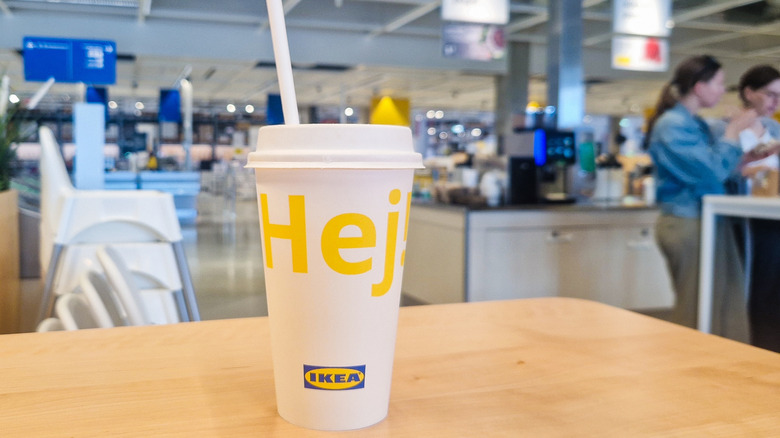
I get it. IKEA has directed you carefully through its maze of furniture sections and you eventually end up in the IKEA food court. After going on this infamous adventure, it's not surprising that you'd be looking for some refreshment. This can make the store's refill stations all the more appealing. However, drink refills everywhere work on a basic level of trust. They allow customers to fill up without needing to take time away from staff who will be dealing with food requests. If you've already refilled a couple of times, then you've probably already paid only a fraction of what other places may charge.
The refill section is there for when you need a drink during your meal. Once you're ready to leave, the refills need to stop. Topping up your own container on the way out is crossing a line of common decency. As is thinking you can enjoy a refill as you've spent a few hours shopping elsewhere and want to go back. If everyone took advantage of these refills, it would soon force IKEA to take them away or impose strict limits on what everyone can have. It's another small act of consideration that builds up an easier and fairer experience for everyone.
Clean up after yourself
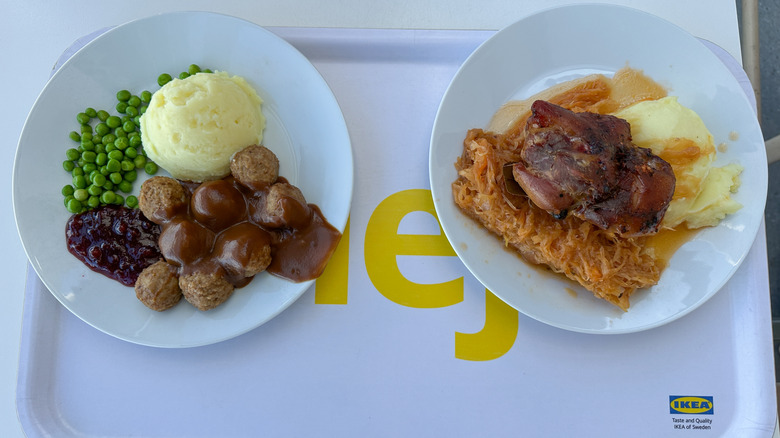
The last, and perhaps most important rule of all, is to clean up after yourself. As I mentioned, IKEA tables are often busy and there will likely be an eager customer hoping to use your table. Cleaning up after yourself is not only polite to them, but it's also respectful to the staff. It's a self-service cafeteria where it's your responsibility to take your tray away and place it on the designated trolley or rack. Of course, IKEA still has cleaning staff on the food court, but they are responsible for wiping down tables and clearing up any spills.
Even if you take your tray, you want to ensure the rest of the table is clear. Try and wipe any crumbs, take any wrappers with you, and don't leave any cups. If you have accidentally made a mess, alert a member of staff and politely apologize. As a diner, you've probably experienced a time when you've gone to sit down but are faced with a dirty table. When everyone does their little bit, the whole system is elegant and efficient, just like much of IKEA's furniture range.