

Why Anthony Bourdain Said To Avoid Ordering Well-Done Meat At Restaurants
We may receive a commission on purchases made from links.
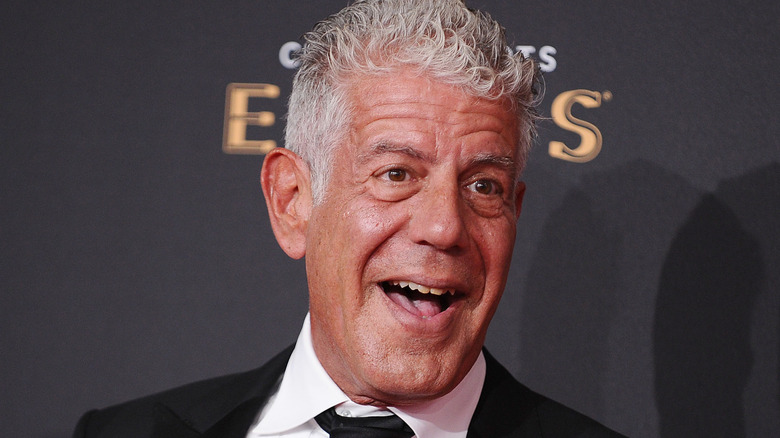
Ask any chef why you should avoid ordering a well-done steak and you'll get one of two answers. One type of chef will get technical: they'll talk about how cooking a steak for that long would almost always result in all the tasty marbling being cooked off, turning a juicy, tender, delicious cut of meat into something dry, tough, and devoid of all flavor. On the other hand, a chef like Anthony Bourdain, who was always the contrarian entertainer, will give a more honest answer.
In 1999, Bourdain wrote an essay in The New Yorker titled "Don't Eat Before Reading This," which gave readers a whole list of things to avoid ordering at a restaurant – including seafood on a Monday, weekend brunch, bargain sushi, and the complementary bread baskets. A year later, he published his first book, "Kitchen Confidential," which expanded on the same theme, giving readers an uncensored view of New York's restaurant kitchens.
One of the more famous tips he shared involved well-done steaks, sarcastically saying that people who ordered those "pay for the privilege of eating our garbage." According to Bourdain, if you order a well-done steak, you're very likely to be served a substandard cut of meat that would've otherwise been thrown in the bin. He then went on to write in detail about a time-honored practice called "save for well-done."
What does 'save for well-done' mean?
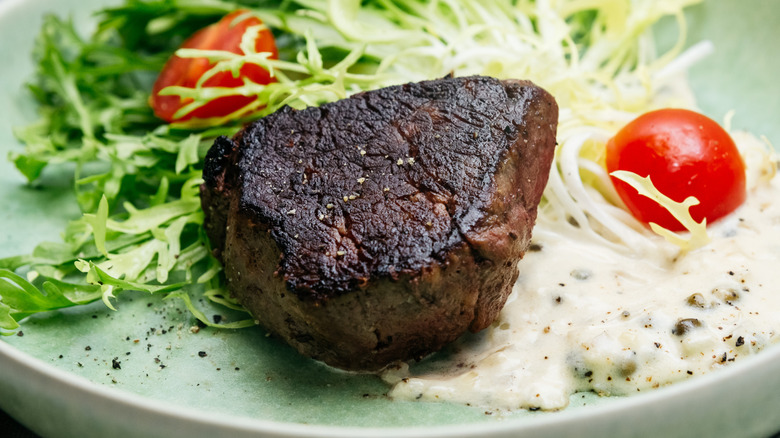
According to Bourdain, every now and again a cook would find a piece of steak that was tough, full of connective tissue, and occasionally even going bad. At this point, the chef would have three options. The first was to throw it in the bin, which would mean a total loss. The second was to cook and serve it to the staff, which, he argued, was as good as throwing it in the bin. The third was to save and serve it when a guest ordered their steak well-done — also known as the "save for well done" practice.
The reasoning behind this that a well-done steak would be dry and chewy, with the meat cooked to a point where it no longer mattered how good or bad the cut was to begin with. In Bourdain's words, "the philistine who orders his food well-done is not likely to notice the difference between food and flotsam." His description of said "philistine" was rather more graphic in "Kitchen Confidential" a year later. In the book, he referred to them as "rubes" who preferred their meat "incinerated into a flavorless, leathery hunk of carbon."
Incidentally, there was one more thing Bourdain disliked when it came to steaks: tenderloin. While it might be the ideal cut for a classic Wellington, Bourdain called the tenderloin "boring" in a 2016 interview with Insider Tech, and said that most chefs felt the same way. In case you're wondering, his favorite cuts of steak came from the rib section, which he praised for their perfect balance of lean meat and fat. Guaranteed flavor — that is, as long as you don't order it well-done.