

This Old-School Gold Rush–themed Steakhouse Chain Went Bankrupt Twice — Only 10 Locations Remain
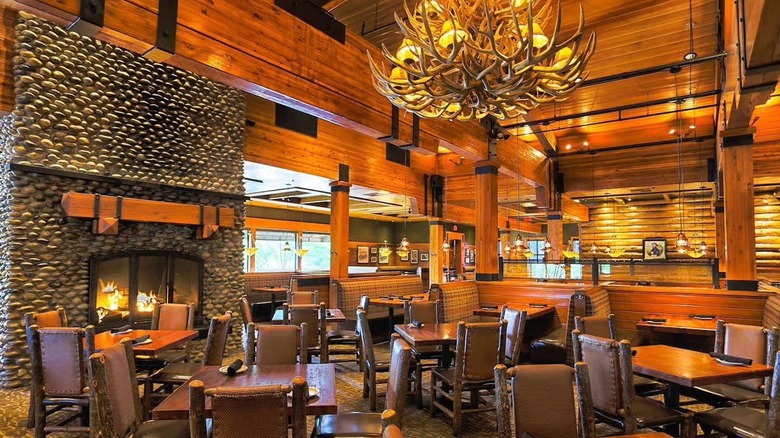
The California Gold Rush was a story of both extravagance and hardship. Fortunes were made overnight as miners struck gold worth thousands, but for every lucky prospector who found generational wealth, countless others lost everything chasing it. In many ways, the story of Claim Jumper, America's biggest Gold Rush-themed steakhouse chain, mirrors that era: opulence, struggle, and a slow decline. Having served oversized steaks and six-layered motherlode cakes across 45 locations on the Pacific Coast, Claim Jumper ended up filing for bankruptcy twice. Now, only 10 locations remain.
Claim Jumper was founded in 1977 by Carl Nickoloff and his son Craig. Inspired by the Westerns set during the Gold Rush, the Nickoloffs opened their first restaurant in Los Alamitos, California. From its 250 seats to the hearty all-American menu — think ribs, steaks, pies, salads, etc. — everything about Claim Jumper was larger than life. They were known for their oversized portion sizes, like many American chains, but this wasn't a question of putting quantity ahead of quality. It was about providing a memorable, family-friendly experience at a reasonable price.
Much like the early prospectors more than a century ago, the Nickoloffs struck gold. By the mid-90s, Claim Jumper had opened 17 locations across the Pacific Coast, and in another decade they would be in 45 across eight states. This was growth fueled by success as much as ambition. According to a 1995 review in the Los Angeles Times, it wasn't uncommon to experience a 90-minute wait during peak hours, and impatient crowds clustered outside their doors and in the parking lots were a common feature across outlets. So, what went wrong? How did this much-loved chain go from three decades of success to bankruptcy? Well, that's a story.
Hitting rock bottom after striking gold
In 2005, Craig Nickoloff, who had been running the show for nearly two decades after his father's death, sold a majority stake in the company to a Los Angeles-based private equity firm for over $200 million. "We had a great time building the company," he reportedly told Orange County History Roundup in 2010. "We are grateful for all the wonderful people that we came into contact with and employed over the years." Little did he know how soon things would unravel after the business was sold. Over the next two decades, the company would end up filing for bankruptcy twice — on both occasions triggered by circumstances out of their control.
The first time Claim Jumper filed for Chapter 11 was on September 11, 2010, two years after a market crash had left the global economy in tatters. Claim Jumper officials admitted in court filings that the chain was unable to recover from the economic downturn, especially having taken on significant debt to fuel their rapid expansion. Landry's Restaurants Inc. acquired the chain in an auction for just over $75 million, outbidding, among others, a group led by Craig Nickoloff himself.
Ten years later, disaster struck again, this time in the form of COVID-19. Two years into the pandemic, Claim Jumpers — who still operated 45 restaurants nationwide at this point — once again filed for bankruptcy. In the three years since, 35 more locations have shuttered, leaving only 10 operational. Seven of these are located across California, Oregon, and Nevada, while the other three are located at different Golden Nugget Hotel & Casinos in Las Vegas and Laughlin, Nevada, and Lake Charles, Louisiana.
Diminishing quality, rising prices
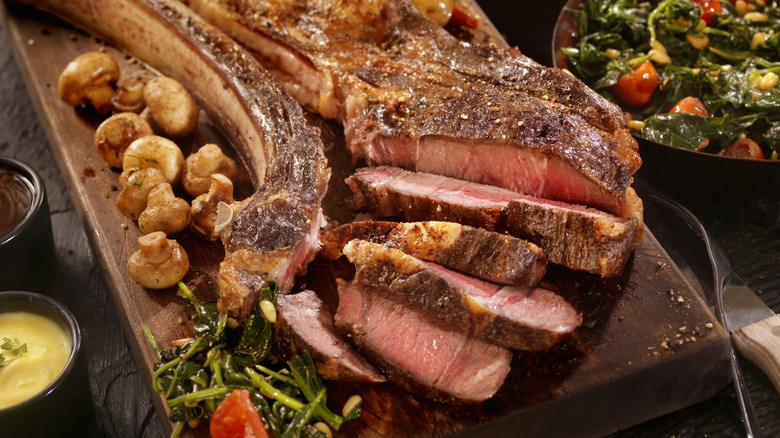
While the bankruptcy filings were triggered by two global disasters, customers also point to changes in the way the chain operated once the Nickoloffs gave up control. Throughout their dream run, the chain was known for two things: the quality of the food and its reasonable pricing. Both of these changed once the chain changed hands. According to one Redditor, Claim Jumper started cooking food in a central kitchen before freezing and shipping it to different outlets. "The quality went way down, people stayed away, and now it's in a death spiral," the user posted.
It isn't as easy on the pocket anymore either — it just barely failed to make the Top 3 in our ranking of most affordable steak dinners at chain restaurants. Once known as the go-to spot for family gatherings because of their big portions at affordable rates (the average check was $12, according to a 1996 report by Westworld), a two-person meal can cost upwards of $200 nowadays. This is unsurprising, given that their steaks cost as much as they do at The Capital Grille, which is the gold standard when it comes to steakhouse chains. "The quality went way down while the prices kept going up," another Reddit user explained, highlighting the post-Landry's Claim Jumper as inferior to the original. This is certainly a sign that the good times have come to an end.