

18 Things You Should Know About Benihana
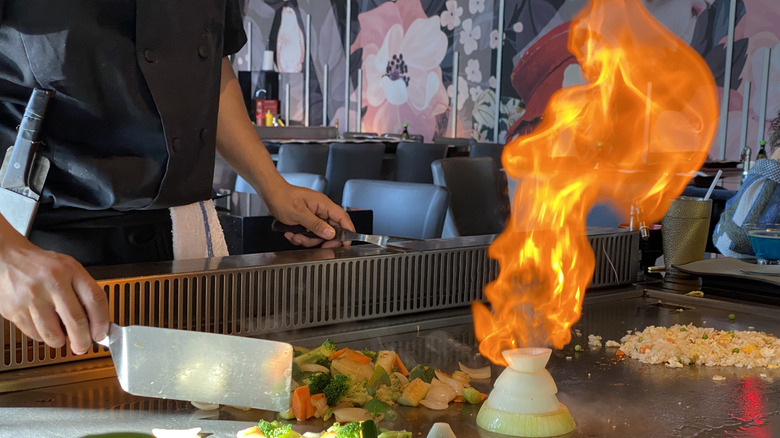
Some people like to go out and enjoy a nice, quiet meal. Others may prefer the Benihana experience. Since its inception, this Japanese steakhouse has delighted diners with an array of dazzling displays. From knife-flipping to onion volcanoes, Benihana has been serving teppanyaki with style for a long time now. Whether you're a Benihana regular or have always wanted to go, you'll love reading these fascinating facts about the brand.
Here, you'll find out all about its humble beginnings, its eccentric larger-than-life founder, its influence on modern dining culture, and much more. Behind the eye-catching cooking is a fascinating story where innovation is balanced with tradition. We've found fascinating facts that will take you on a deep dive into the world of Benihana. Knowing these will no doubt allow you to appreciate your next visit to the restaurant even more.
Hiroaki Aoki started it all in 1964
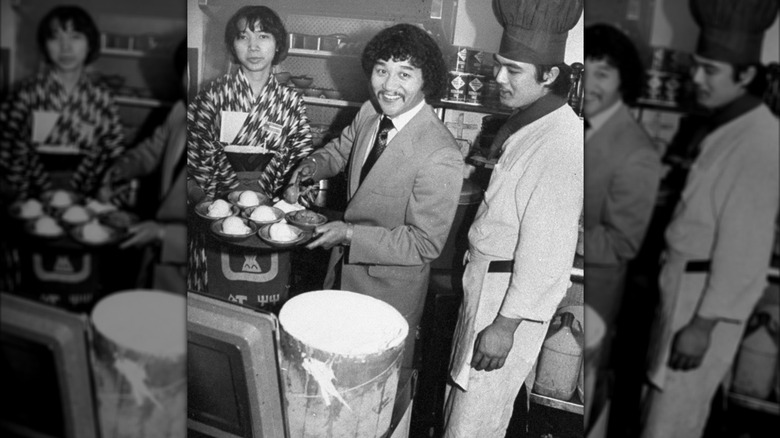
Benihana was founded by Hiroaki Aoki. Knowing that people may have trouble pronouncing his name, he went by the nickname "Rocky". Born in Tokyo in 1938, he became a wrestler and qualified for Japan in the 1960 Summer Olympics. However, he declined the opportunity and instead moved halfway around the world to New York when he was just 19. That wasn't the end of his wrestling career, though. He won the U.S. flyweight title for three consecutive years.
With his parents having a coffee shop back in Japan, he was determined to create his own dining experience. He set to work as hard as he could, saving every cent to make his dream come true. It eventually did when he opened his first teppanyaki restaurant in 1964. He was able to live his American dream and had a hunch that American diners would share in his love for entertainment and flair.
Aoki named it after his parents' coffee shop
The name of the restaurant has an interesting history in and of itself, and starts with Aoki's parents, Yunosuke and Katsu. Yunosuke has his own interesting story, as he was the descendant of a samurai and was a popular entertainer. The couple opened a small coffee shop in Tokyo called Benihana, with the name being inspired by a red flower they found amongst the rubble in a city recovering from the devastation of World War II. It was perhaps a fitting symbol of resilience and renewal — the same qualities Japan needed for recovery.
Benihana translates to "red flower" in Japanese. When it came to creating his restaurant in New York, Aoki decided to use the same name to honor what his parents had built. Despite the two places sharing similar business names, they remained completely different establishments. However, it's a lovely name that tells a story of family and rebirth.
Aoki had a colorful life
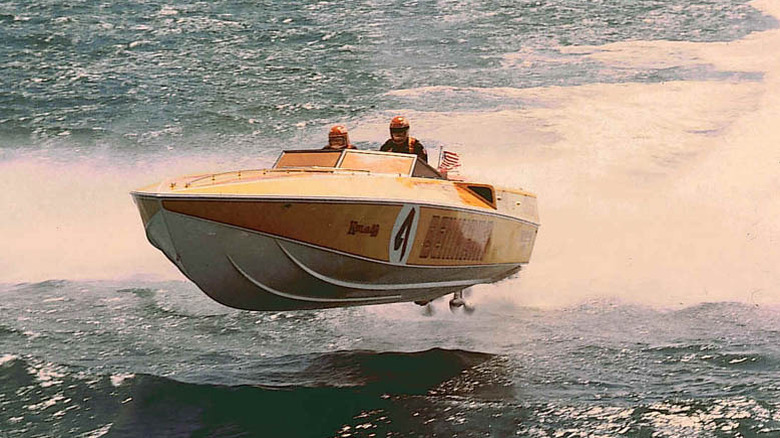
We've already looked at how Aoki was a great wrestler, but his colorful life goes way beyond that. If you think the concept of Benihana is bold and unpredictable, then it merely mirrors the man who founded it. Funnily enough, Aoki couldn't actually cook but instead knew how to hire the right people and put on a show. Away from Benihana, he was a thrill seeker, and success seemed to follow him wherever he went.
In true Aoki fashion, becoming the world leisure class backgammon champion in 1974 may not have seemed much of a thrill to him, so he turned his attention to powerboat racing. After becoming a champion, he nearly died in a crash in 1979. That didn't deter him from staging huge stunts; two years later, he piloted a helium balloon across the Pacific Ocean. If that wasn't enough, he also won the Milan-Moscow car rally in 1987. His adventures not only showcased his willingness to take risks but also worked as great advertising for Benihana.
Aoki sold ice cream to raise funds
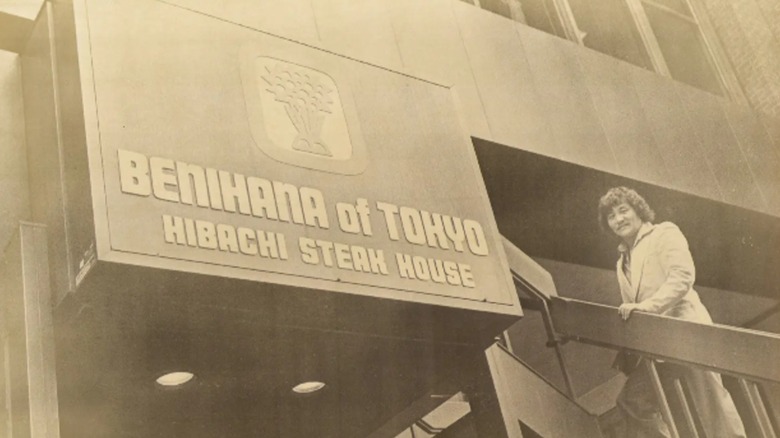
Some people are able to start a business by hustling to save as much money as possible. Others can do it with a little help from a relative. Given that his life was never simple, it's no surprise that Aoki experienced both opportunities. His dream started by driving a Mister Softee ice cream truck through Harlem. Not only did he sell as much ice cream as possible, but he also did so flamboyantly by putting a little Japanese umbrella on each purchased cone.
Through his business exploits, he raised $10,000 to pursue his dream. Although it's not stated how much, his father also loaned him money to help reach his goal. Apparently, it was also his father who gave him the push to bring teppanyaki cooking to America.
The first restaurant was tiny
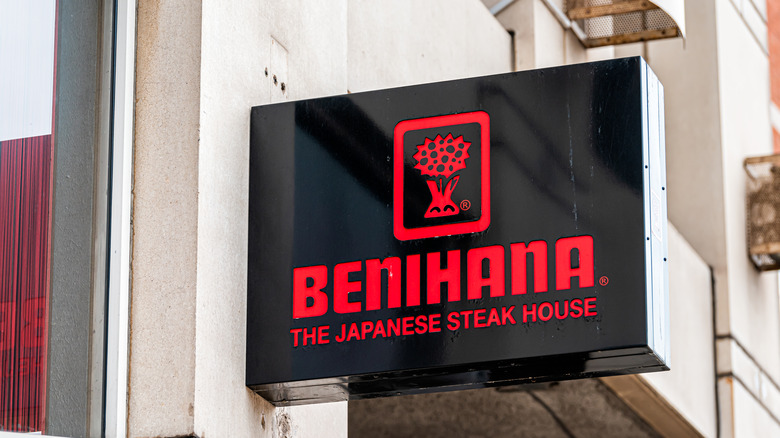
A few new restaurants can roll the dice with grand openings with a huge number of tables for guests to choose from. Whether it was a lack of funds or a cautious approach, Benihana started small. Given what we've already learned about Aoki, we'd guess that he didn't have the money to get anything larger. Situated on New York's West 56th Street, it featured only four tables. It was a space that would usually be too tiny for a small town diner, let alone in the heart of an iconic city.
As you'll soon find out, this prime location didn't exactly help Benihana enjoy a flying start to life. Benihana no longer operates from its birthplace, but it has a restaurant on the same street. Thankfully, this restaurant has quite a few more tables than just four. For true Benihana fans, it gives them a chance to enjoy hibachi on the street where it was introduced to the country.
The showmanship was adopted straight away
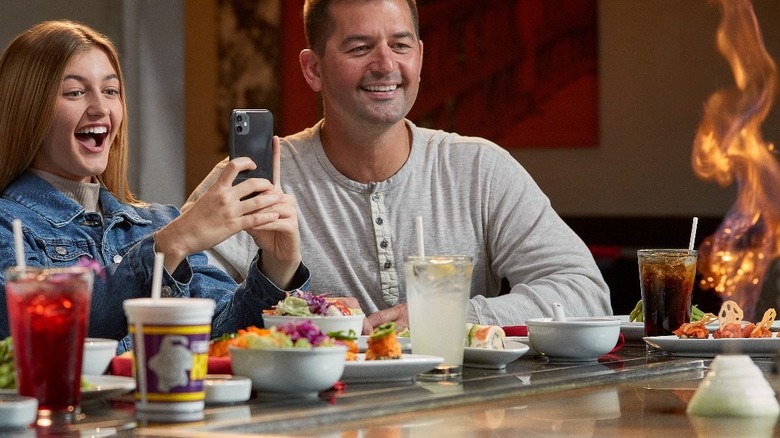
Many companies dramatically change their business operations over time. For example, Taco Bell started as a small stand in California. Amazon famously began life as an online bookstore. In contrast, Aoki knew exactly the experience that he wanted to provide and ran with it. Straight from the start in that four-table restaurant, he wanted his chefs to be a part of the entertainment.
Whether it was flaming food or knife-flipping, Aoki knew that his restaurant had to stand out from the crowd. Given that it was a bold move, it's incredible that it not only worked but is also still as popular as ever. It means that Benihana customers of today have a similar experience to those in 1964. Benihana didn't need to move with the times; it was already ahead of the curve.
Benihana suffered a slow start
Despite the flamboyance, the restaurant got off to a slow start. Benihana struggled to get customers, serving one to two daily. Such numbers would be unthinkable now. Despite the theatrics of the chefs, it didn't feel as though word was spreading. It got so bad that some of Aoki's family members had to work at other restaurants to make ends meet.
That was until the words of Clementine Paddleford played a huge role. He was a well-known critic for the New York Herald-Tribune and visited Benihana around six months after its opening. After giving the place a glowing review, the fortunes of the restaurant changed forever. From serving only one or two people a day, Aoki soon needed to turn diners away, with his four-table restaurant in desperate need of expansion.
It brought teppanyaki to America
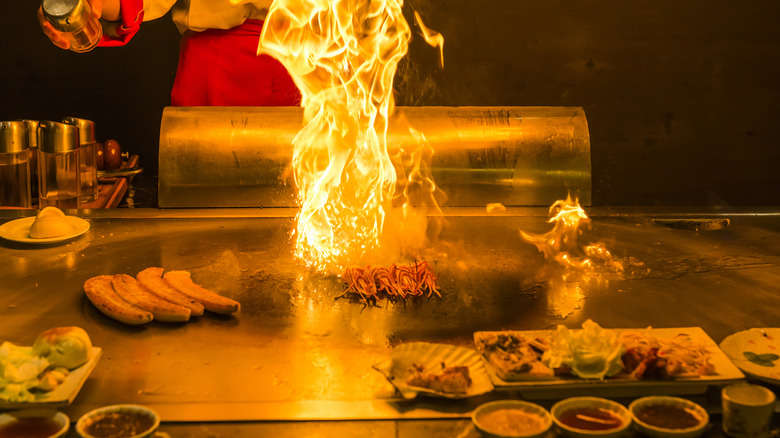
First, it's important to clarify the distinction between teppanyaki and hibachi. The difference between them is complicated. Hibachi was originally the term used for the large fire bowls that people would cook over. This is a practice that goes back centuries. Teppanyaki is a type of cooking where you prepare meals in much the same way, but on a flat, iron griddle in front of guests. It's complicated because hibachi is now just used interchangeably with teppanyaki to mean the same thing.
The origins of teppanyaki date back to the end of WWII, with a restaurant called Misono claiming to be the origin of this cooking style as a way to delight American soldiers in Kobe. This style was essentially unknown in America until Aoki opened his first restaurant. It must have seemed like a wise move to take something that was popular with Americans in Japan and transfer it to the U.S. itself. Whether you call it hibachi or teppanyaki, it has evolved with its own etiquette, and many restaurants now copy the style started in Kobe all those years ago.
Benihana served as a gateway to Japanese cooking
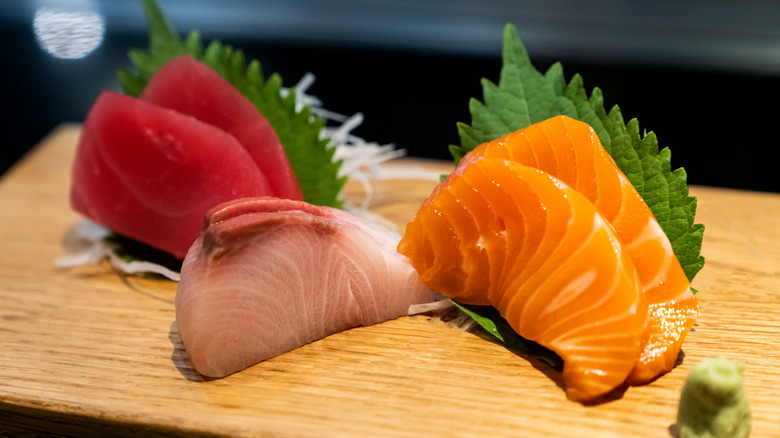
Benihana did an incredible job at popularizing teppanyaki, with many such restaurants now in New York and beyond. However, its influence on American culture didn't end there. It's no coincidence that the rise of Benihana led to an increase in Americans exploring Japanese cuisine more broadly. As Benihana's own website states, sushi is now enjoyed all over the world, and soy sauce has become an essential ingredient in restaurants and home cooking.
There are no studies on the link, but it feels as though Benihana helped to normalize Japanese food in the mainstream. These days, it's easy to find sushi bars, ramen shops, and authentic Japanese restaurants across the country. While Benihana may have also been a pioneer of entertaining cooking, it may perhaps be even prouder of helping to spread Japanese culture to America and beyond.
It was bought by One Group in 2024
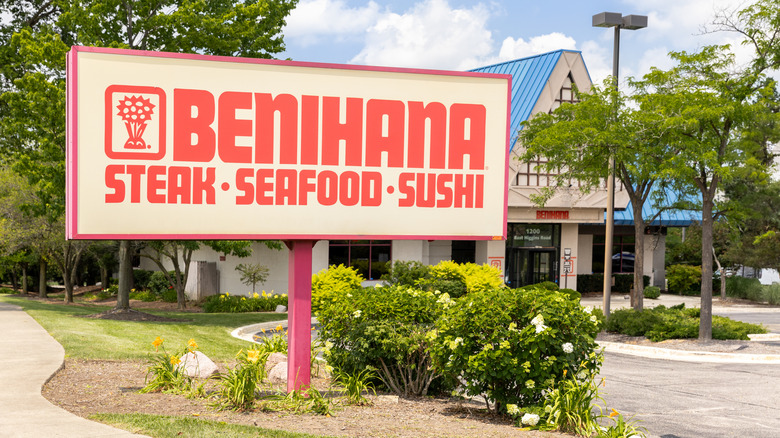
Benihana remained in Aoki's hands until he was found guilty of insider trading in 1999. At this time, he had ceded control of his company to a trust managed by his children and a lawyer. Aoki died in 2008 at the age of 69, and four years later, the company was purchased by a private equity firm. Angelo Gordon & Company bought the company for $296 million and kept it for 12 years until it was sold to One Group Hospitality Inc. for $365 million in 2024.
It may be argued that the company is now in better hands, considering dining is ONE Group's specialty. It has plenty of other great restaurants in its portfolio, including STK Steakhouse and Kona Grill. It remains to be seen the impact the group will have on Benihana, as ownership is still in its infancy. But it seems the theatrical teppanyaki dining experience is here to stay.
Chefs need extensive training
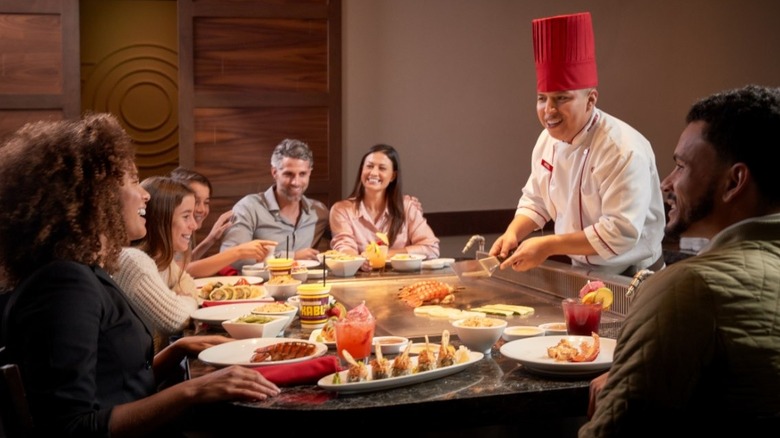
If you want to become a chef at Benihana, you need to be a lot more than just a great cook. However, the foundation of the restaurant is still built on the quality of food. Due to this, it's said that chefs aren't even considered for the position unless they have at least a year of relevant experience. Once on board, they go through a basic level of training that can last up to three months. However, you might be surprised to know that a lot of learning to become a master chef is done on the job.
Being a master of the tricks takes time and is likely to come with plenty of mistakes. No amount of training could truly prepare you for cooking and performing in front of real customers. Yet Benihana employs chefs who can do a complicated trick or laugh off a mistake while preparing a great meal. Due to this, Benihana chefs are usually expected to have plenty of charm and charisma. Purportedly, the pay isn't that much better than regular restaurants, but the tips are great.
The menu remains surprisingly simple
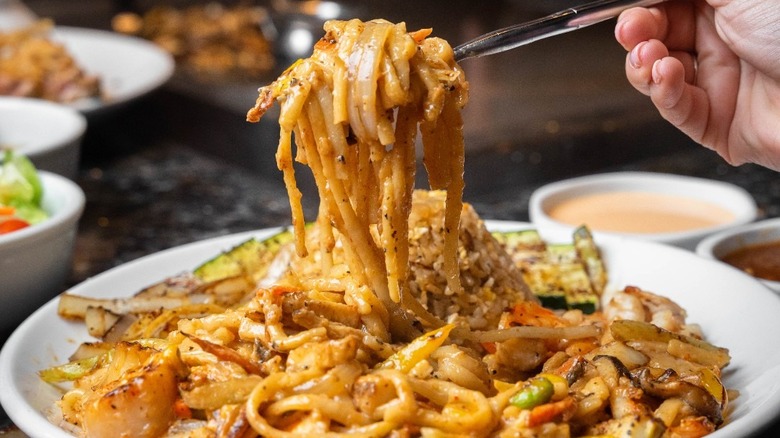
The theatrics of the chefs may seem complicated, but the menu has remained very simple. This makes a lot of sense. It would ruin a part of the fun if your chef had to continuously leave the grill pan to gather a wide variety of ingredients. Instead, the focus is mainly on providing delicious meat with a simple mix of tasty vegetables. This simplicity allows the chefs to ensure a high level of consistency while being able to delight the patrons with their performance.
This consistency allows it to always serve beautiful meals, even if the restaurant's frozen products don't live up to the same standard. When dining at Benihana, you generally have a selection of high-quality proteins paired with vegetables, rice, or signature sauces. Over time, it has proved to be all you need for a great Benihana experience.
It has some signature tricks
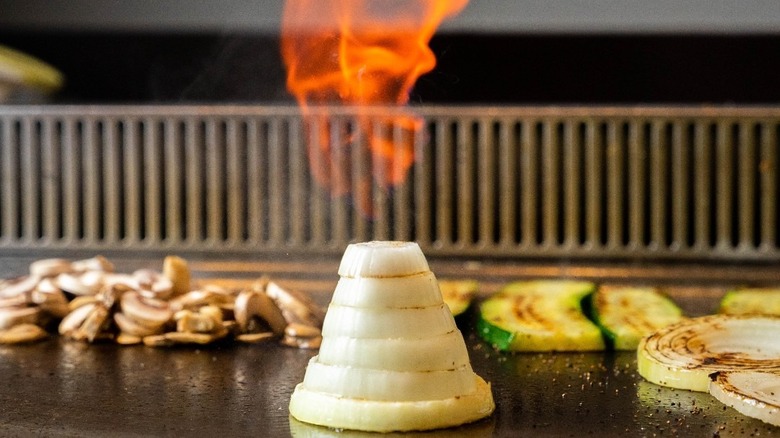
Benihana isn't a cheap restaurant. As we've seen, part of that is because you're not just paying for food. Whereas other restaurants may be able to prep food en masse, Benihana is a much more bespoke experience. A part of that uniqueness comes with tricks that the restaurant has pioneered and are still enjoyed today. One of those is the onion volcano. Onions are arranged into a cone, and clear alcohol and oil are added. The arrangement is lit, and a roaring flame briefly emerges from the "volcano."
There is also plenty of shrimp tossing going on. Sometimes cooked shrimp are tossed into the mouths of guests. Other times, chefs may perfectly flip the tails into their hats or pockets. Others, such as the fried rice heart, can be made to look like it's beating by a well-placed spatula. Added to these tricks are plenty of utensil-tossing, humorous chat, and perfect knifework. It all ensures that you leave Benihana with a smile on your face, and not just by having a full stomach.
Benihana is famous for its birthdays
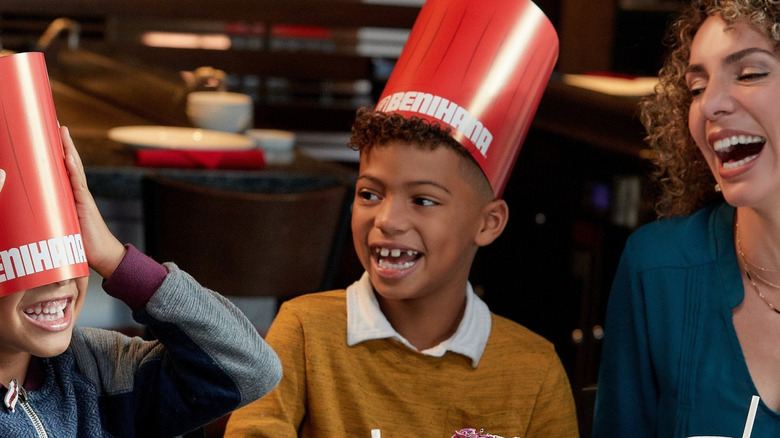
Benihana has long been a great place to celebrate birthdays. Many guests love to post on platforms like TikTok and Instagram to share their experience on the special day. Along with being able to use a $50 voucher if you are signed up, the Benihana chef would be happy to make you the star of the show and give you some personal touches.
There is no dedicated birthday service, but instead, diners are made to feel special. This can include some of its famous tricks being directed at the celebrant. Given the interactive dining and lively entertainment, it makes it a natural place for people to go for a celebration.
It showcases authentic décor
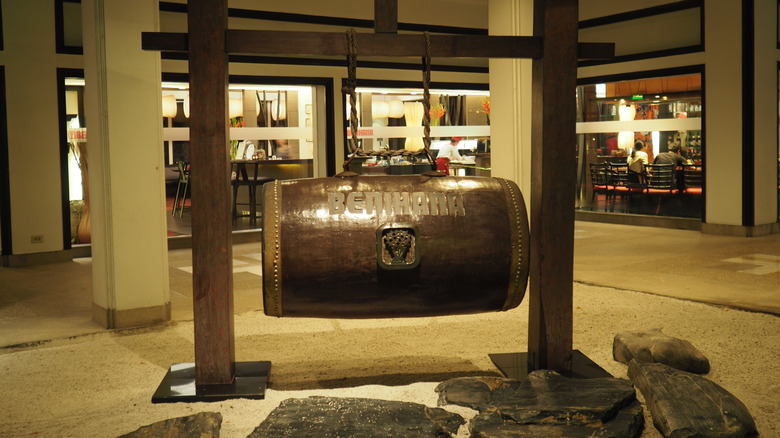
Among the many charms of a Benihana restaurant is the ability to sample a touch of Japanese culture. A lot of the restaurants have different designs, but many incorporate elements of traditional Japanese architecture. It combines a visually striking setting with the visual delights you get from the chefs.
Along with this can come a lot of subtle lighting and clean lines, giving that classic Japanese sense of calm and elegance. The teppanyaki setting is very Japanese, too, with communal dining being a hallmark of Japanese culture. Japanese artwork, calligraphy, and ornaments can further enhance the experience. Over 60 years since opening in America, Benihana is still staying true to its Japanese roots.
It has long been a spot for celebrities
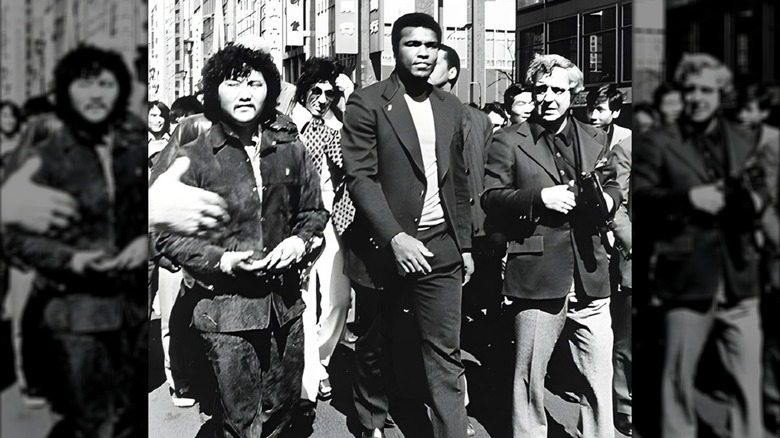
If you want your restaurant to become a hotspot of celebrities, it helps when one of the people who has eaten there is Muhammad Ali. Aoki became friends with Ali, who dined regularly at Benihana. Aoki even played his part in matching Ali against Mac Foster for a fight in Japan. Having a friendship with such a cultural icon no doubt helped the profile of Benihana. That celebrity appeal has never seemed to wane, with Benihana calling itself "the dining destination of choice for celebrities across the globe," (via Facebook).
Many modern celebrities still want to enjoy the Benihana experience, with Taylor Swift, Selena Gomez, Halle Berry, and Justin Bieber being some of the many names to have been spotted there. Given that the company offers private dining, there are probably many more we don't know about. The restaurant has also been featured in shows as Mad Men and The Office. It's clear that Benihana remains the place to be.
Benihana now has a global reach
Benihana originally opened in New York but has since spread to all corners of the U.S.A. Across the Americas, it has 77 restaurants, which include spots in the Caribbean, Central, and South America. In total, it has 105 locations across the globe, which include franchise and licenses. It's an impressive level of growth that now includes locations in Europe, the Middle East, and Southeast Asia.
The joy that Americans have experienced for many years can now be felt by anyone. What's interesting is how the restaurant hasn't expanded into Japan. This makes sense when you consider that teppanyaki was seen as a way to mesh Japanese cooking techniques with Western tastes. However, its growing international footprint shows the enduring appeal of people wanting to adopt Japanese culinary traditions and be wowed by its chefs.
It has a loyalty club
Since joining the One Group, Benihana has become a part of a loyalty program called "Friends With Benefits." It's the type of tongue-in-cheek name that Aoki probably would have been happy with. Through the loyalty card, you'll acquire points that you can use at Benihana, along with other participating restaurants of STK Steakhouse, Kona Grill, RA Sushi, Samurai, and Salt Water Social. Of course, there is also the $50 birthday reward we mentioned earlier.
This system replaced the old "Chef's Table" membership it had, but it's not the only one currently available. In addition to the adult loyalty system, there is also one for children called "Kabuki Kids." This is for anyone who is 12 years or younger. Along with a birthday certificate, birthday kids are also allowed to take home a souvenir mug when they get a Kabuki Kids meal.