

Make Dirty Sheet Pans Look Brand-New Using These Pantry Staples
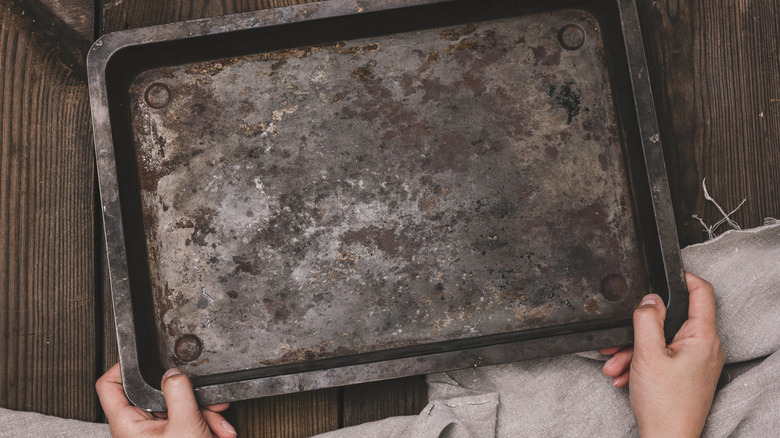
Sheet pans can be one of the toughest kitchen items to clean. This is often because we tend to overlook giving them a good scrub after each use. Unlike other cookware and bakeware for which immediate cleaning is a no-brainer, sheet pans are usually covered in aluminum foil or parchment paper when we utilize them, which may trick us into thinking they didn't actually get dirty. Spoiler: They did. Some grease somewhere soaked through and started a pile of build-up. A bit of food somewhere else clung to a corner you overlooked and really took root. Before you know it, you've got a sheet pan caked in an unappetizing assortment of remnants from meals past. And dirty baking sheets can actually make your food taste bad, because all that residue is baking onto whatever you use the sheet for next.
Luckily, there's hope. Even if you've let your sheet pan get away from you, it's easier than you might fear to make it look as good as new. It's also cheaper than you'd think, because you can use pantry staples you already have. The most tried-and-true combo is baking soda and vinegar. You undoubtedly have both on hand, and they're reliably, impressively effective. Just make a paste from two parts white vinegar and one part baking soda, spread the paste all over the pan, and let it sit for about half an hour. Scrub it off with a moistened sponge, rinse, and you'll have a shiny sheet pan.
Other effective sheet pan cleaning methods
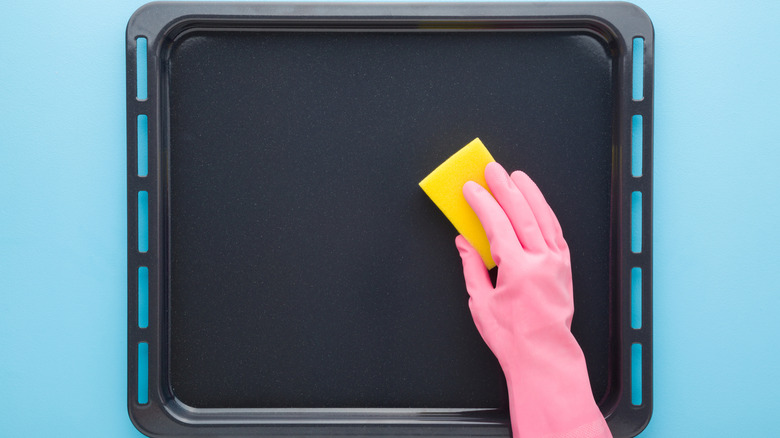
There are many genius ways to clean your kitchen with baking soda — it's somewhat abrasive and also chemically reacts when combined with an acid , like vinegar, to create a strong, grime-busting solution. It works wonders for everything from cutting boards to oven doors. For your sheet pan, you can also combine baking soda with hydrogen peroxide. You'd make a paste here, too, with a few tablespoons of the hydrogen peroxide; then follow the steps of the baking soda and vinegar process. Spread it over the pan, wait around 20 minutes, scrub, and rinse.
Another good baking soda partner you have in your pantry? Dish soap. Again, you'd let a combination of baking soda and dish soap hang out on the sheet for a while before scrubbing and rinsing. If you realize you're out of baking soda, don't panic — there are, in fact, solutions without it. You can substitute cream of tartar for baking soda in a vinegar solution and get similar results. Or, you can lay dryer sheets over your pan in the sink, add dish soap, fill the pan with water, and let it sit for a few hours up to overnight. When you rinse it, you'll find the build-up easily lifts off, and you can scrub the pan clean.
The best way to ensure easy, effective cleaning is prevention. Start rinsing pans with warm, soapy water after each use, and do a thorough scrub with one of these methods every few months.