

The Appliance Secretly Driving Up Your Power Bill Isn't The Fridge Or Dishwasher
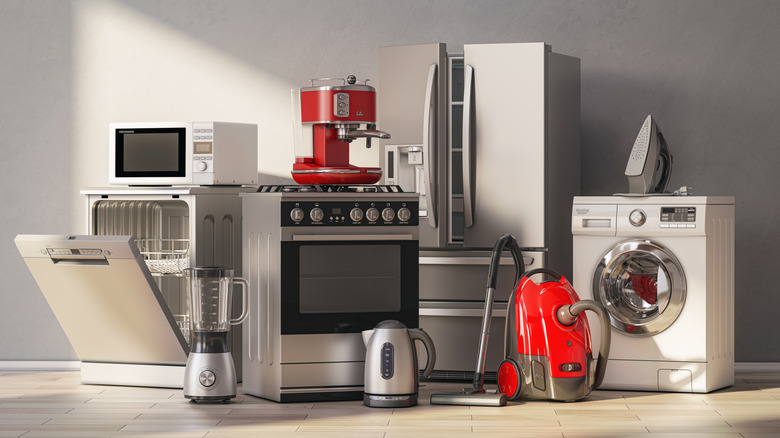
Remember getting scolded for "air conditioning the whole neighborhood"? Turns out, the grown-ups of yesteryear were right, wasting energy is an invisible leak. But if you're looking for the real culprit behind your sky-high power bill, it might not be your fridge humming in the corner, or the dishwasher swishing away after dinner. The real energy hog is the oven: Every time you preheat, you're summoning industrial-scale heat for a home-sized task. Energy use-wise, the oven is the Cadillac SUV of the kitchen. It's awesome and powerful, but wildly inefficient for short trips. Electric ovens typically draw between 2,000 and 5,000 watts, compared to about 700 watts for a refrigerator and 1,200-2,400 for a dishwasher. Each preheat is a power surge, a miniature furnace roaring to life so you can roast a single sweet potato or reheat yesterday's pizza.
Ovens are power-hungry by design. They rely on resistive heating, the coils converting electricity directly into heat, and unlike a fridge or dishwasher, which use electricity to power a motor or pump, the oven's job is to lose heat; it doesn't recycle or retain it. It's an open system, fighting constant loss through insulation and the air itself. According to Department of Energy data, most households prepare at least one hot meal per day at home, and though the oven accounts for only a small percentage of a household's total energy use, when it's running, it draws more electricity per minute than almost anything else in the kitchen.
Using your oven without spiking your power bill
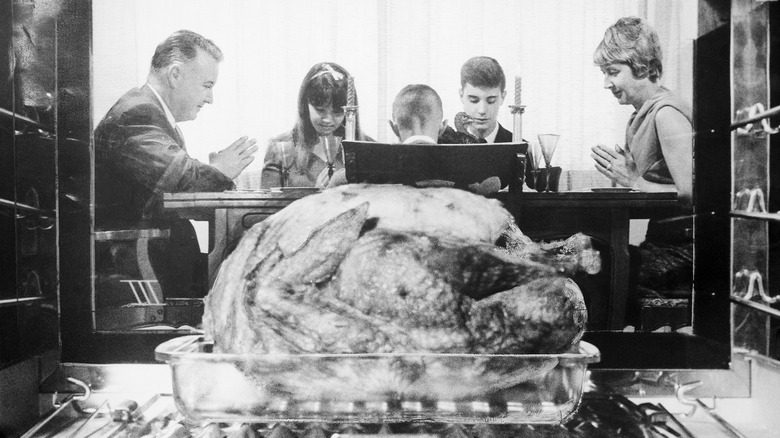
Once upon a time, ovens worked differently. They were built around retained heat, brick hearths and wood-fired stoves that stayed warm for hours after a single burn, using that ambient heat for baking, roasting, and drying. A cook could plan a whole day's worth of meals around one fading glow of the embers. By the mid-1800s, gas ovens began replacing coal and wood stoves, offering cooks a controllable flame. Around the turn of the 20th century, thermostats made it possible to regulate the heat with accuracy. Electric ovens followed soon after, gaining popularity as access to household electricity expanded. They were cleaner, easier to install in smaller kitchens, and required less ventilation than gas, making them the default in many modern homes.
Convenience changed our relationship to heat. In trading wood and flame for buttons and coils, we forgot that heat was once a finite material, something to be used, stretched, and respected. Instead of tending a flame, we preheat on autopilot, letting thousands of watts roar to life for a single sheet pan dinner. Modern ovens are tools of abundance, but using them efficiently means being strategic, by batch cooking, overlapping dishes, and taking advantage of residual warmth after the timer dings. If you're just making a handful of roasted carrots or reheating leftovers, a toaster oven or countertop air fryer uses a fraction of the energy. To save more, resist peeking, because every open door dumps pricey heat into nothingness. Keep pans centered to maximize airflow, and match cookware to the task: glass and ceramic hold heat longer than thin metal. A little awareness goes a long way. After all, the most elegant kind of cooking doesn't just make good food, it respects the fire it borrows.