

10 Kitchen Upgrades That Aren't Worth The Money, According To Pros
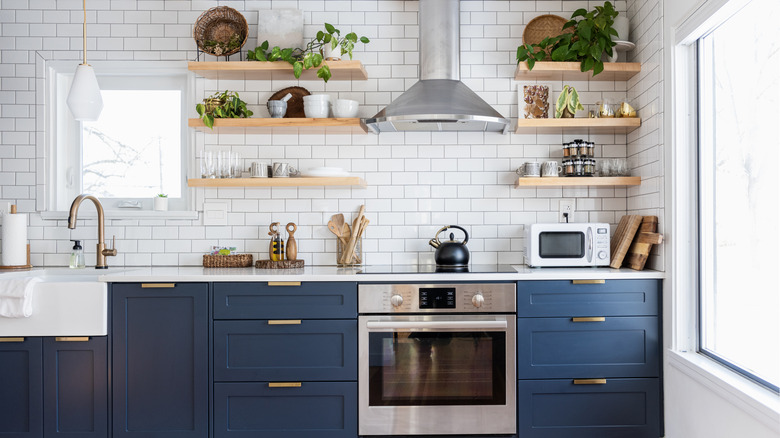
There are several reasons why you may have been feeling that itch to upgrade your kitchen. Attracting a more lucrative resale value is an obvious benefit, yes, but strategic upgrades can also improve the functionality of your everyday cooking experience. Boosting the aesthetic appeal of the space is another worthwhile reason to invest in some design and functional value-adds. But when you weigh the cost versus benefit of certain upgrades, you'll find that the scales do not always balance.
If you are looking to future-proof your kitchen investments, it helps to consider certain factors before making a big splashy purchase. Are your chosen upgrades heavily influenced by trends that might die out soon, such as color-of-the-year cabinetry? Given the cyclical nature of trends, what is old will always be new again, but you will be stuck with outdated elements in the interim. Heavy maintenance costs and upkeep are other silent thieves that can rob the value of your investment in the long run — you can witness these in full with high-end elements, such as marble countertops and luxury backsplashes.
So, how can you tell the difference between an improvement that will dial up the resale value of your home versus the duds that will silently drag it down? We called upon Melissa Schneider, co-founder and lead designer at Homes Innovation, and Monica Gounaropoulos, founder of Spiti Interior Design, for help. Together, they decode the kitchen upgrades that aren't worth your time and money.
Specialty appliances
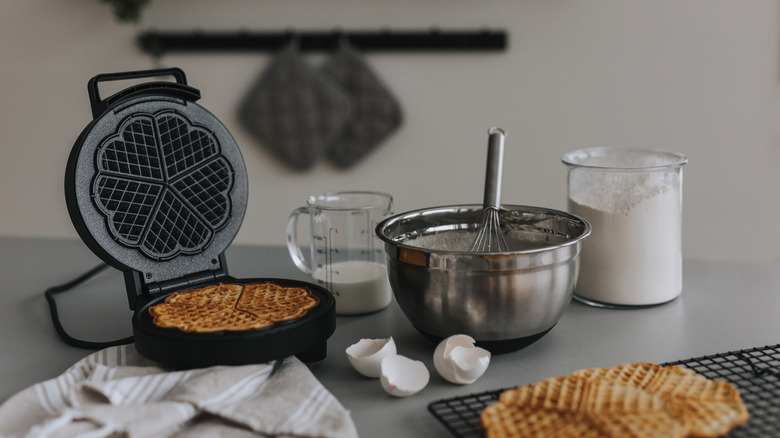
What do waffle makers, ice cream churners, and s'mores makers have in common? There is a good chance that they will be relegated to the back of your kitchen cabinet once the excitement wears off. According to Melissa Schneider, co-founder and lead designer at Homes Innovation, specialty appliances can be broadly split into two categories: "The built-ins that look seamless and cost a small fortune, and the ones you stash in a cabinet until inspiration strikes." The former can include everything from induction cooktops and wall ovens to smart fridges and warming drawers — all of which are guaranteed to inflate your kitchen budget. However, these gadgets may not increase the perceived value of your kitchen to potential buyers as easily as other coveted design elements. Instead, you'll find that refreshed cabinets or updated countertops are among the kitchen upgrades that can increase the value of your home.
Beyond offering limited functionality, many novelty gadgets replicate your existing appliances. Convinced that you need a pizza maker? The good news is that you have one in your kitchen already: the oven. "Some items are fun to dream about, but not every splurge adds value or earns its keep," Schneider says. Instead, she finds that it is helpful to thoroughly research, read reviews, and compare brands before making any big purchases.
Warming drawers
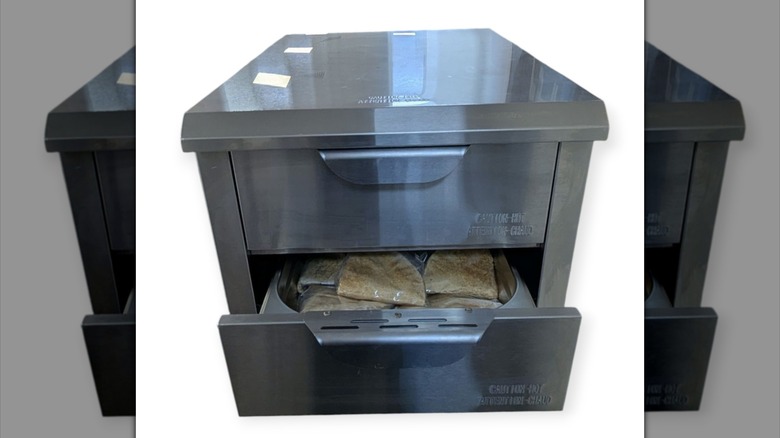
As your dinner guests cluster around the table, you slide open your warming drawer to reveal an array of gourmet steaks — grilled to perfection and nesting at the right temperature. It is a tempting dream, but not one that needs to blow a hole through your budget in the process. After all, with some careful planning and strategic timing, you can easily ensure that your meals are served warm to guests with your existing gadgets.
While Melissa Schneider agrees that adding a warming drawer to your kitchen makes for an effective flex, she also cautions that these can run between $1,000 to $3,000 depending on the brand — a massive chunk of change to shell out for a drawer that is doing what your oven can do already at a low temperature.
Ultimately, deciding whether the hefty price tag of these drawers is money well spent depends on your needs. "If you're the kind of person hosting five-course dinners on a Tuesday, then yes, I fully support this purchase — and also, please invite me over," she says. But for those who aren't into the frills and formalities of hosting, she believes it will not offer much daily usage. It also helps to remember that warming drawers come with a complicated installation process and can take up valuable real estate in smaller kitchens.
Double kitchen islands
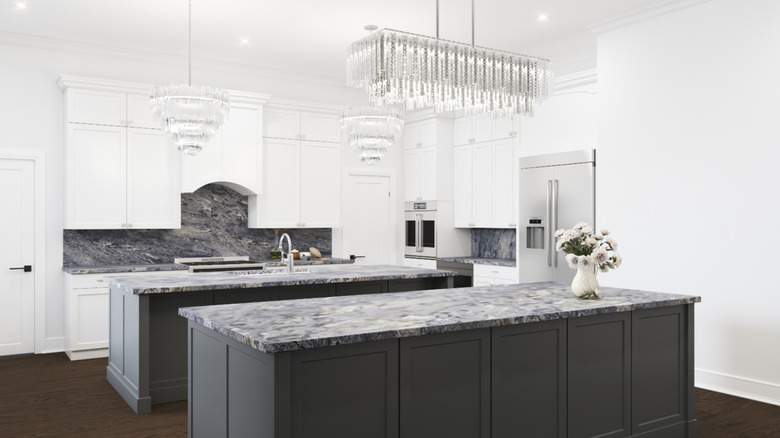
On paper, adding an island to your kitchen can sound like hitting the ultimate jackpot. Additional workspace, storage, and seating: What's not to love? In fact, the notion of kitchen islands is so lovable that a new trend has people adding two islands within one kitchen.
"Some homes are blessed with the kind of square footage that just begs for not one, but two kitchen islands," Melissa Schneider says. When planned strategically, she believes that double kitchen islands can make a strong visual impact: one island can be used for seating and storage, while the other can be kitted out with state-of-the-art appliances. "But let's be real, most homes aren't sprawling 4,000 to 5,000 square-foot estates, and forcing in a second island can make the space feel crowded," she says.
It is easy to grasp the wisdom behind her words. In space-starved kitchens, the addition of a second island can make the space feel unnecessarily cramped. In fact, even if you stick to just one, there are some kitchen island mistakes that can make your space appear smaller than it actually is. You'll also need to remember that double islands means double the maintenance costs and upkeep. Instead, Schneider recommends opting for more efficient workarounds, such as adding a miniature butler's pantry. With a small expanse of countertop, storage, and perhaps a small second sink, she believes that you can get the additional workspace that you need without overwhelming the main kitchen.
Color-of-the-year cabinetry
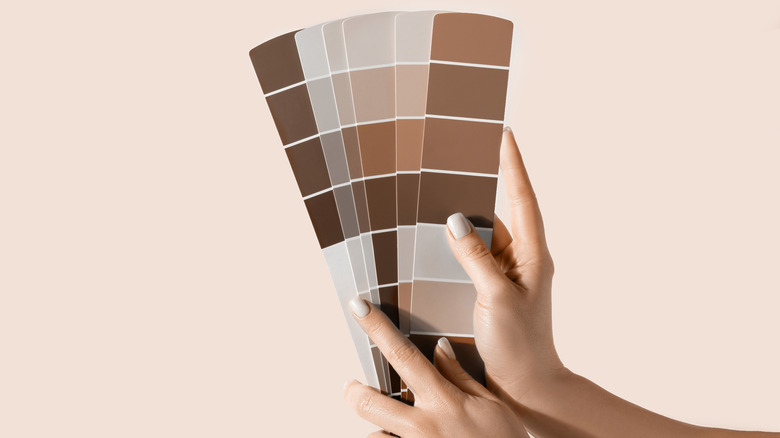
It is a cycle that plays out unfailingly every year: Global color authority Pantone announces the color of the year and suddenly, everything from your light fixtures to kitchen towels are expected to follow suit. It is easy to get caught up in the excitement — indeed, no one can deny the charms of this velvety color-of-the-year mocha mousse recipe. But the fast-paced turnover of trends means that what is trendy today will be dated tomorrow.
Monica Gounaropoulos, founder of Spiti Interior Design, has found that color-of-the-year fads often amount to little other than short-lived trends that feel outdated quickly. She believes this is particularly important when it comes to crucial design elements that can define the space, such as cabinetry. Rather than opting for quirky colors, she believes it is safer to opt for safer choices, such as timeless neutrals, if you hope to sell your place anytime in the foreseeable future. If you are looking to fast-forward through hours of research, it helps to bookmark some classic options from this round-up of timeless kitchen cabinet colors that never go out of style.
In case you have been bitten by the creative bug, Melissa Schneider believes that there is scope for a handy compromise. "My go-to combo is a classic white on the uppers and something fun, rich, or trendy on the lowers. That way, when styles shift, and they always do, you only have to update half the kitchen instead of all of it," she says.
Excessive light fixtures
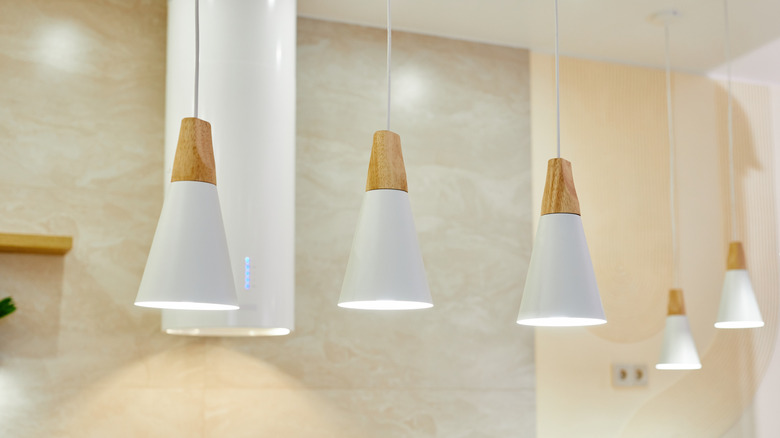
Given the detail-oriented nature of tasks that are performed in the kitchen, from chopping to rinsing, more lighting fixtures might sound merrier. However, it is possible to have too much of a good thing. If you find yourself tempted to buy every possible pendant, wall sconce, and ambient strip lighting that the hardware store has to offer, it might be time to pause. Multiple fixtures can visually clutter the place and, if placed improperly, create harsh glares and shadows. You may only need between four and six light sources in your kitchen.
Beyond the number of lighting fixtures, Melissa Schneider also believes that there is one common stumbling block where many homeowners falter: scale. In her experience, the most meticulously designed kitchen can fall apart if the light fixtures are too small or dominating for the space. "Nothing makes me cringe faster than a huge island with three tiny pendants floating above it," she says. If you are looking to uncomplicate matters, she recommends a simple rule of thumb to follow when hanging decorative light fixtures in the kitchen: "Hang pendants about 30 inches apart on the ceiling, and keep them 30 to 32 inches above the countertop. It's an easy guideline that always looks polished and intentional," she says.
Luxury backsplash
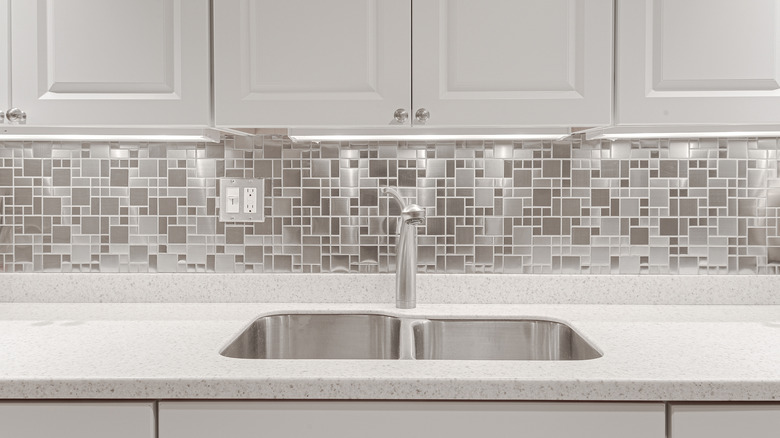
The primary purpose of a kitchen backsplash is to shield the walls against splatters and spills. Sure, it can add to the aesthetic appeal of your kitchen, but that is a secondary task. If the backsplash is allowed to become the focal point of the design, you may find your budget ballooning rapidly — and that is before you factor in the long-term maintenance costs that come with most high-end materials.
Melissa Schneider agrees that there are several landmines to watch out for when designing a backsplash. Shiny metallic tiles and glass mosaics are far from carefree. Textured surfaces, meanwhile, are guaranteed to serve as a trap for grease and build-up that can be a headache to clean — especially when used around the stove. Wallpaper and mirrors in the kitchen? "As my friend Cher would say, 'As if!'," she says.
If you are looking to dial up the visual impact of this area, there are many affordable kitchen backsplash ideas worth considering. Subway tiles with contrasting grout colors can breathe fresh life into this timeless staple. Beadboard, exposed brick, penny tile, and laminates are all worthy candidates that won't be too heavy on the pocket.
Glass-front pantry doors
There was a time when choosing a pantry door was a quick task. However, with the sheer breadth of options available on the market, this process has become slightly lengthier. Depending on the effect you are aiming for, whether it be a rustic farmhouse or industrial concept, you'll find an endless array of options to choose from, including rustic barn-style doors, pocket doors that disappear into the wall, and glass doors. The latter comes with some essential caveats.
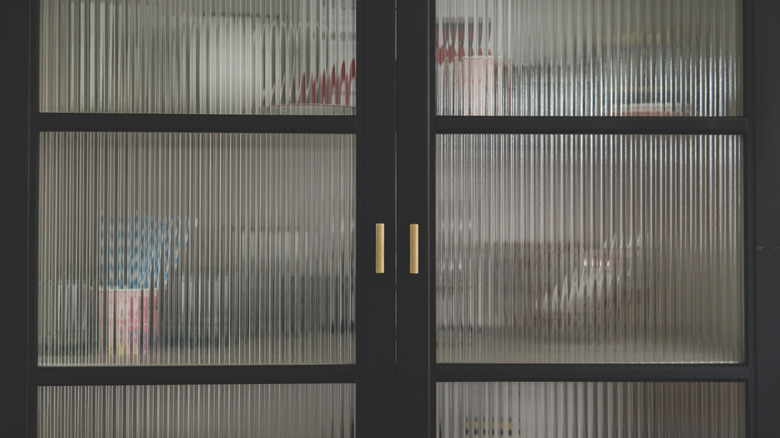
"Nothing lights up a designer like the chance to get playful with a project like custom pantry doors," Melissa Schneider says. She has witnessed the design evolution of kitchen pantries from something that needs to be hidden to enjoying its time in the limelight. But she advises against creating a fishbowl effect by opting for clear glass doors. Why? For starters, nobody's pantry is ready for the camera around the clock. Crumbs, spills, dust, and visual clutter will all be visible for the world to see — you can kiss goodbye to any notions of privacy that you were harboring.
If you do find yourself leaning in favor of glass doors, Schneider recommends opting for smarter finishes than with clear glass. Frosted panels, stained glass, and reeded textures have all won her vote. By enlisting the help of coordinated storage baskets, bins, and acrylic containers, you can maintain some semblance of order behind the scenes.
Rolling pantry ladder
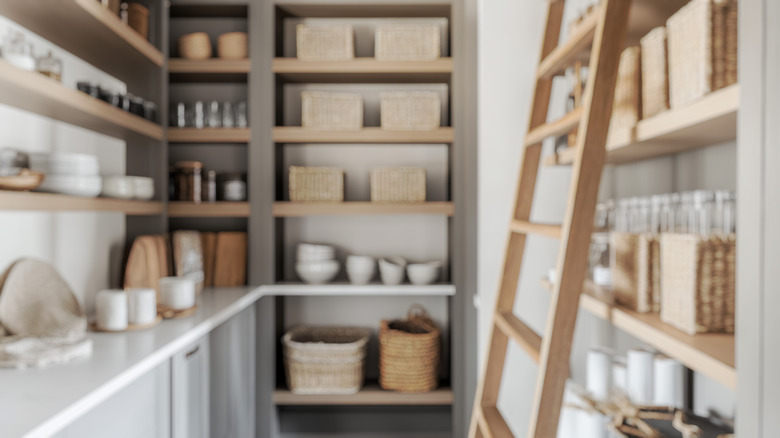
There is no denying the quaint charms of a rolling ladder that glides smoothly across your kitchen pantry to help you access the uppermost shelves. While it might look perfectly at home in a sprawling country estate with high ceilings, a rolling ladder can end up overwhelming the space in most standard-sized kitchens. You'll also want to factor in the installation costs of the rails and compare that to modern shelving solutions, such as pull-down shelves.
"A rolling ladder in a walk-in pantry is one of those jaw-dropping features that feels right up there with motion-activated lights in your wardrobe closet — totally fabulous and completely extra," Melissa Schneider says. But it may not serve as an effective storage solution for everyone. She believes that unless your pantry is tall and optimized right to the ceiling, the ladder might end up as more of a decorative prop rather than a functional element.
If you are hoping to truly maximize the storage potential of your kitchen, she recommends inspecting every wall and corner closely. You'll likely discover possibilities for adding tiered shelving from the floor till the ceiling and hanging organizers on the back of the door. "The smartest pantries don't waste an inch, and often the best 'wow' factor is how efficiently the space actually works," she says.
Marble countertops
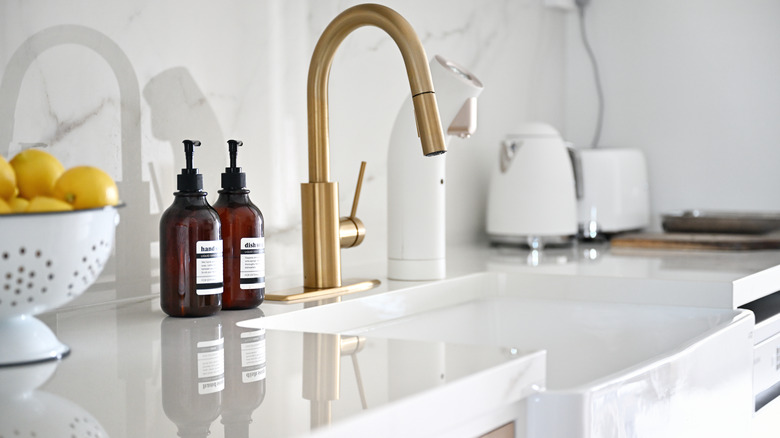
There are few things that will have potential buyers queueing up at your door like the sight of a gleaming expanse of marble along the kitchen countertops. While this high-end material can add some value to your home, it comes with an equally long list of maintenance requirements.
And you don't have to take our word for it, either. When quizzed about the high-ticket upgrades that aren't worth the money, Monica Gounaropoulos found herself instantly thinking of luxurious marble countertops and other natural stones. "These materials look fantastic, no doubt — and they come with a high price tag. But they're very susceptible to staining and scratching, so they can quickly become a headache," she cautions.
Let's examine the evidence: Marble is a porous material. This means that staining agents, such as coffee, tea, and fruit juices, will sink deep into the surface. Your marble countertops might forgive, but they won't forget that accidental spill. A quality sealant can help to an extent, but you'll need to be prepared to redo the process as often as four times a year. Scratches and scuffing? You can forget about getting away with those. With the tendency to develop a patina over time, the polished slab you brought home is likely to dull with the passage of time — as is your patience with the maintenance and upkeep that this material requires.
Floating shelves
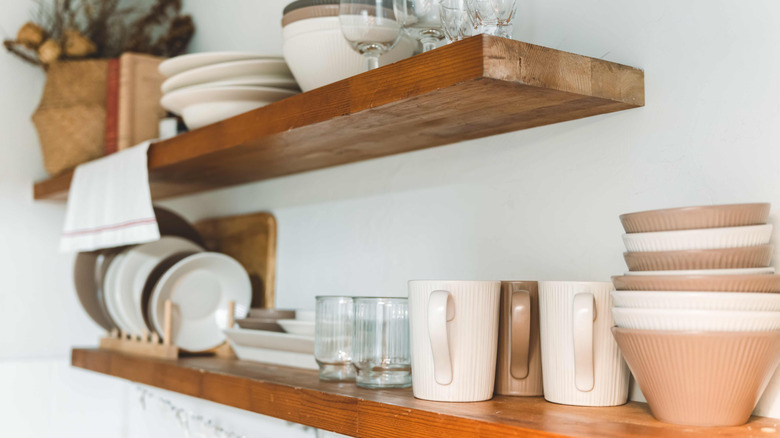
Leveraging vertical storage is the kitchen organization hack that'll save you so much space. This is where floating shelves can feel like a godsend for adding some crucial storage options to a space-starved kitchen while also scoring brownie design points with their sleek, modern design. But will you be sacrificing practicality for mere aesthetics? Monica Gounaropoulos seems to think so. "Open, floating shelving is another design aspect which can look beautiful but quickly becomes impractical in a high-functioning kitchen," she rues.
Her logic is easy to follow. For keeping the shelves uncluttered, you'll need to opt for a minimalistic approach that will leave this valuable real estate underutilized. Or you could choose to use these shelves to their full capacity; you'll just constantly need to work on keeping the mess at bay. On the subject of capacity, it also pays to bear in mind that floating shelves cannot do much heavy-lifting in the storage department — in the most literal sense of the term. You can expect to store light knick-knacks here, such as succulents and picture frames, but bulky items are a no-no. Since floating shelves are attached to the wall without visible brackets or screws, they lack stability and do not have the same storage capacity of conventional cabinetry. If you are willing to sign up for limited use as well as constant cleaning and curation, floating shelves can work for you — otherwise, you'll need to toss this on the "no" pile.