

Overnight Oats Or Chia Pudding: Which Is Better For Fiber And Protein?
We may receive a commission on purchases made from links.
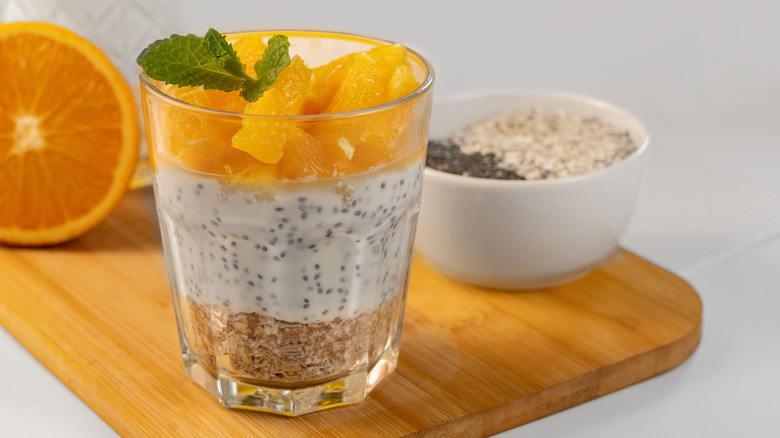
Sisters but not twins, chia seed pudding and overnight oats offer convenient, nutrition-forward, make-ahead options for a fueling breakfast during busy mornings. Both dishes consist of dry ingredients hydrated in a dairy component to become texturally soft, rich, and creamy. But, just as each dish provides its own tasting profile and mouthfeel, each also comes with its own respective health benefits. When it comes to nutrition, overnight oats win for protein and chia seed pudding wins for fiber.
The FDA recommends a daily intake of at least 50 grams of protein and 28 grams of fiber every day for adults. On the breakfast table, protein doesn't have to mean meaty bacon. Discerning home cooks can add protein to their favorite plant-based breakfasts with a little nutritional know-how. Enter: Overnight oats. In addition to protein, many modern foodies are also looking to incorporate more fiber into their daily diets. Enter: Chia seed pudding. Overnight oats boast about 24 grams of protein and 5 grams of fiber, while chia seed pudding packs roughly 17.4 grams of protein and 20 grams of fiber. Depending on foodies' unique health goals and needs, one offering might be a better-suited morning meal (or late-night snack) option than the other.
Overnight oats deliver day-fueling protein
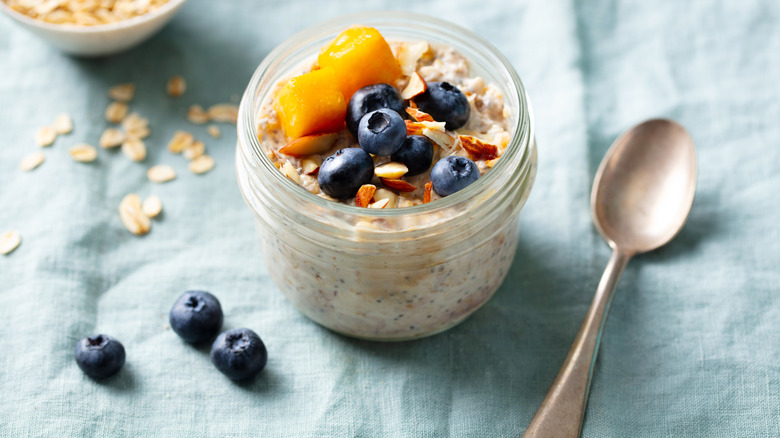
Using Tasting Table's strawberry overnight oats recipe as a jumping-off point, one serving of overnight oats includes ½ cup of rolled oats, ⅔ cup of milk, and ⅓ cup of Greek yogurt. The ½ cup of dry rolled oats packs 5 grams of protein and 4 grams of fiber. An eight-ounce serving of cow's milk packs 8 grams of protein. For dairy-free foodies, soy milk is the plant-based alternative with the highest protein content, matching dairy milk at 8 grams per eight-ounce serving (or around 5 grams in the overnight oats' ⅔ cup of milk). Greek yogurt packs more protein than most other types of yogurt – roughly 11 grams per ½ cup, but just 0-1 grams of dietary fiber. In total, that shakes out to about 24 grams of protein and 5 grams of fiber in a single serving of overnight oats.
It's worth mentioning that some overnight oat offerings are fortified with enriched fiber content. Here at Tasting Table, our favorite brand of store-bought, ready-to-make overnight oats is Oats Overnights' salted toffee oats flavor, which boasts 20 grams of whey protein and 6 grams of fiber per serving. Foodies looking to incorporate even more plant-based protein and healthy fats into their diet might stir in a spoonful of almond butter, which delivers 3.4 grams of protein, 1.6 grams of fiber, and 9 grams of fat. Other high-protein overnight oat toppings could include hemp seeds, pepitas, guava, or a sprinkle of vibrant spirulina powder.
Chia seed pudding packs gut-healthy fiber
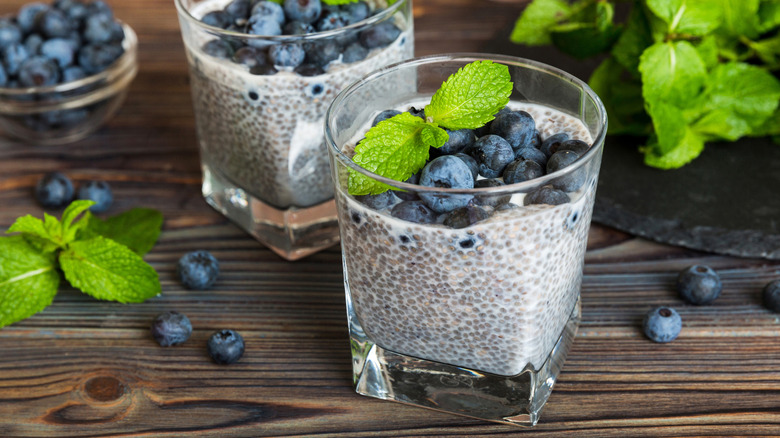
Chia seeds pretty much exemplify the "small but mighty" adage. These ultra-tiny beads are fiber and omega-3 nutritional powerhouses, improving digestive health, promoting blood sugar maintenance, and even lowering blood pressure. In fact, by weight, chia seeds are 17% protein, 31% fat, and 42% carbs — 82% of those carbs consist of fiber. Similarly using this classic chia seed pudding recipe as a jumping-off point, one serving of chia seed pudding includes four tablespoons of chia seeds and one cup of milk. Four tablespoons of chia seeds pack roughly 20 grams of dietary fiber and 9.4 grams of protein. Adding the 8 grams of protein from the full cup of milk, that totals 17.4 grams of protein and 20 grams of fiber.
Fiber helps foodies stay fuller longer, which can be helpful for curbing hunger on busy days or meeting weight loss goals. Unlike oats, chia seed pudding also offers the benefit of omega-3 fatty acids, an essential nutrient found in nuts, fish, and seeds that reduces bodily inflammation and promotes heart and brain health. For an extra kick of fiber, toppings to elevate chia seed pudding could include medjool dates (3.2 grams of fiber per two dates or 48 grams), raspberries, blackberries, cubed pears, apples, or slivered almonds.