

This Sleek Backsplash Trend Looks Great, But Has Trade-Offs
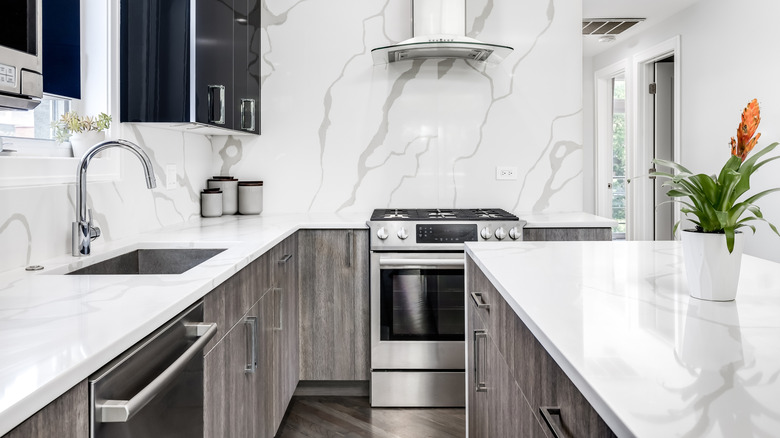
Kitchen design trends are ever-changing, and no place in your kitchen, not even your backsplash, is immune. For years, the go-to standard for backsplashes was tile, which is easy to fit into different spaces and allows for all kinds of unique and bold designs that can add character to your kitchen. But over the last few years, another trend has reared its head and started to replace tile as the dream choice on everyone's Pinterest boards: the slab backsplash.
Slab backsplashes are called that because, unlike tiles that are made up of many pieces fit together, slab backsplashes are single blocks of material that cover a wall space with no interruption. Often made from quartz, marble, and other popular kitchen countertop materials, slab backsplashes have gotten popular because of their clean and more minimalist design, along with the natural looks of the stones used.
However, tile was a common kitchen backsplashes material for a reason, and even if you prefer the style of a slab, they have some big tradeoffs and downsides compared to other options. The biggest is cost, which comes from both the materials used and the labor needed. Cutting one big piece of material to fit into custom spaces is something that requires specialized workers to craft, and the installation of these heavy pieces also requires an expert team. This makes slab backsplashes out of the question for people who are looking to save money by making it a DIY project.
Slab backsplashes require a professional team, expensive repairs, and pricey material
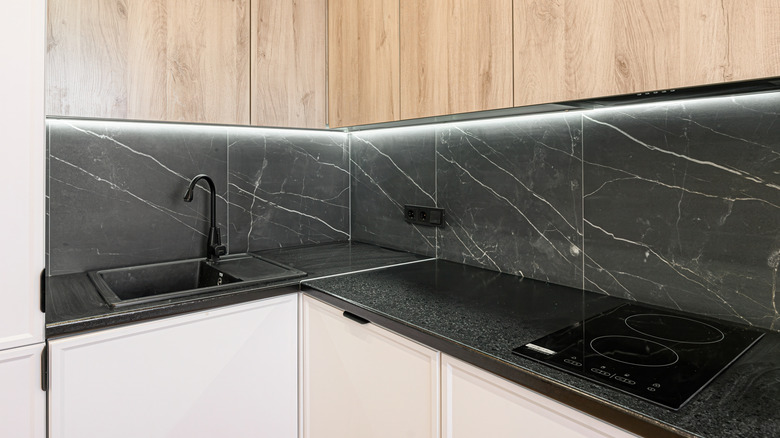
The material is also a big part of the cost of slab backsplashes. A quartz or marble backsplash can cost around $90 per square foot, which can be almost nine times as much tile. A cheaper material like granite can still cost between $50 and $75 per square foot. Even if some tile is more expensive, that's likely more than double what you would spend. That price and difficulty also extends to repairs. If you damage a tile, you can replace one at a time. But being one piece, slab backsplashes are very difficult to repair. Some minor scratches and chips can be fixed, but more significant damage can mean replacing the entire slab. That's another big cost to worry about.
Finally, being mostly made from stone materials, slab backsplashes don't have as much customization available as tile. They can look great in a modern and sleek kitchen and have a nice effect when paired with marble or granite countertops of the same style, but the limited pattern and color palette means they simply won't work with some designs.
If you do choose them, slab backsplashes can provide a beautiful, natural look, and have the advantage of being easy to clean with their smooth, uniform surfaces. And while they can be damaged, they are quite durable. But just be ready to spend plenty of money, and don't expect that you'll be able to take care of it yourself.