

10 American Dishes That Make No Sense To The Rest Of The World
It's no secret that Americans love their food. In fact, a 2022 survey of 2000 U.S. adults found that over half admitted to loving food more than anything, and as fellow foodies, we aren't going to argue with that. Hearty fast-food classics like pizza, burgers, and fries are big hits in the States, and Tex-Mex dishes like nachos and chili are incredibly popular, too. Everyday meal choices are also heavily influenced by Asian cuisines, with sushi and Chinese-style noodle dishes being firm favorites. And, let's not forget the tempting selection of sweets that are synonymous with America, from pillowy glazed donuts to creamy cheesecakes and comforting fruit pies.
While most of the aforementioned dishes have relatively universal appeal, not all American-style foods are quite as popular outside of the U.S. Some dishes that have long served as beloved treats for Americans are deemed downright odd in other parts of the world. Sometimes, this is down to a seemingly unconventional pairing of ingredients, where sweet and savory flavors collide. Or, perhaps there's a level of richness and indulgence that doesn't quite fit into other culinary realms. From cozy casseroles to deep-fried treats, America is home to some undeniably divisive creations. But, we reckon the sceptics would soon be converted if they were willing to give these dishes a try.
Sweet potato casserole
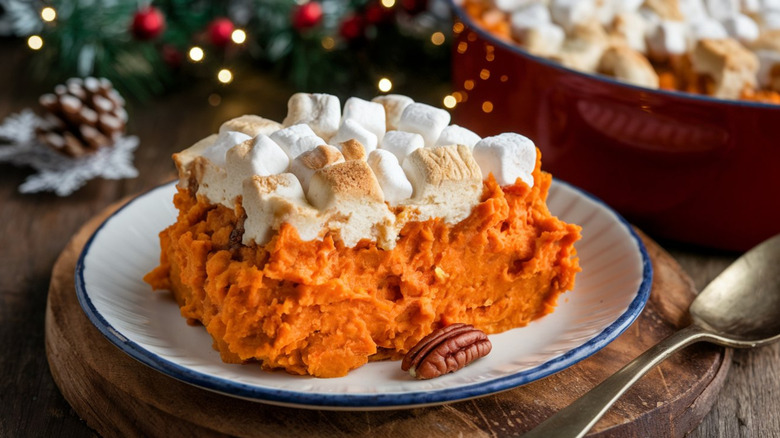
A true Thanksgiving classic, sweet potato casserole is a holiday side dish like no other. Its combination of hearty sweet potato and fluffy marshmallow is a favorite for many Americans, but this dish is often considered a rather odd concept by those who've never sampled its unique taste. Admittedly, pairing an intensely sweet ingredient like marshmallow with a vegetable doesn't feel especially natural, but somehow, they come together beautifully. Often infused with warming spices and studded with crunchy pecans, this casserole is wonderfully comforting. And, the creamy sweet potato and melty, caramelized marshmallow make for a delightful medley of textures. Sweet potato casserole is typically served alongside meats like turkey and ham, and other savory holiday side dishes.
For those who really can't get on board with the marshmallow-potato combo, you could always opt for a savory sweet potato casserole with bacon instead. Made with lashings of heavy cream and cheese, it's just as indulgent, but with a saltier, smokier flavor profile that's better suited to those who lack a sweet tooth.
Chicken and waffles
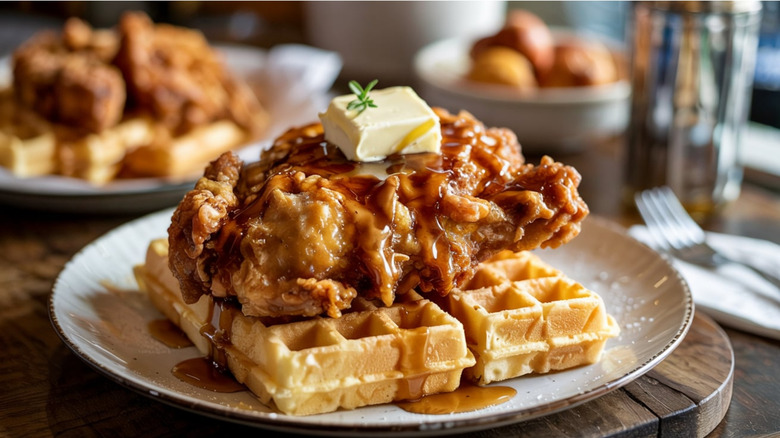
In many parts of the world, fried chicken and syrupy waffles are two foods that remain very much separate. The former might be enjoyed alongside fries, rice, or salad, while the latter typically serves as a sweet breakfast treat, perfect for piling with fresh fruits or swirls of whipped cream. However, in the U.S., it's not uncommon to find chicken and waffles on one plate, and this dish is a favorite on cafe menus and home dinner tables alike. This versatile mashup of sweet and savory can be enjoyed at any time of the day, and the contrast of soft and crunchy textures is exceptionally satisfying.
Chicken and waffles are particularly popular in the Southern States, although these two foods were allegedly first combined by the Pennsylvania Dutch in the 1600s. Early versions involved piling the waffles with shredded chicken and a savory gravy, but over time, the dish has evolved into a sweeter, more indulgent affair. Modern dishes see chicken thighs or breasts soaked in a buttermilk mixture, then dredged in seasoned flour, before they're deep-fried to golden, crispy perfection. The succulent chicken is then served atop fluffy buttermilk waffles and finished with a sweet sauce or syrup. We love adding a little booziness to chicken and waffles with the addition of a warming bourbon-maple syrup, but a spicy chili-honey butter makes for an equally delicious topping.
Fluffernutter sandwiches
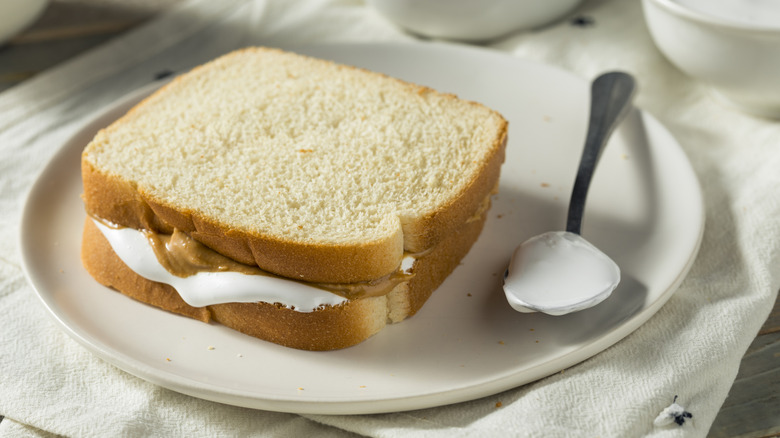
There's so much to love about the fluffernutter sandwich. As well as being incredibly easy to whip up, this indulgent treat offers plenty of nutty, salty, and sweet flavor, with a mouth-watering combination of creamy spreads and soft, fluffy bread. However, if you don't have a sweet tooth, you might be better off sticking to a classic ham and cheese.
The fluffernutter is an all-American invention, and its popularity has remained relatively contained within the States. This sandwich is much-loved in Massachusetts, where it first originated back in the early 1900s. It was Emma Curtis, a descendant of the American revolutionary Paul Revere, who came up with the concept. She published the recipe to promote her product — Snowflake Marshmallow Creme, which she spread between slices of bread along with a generous helping of peanut butter. She coined her creation the "Liberty Sandwich," and it soon became a hit across New England and beyond. The sandwich later evolved to feature marshmallow fluff rather than creme, hence the term fluffernutter was born.
Today, you'll find various takes on the original sandwich, such as those featuring sliced bananas or stuffed with crunchy potato chips. You can transform this dish into a decadent French toast stack, or even swap the bread for peanut butter cookies, for a more dessert-like approach.
Biscuits and gravy
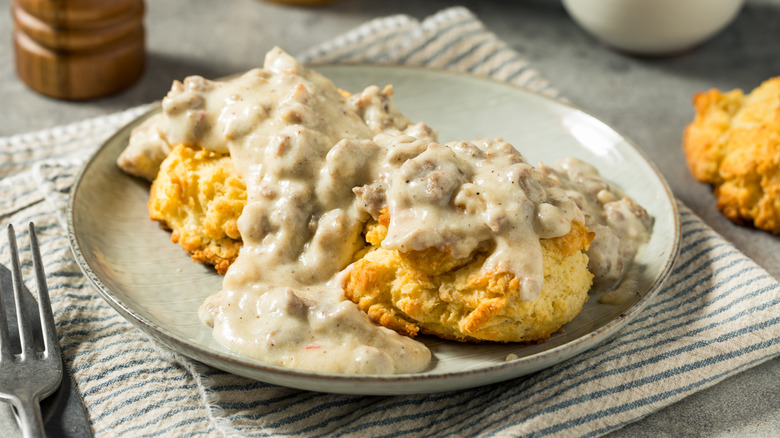
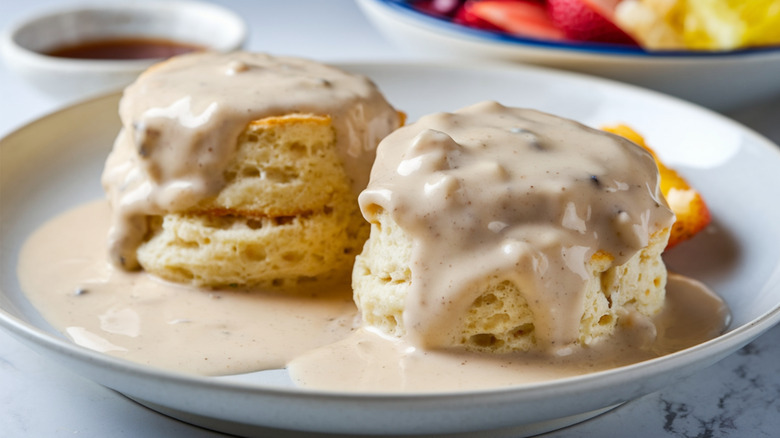
This Southern classic might seem like a suitably cozy way to satisfy your breakfast cravings, but it's not a dish that's widely enjoyed outside of the U.S. The biscuit-gravy pairing is especially confusing to Brits, who class biscuits as something entirely different altogether. In the U.K., the term "biscuit" refers to a firm-textured cookie (think shortbread, ginger snaps, or digestive biscuits), with the closest thing to an American-style biscuit being a traditional English scone. However, Brits typically serve scones with clotted cream and jam, and most definitely not a savory meat gravy. What's more intriguing to non-Americans is that biscuits and gravy is a breakfast dish. After all, gravy is often found poured over roasted meats and veggies for a hearty lunch or dinner. Despite this, there's something rather tempting about the combination of those tender biscuits and the rich, flavorful topping, no matter what time of day it is.
Biscuits are made with a simple dough that includes flour, sugar, butter, milk, and egg, though some recipes also feature herbs or cheese. The dough is rolled out and cut into thick circles, which are baked until risen and golden. The resulting biscuits are flaky and buttery, with a melt-in-the-mouth texture. A classic way to serve them is with a herbed sausage gravy accented with seasonings such as sage, garlic powder, and nutmeg.
Jell-O salad
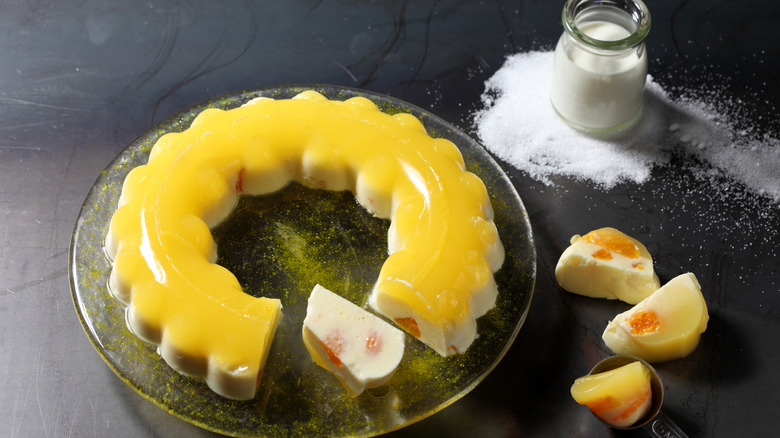
In 1950s America, a wobbly show-stopper was the star of dinner tables up and down the country. Jell-O salad comes in various shapes and sizes, and was once commonly made with savory ingredients. When gelatin became widely available in the 1920s, in the form of products like Knox and Jell-O, desserts that were previously reserved for the upper class could now be whipped up with ease by the masses. This gave rise to the Jell-O salad, but it was post-World War II that the dish really took off.
While gelatin-based desserts are not exclusive to the U.S., many varieties of Jell-O salad are made with distinct ingredient combinations seldom found elsewhere. For example, a recipe from the 1950s "Better Homes and Gardens Cookbook" sees canned cream of asparagus soup blended into the gelatin mixture, along with grated onion and vinegar. Another recipe, which was advertised by Jell-O itself, featured lime Jell-O, cottage cheese, and mayonnaise, which was set in a mold and topped with seafood salad.
Nowadays, sweet versions of the salad are (perhaps thankfully) more popular. Many varieties include crushed pineapple, mandarin oranges, and vibrant fruit-flavored gelatins. The Jell-O can be poured into a mold for an elegant presentation. Or, for a creamier, softer-set approach, cottage cheese, heavy cream, or Cool Whip are often blended into the mixture, with everything simply spooned into a serving bowl to firm up in the fridge before serving.
Deep-fried butter
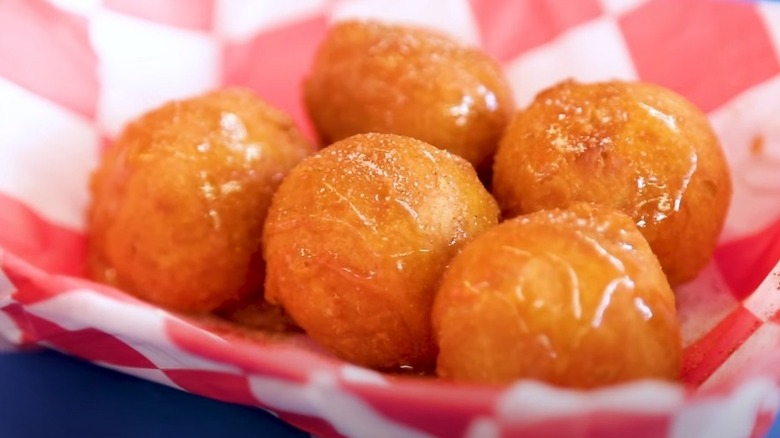
If there's one food that probably doesn't need to be cooked in even more fat, it's butter. But that's exactly what's going on with these sweet, golden morsels. Deep-fried butter is the invention of Abel Gonzales, who won an award for his creation at the 2009 State Fair of Texas. The annual fair is renowned for its selection of eye-wateringly calorific fried foods, from pickles to Key lime pie. But, how on earth do you fry something that melts so readily?
These rich, indulgent treats begin with balls of chilled butter that get rolled in cinnamon sugar and frozen solid. These are then dipped in a sweet, cinnamon-flavored buttermilk batter before being fried in hot oil until crisp. Once drained, the bites can be finished with a dusting of powdered sugar or a generous drizzle of syrup. And, as over-the-top as they may sound, they're remarkably moreish. As the balls cook, the buttery middles melt and infuse the crispy outer layer, yielding a flavor that's been likened to a stack of buttery, syrup-topped pancakes. While deep-fried butter might have a cult following in Texas, it seems the rest of the world is yet to catch on, but perhaps they simply don't know what they're missing out on!
Corn dogs
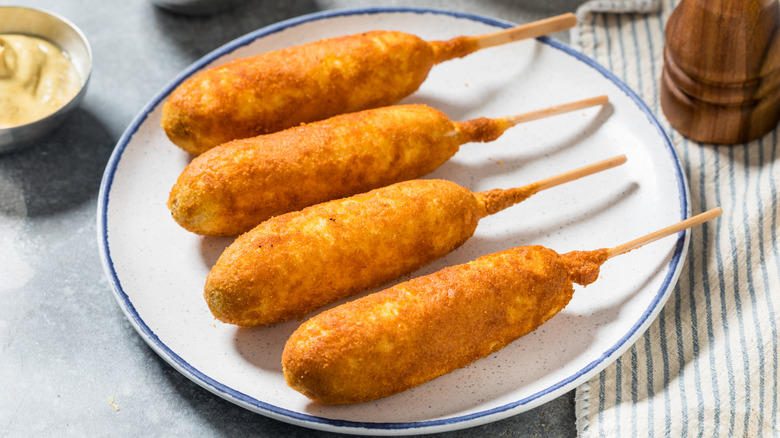
Another food that had its debut at the State Fair of Texas, this time in the 1940s, is the beloved corn dog. A true icon of the American food scene, corn dogs have indeed found their way to many other corners of the world, with countries like South Korea, Australia, and Argentina all having their own versions of the snack. But, in many other areas, they're not a common offering, with many Europeans viewing the deep-fried sausages as nothing more than an unappetizing junk food.
But, for fans of this fairground favorite, the combination of smoky frankfurter sausage and a crispy cornmeal coating is nothing short of irresistible. It's a pairing that oozes comfort, and since they're cooked on a handy wooden stick, corn dogs are super easy to eat on the go. Once the sausages have been skewered and generously coated in the batter, they're deep-fried until browned and gloriously crunchy on the outside, creating that all-important textural contrast. You can even infuse them with a hint of sweet and spicy flavor by mixing some honey and sriracha into the batter. Drizzled with ketchup and mustard, corn dogs are a fitting party or game-day snack and great for serving as part of a wider savory spread.
Spam musubi
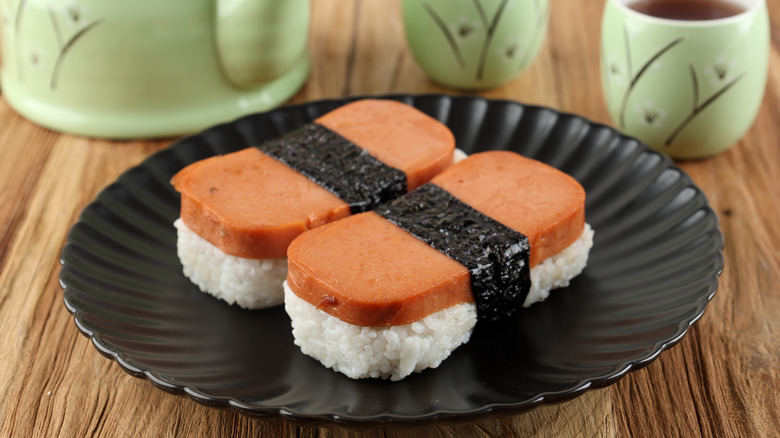
Spam musubi has a devoted fan base in the U.S. Loved for its simplicity and portability, this snack is often enjoyed as a quick bite between meals, and it's also a popular addition to packed lunches. Spam musubi has its roots in Hawaii and was a valuable staple during World War II, when Spam gained popularity due to its convenient canned nature. Musubi, however, is a Japanese concept that involves topping or filling balls of rice with various ingredients before wrapping everything in nori. So, the idea of crafting a Spam-topped musubi can likely be attributed to Hawaii's Japanese immigrant community.
Not everyone has caught on to the wonders of Spam musubi just yet. Though enjoyed across America, it remains strongly associated with Hawaii. While this dish is not something you'd typically see outside of the States, there's no denying its universal appeal. Thankfully, the core components of this dish (Spam, short-grain rice, and nori) are widely available internationally. So, if you're new to this dish and feeling inspired, you can absolutely create your own version at home. The Spam is typically marinated in a mixture of soy sauce, oyster sauce, and sugar before being pan-fried and placed atop the molded mound of cooked rice. Secure the two elements together with a strip of nori, and you'll have a perfectly-formed, protein-rich snack that can be served warm or cold.
Kool-Aid pickles
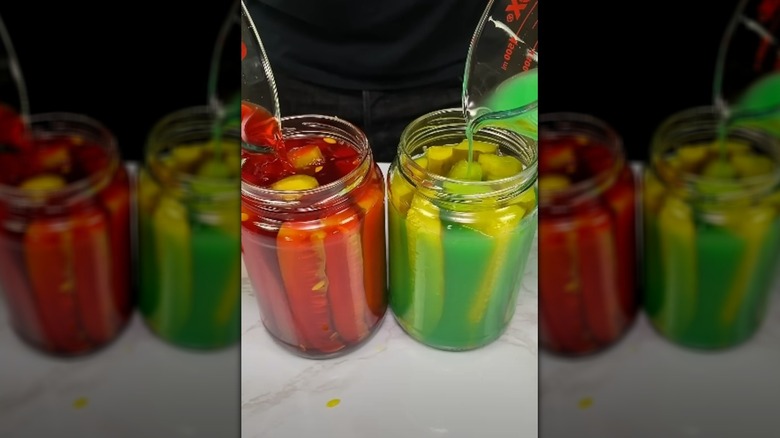
We'll admit, this recipe is pretty out-there, but if you grew up in the South, it may well bring back nostalgic childhood memories. Kool-Aid pickles (or koolickles) are essentially dill pickles that have been soaked in a sweet and tangy Kool-Aid mixture, which infuses them with plenty of fruity flavor and vibrant color. If you're not sold, we'll forgive you, but there's certainly something intriguing about this unusual concoction.
Koolickles are said to have originated in the Mississippi Delta region. They're a firm favorite amongst the younger generation, and are often sold in convenience stores, as well as being a popular homemade treat. Today, these colorful creations are still very much a Southern delicacy, though you'll sometimes find them in the Midwest, too. Koolickles have also caught the attention of TikTok foodies, with many creators giving these fruity pickles a try out of pure curiosity.
You can use any flavor of Kool-Aid mix to infuse the pickles, such as green apple, cherry, or blue raspberry lemonade. Simply combine the powder with sugar and the brine from the jar of pickles to create the soaking mixture. After around five days in the fridge, the koolickles are ready to enjoy. They should offer a balanced sweet and sour taste, with notes of dill still shining through.
Scrapple
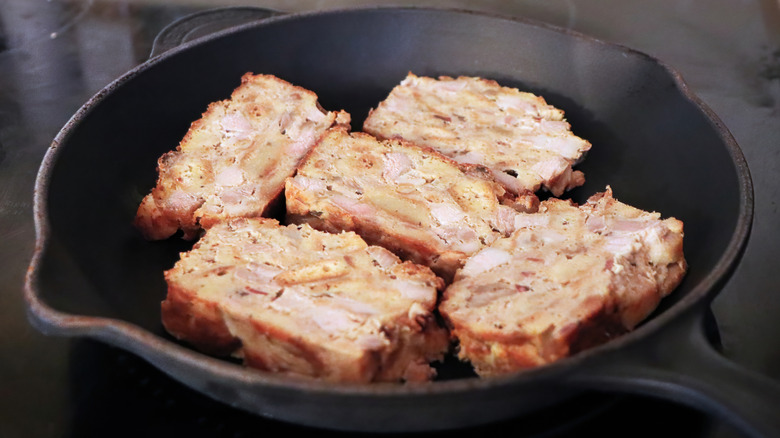
Little-known outside of America's Mid-Atlantic region, scrapple is a rustic, pork-based dish with roots in the Pennsylvania Dutch community. Born out of resourcefulness, it was developed in the early 1800s as a way to use up the less desirable cuts of the pig. Scraps like trotters, heart, and liver are first boiled, then drained and finely chopped, before being seasoned with herbs and spices. Then, cornmeal is heated with the meat cooking liquid until thickened and combined with the cooked pork scraps. This mixture gets transferred to a loaf pan and chilled until firm. The final step is slicing off thick slabs and frying them in a skillet until nicely browned.
You'll find dishes similar to scrapple across the States, including North Carolina's liver mush and Ohio's goetta. Head to the Netherlands, and you might come across balkenbrij, which sees pork scraps mixed with buckwheat flour and onion, and Germany's pork-based loaf called panhaas is actually thought to have been the original inspiration for scrapple. Despite this, the preparation of scrapple itself doesn't often extend far beyond Pennsylvania, and this dish has particularly strong ties to the city of Philadelphia. Of course, an offal-based dish is always going to be divisive, so this one probably isn't likely to be a worldwide sensation any time soon.