

Gordon Ramsay Says The Key To A Great Knife Is All In The Handle

When most people think of a great chef's knife, they think of the blade — a shiny, razor-sharp edge of steel furiously chopping vegetables, cleanly carving through a cut of meat, or neatly slicing fillets of fish. But while the sharpness of the blade can't be underestimated, Chef Gordon Ramsay insists the true key to a great knife lies at the opposite end: in the handle.
Investing in a good kitchen knife is completely worth it. However, the process of choosing the right chef's knife for your kitchen can sometimes feel daunting. Ramsay has an easy tip: "Before you buy a knife, hold it in your hand and make sure it feels right for you," he says in a video on his YouTube channel. "If you're comfortable holding the handle, your cutting becomes easier."
According to Ramsay, there are two specific ways in which the right handle helps. The firmer the grip, the easier it is to chop, so choose a knife with a handle that fits snugly into your hands. The second is to do with the handle's weight: The heavier the handle, the more control you have over the blade. Speaking of control, how you grip a knife plays a big part too, with most professionals leaning towards the pinch grip.
The world of knife handles
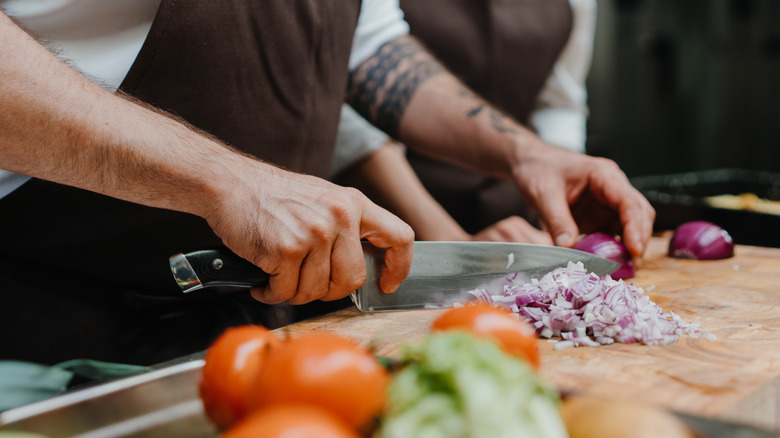
A knife handle's shape makes all the difference when it comes to the grip. Western-style handles are known for their straight top line that makes the blade feel like a seamless extension of the handle. They're versatile, familiar, and often favored by professional chefs for their balance of comfort and control. On the other hand, Japanese knives often feature a distinctive D-shaped handle, designed to nestle into the palm and give the hand a natural point of contact. However, material is another factor to consider when it comes to knives — affecting the weight just as much as the comfort.
Plastic handles are light and affordable, though they can lack durability. Wooden handles offer a warm, traditional feel but require more care. Metal handles bring sturdiness and balance, while newer options like carbon fiber combine strength with a surprisingly light touch. Each material changes the knife's weight distribution, which affects how much control you have. A heavier handle can help steady the blade and give your movements more authority, but go too heavy and the imbalance can make even simple cuts feel clumsy.
Meanwhile, when it comes to shopping for kitchen knives, Gordon Ramsay says less is more. While there are at least 30 different types of knives on the market, Ramsay insists a chef only ever needs three: a heavy-duty chopping knife, a small paring knife for preparing vegetables, and a serrated edge knife for carving and slicing.