

The '70s Casserole Dishes Redditors Are Scouring Thrift Stores To Save

If you have a CorningWare casserole dish from the 1970s, congratulations: You may be coming into some serious cash if you decide to sell it. As evidenced by the skyrocketing prices on resale sites and by Reddit conversations among collectors, '70s-era CorningWare casserole dishes are currently hotter than the ovens they're meant to be used in. People are considering their grandmothers' hand-me-downs with fresh eyes and hunting through flea markets with the hope of discovering a real-deal dish. How in-demand are we talking? On eBay, a CorningWare two-quart pyrex casserole dish from the '70s with the beloved "Spice of Life" pattern — an earth-toned array of vegetables and herbs — is listed at a whopping $99,999.99. If you're a bargain hunter, never fear: You can find a three-quart version on Etsy for a steal at $14,000.
When one Redditor asked about the value of two circa-1970s CorningWare casserole dishes they found at their grandmother's house, still in boxes, they got a mix of reactions; some nostalgic for their own families using these dishes, some gleeful because they've found versions at thrift stores, some advising the original poster of the great value and resale opportunity. This is a clear lesson in why it pays to brush up on the history of vintage cookware — otherwise, you could walk right by a total treasure at the secondhand shop. So, how do you know if your own vintage CorningWare is valuable?
Why 1970s CorningWare casserole dishes are so in-demand
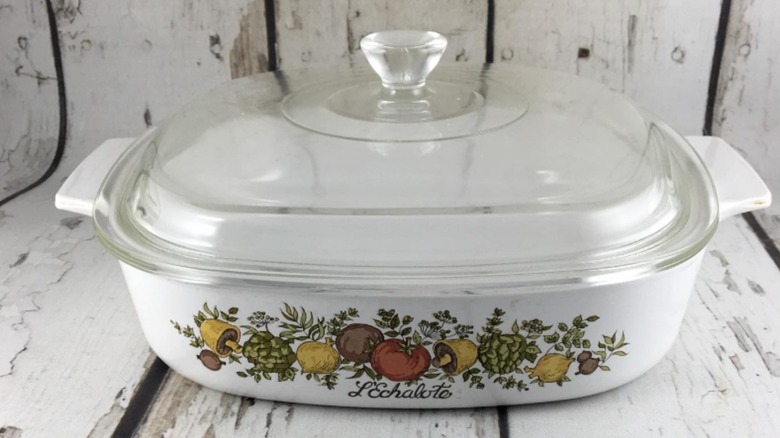
Vintage CorningWare has been growing in popularity because of some new kitchen trends — people are making kitchens cozier with retro motifs. With its nostalgia factor, CorningWare is a natural choice for this aesthetic, making it one of the ultimate thrift-store finds for vintage kitchenware. This is also due to older CorningWare's materials. The Corning Glass Company debuted CorningWare in 1957, using an innovative ceramic-and-glass combination called Pyroceram that could not only withstand the heat of the stove or oven, it could go right from the freezer to the oven without damage. CorningWare became a kitchen must-have because of its durability and convenience, plus its charming patterns like Spice of Life, Blue Cornflower, and Starburst.
Borden Foods bought The Corning Glass Company in 1998 and changed its name to World Kitchen, LLC in 2000; the new owner also changed CorningWare's material to less durable glazed stoneware. A French factory later began making CorningWare out of Pyroceram again, but it's the vintage iterations that are guaranteed to be of the best quality materials. To spot authentic vintage CorningWare, look on the bottom for a flame logo and a "Made in the USA" stamp. CorningWare should also be in good condition, not just for aesthetics but because older dishes may contain arsenic or lead, which can leech out of cracks or chips. The rarer the pattern, the more value, too: Look for Blue Heather, Nature's Bounty, and Renaissance for bigger bucks.