

The Atlantic Fish You Should Avoid Eating Regularly For More Reasons Than One
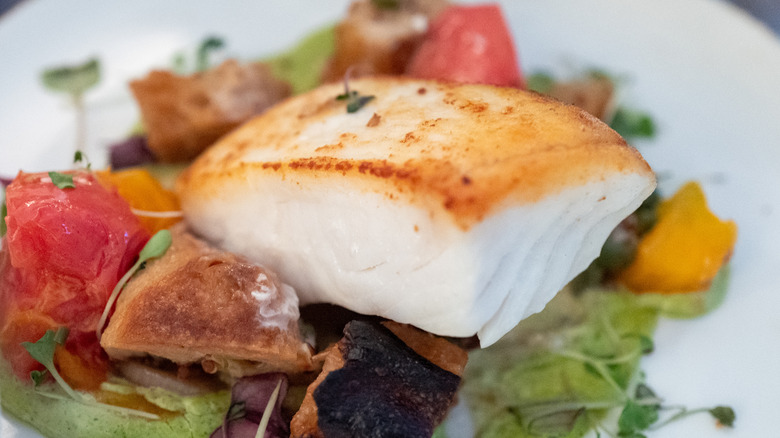
However you cook it, halibut is one of the tastiest white fish. It holds up well to various cooking methods, particularly maintaining a firm texture and bright and buttery flavor when pan-seared. Two types of halibut are fished in the U.S. — Pacific halibut and Atlantic halibut — and it's the Atlantic one that's best to avoid.
As its name implies, Pacific halibut is caught in the Pacific ocean, off the coasts of Oregon, Washington, British Columbia, and Alaska. The Pacific halibut population is healthy, thanks to U.S. and Canadian fisheries' sustainable wild-fishing practices. The same, however, can't be said about Atlantic halibut, which it is thought has been so seriously over-fished that the species is not expected to rebound until 2055.
The biggest culprits in depleting the once-plentiful Atlantic halibut stock are New England fisheries, which use bottom trawl nets. Bottom trawls are weighted nets that are pulled along the ocean floor, scooping up any living creature in their path and causing damage to the seabed. These nets are used mostly for catching crabs, shrimp, and bottom-feeding fish like flounder and pollack — and Atlantic halibut are also bottom feeders and swept up by this method. According to the Northeast Fisheries Science Center, the catch of Atlantic halibut has been precipitously low for at least 100 years, and because of this dire situation, the Monterey Bay Aquarium Sea Watch has issued an advisory to avoid eating Atlantic halibut as "it poses a high risk to the environment."
Atlantic halibut is very high in mercury
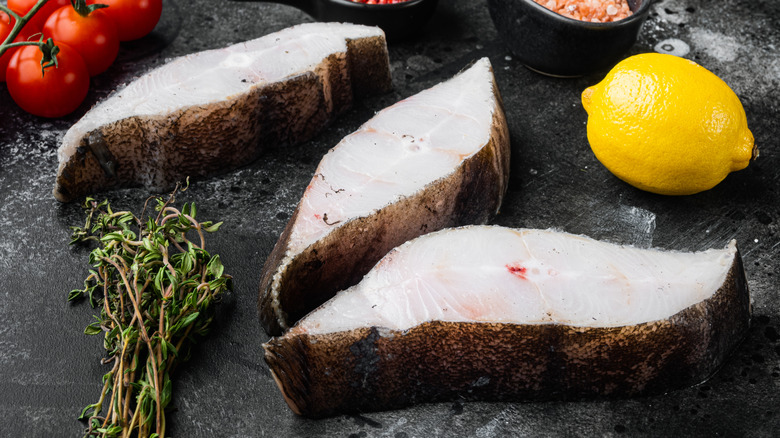
Another issue with Atlantic halibut is that, like most large fish, it's very high in mercury and could pose a health risk if regularly consumed. Mercury is often found in seafood, and there's a scientific reason for it. In the ocean, mercury emissions, caused by several man-made factors, are converted by bacteria into highly toxic methylmercury, which infiltrates into the food chain when large fish eat small fish. Such predatory fish — like halibut, swordfish, and tuna, for example — live longer and thus their bodies absorb high levels of methylmercury. We accumulate mercury in our bodies mostly by eating fish, and such accumulation can create neurological and behavioral issues. It is especially toxic to fetuses, which is why pregnant women are encouraged to avoid certain canned tuna and opt for seafood with low mercury levels instead.
Atlantic halibut is the largest flatfish and can grow up to 15-feet long and weigh hundreds of pounds. They also live long lives — up to 50 years — and consequently, their mercury absorption is highly elevated. Pacific halibut isn't as high in mercury, but it's still recommended that it should be eaten in moderation by pregnant women or nursing mothers and young children. While you should stay clear of Atlantic halibut, Pacific halibut can be a healthful option. It's low in calories and fat, packed with vitamins, minerals, and nutrients, and high in omega-3 fatty acids, which are essential for cardiovascular health. Halibut can be pricey, but you should avoid buying these cheaper fish and spend the few dollars extra for indulging in this New Orleans-inspired blackened halibut with mango-avocado relish.