

Avoid This Handling Mistake When Grilling Your Hot Dogs
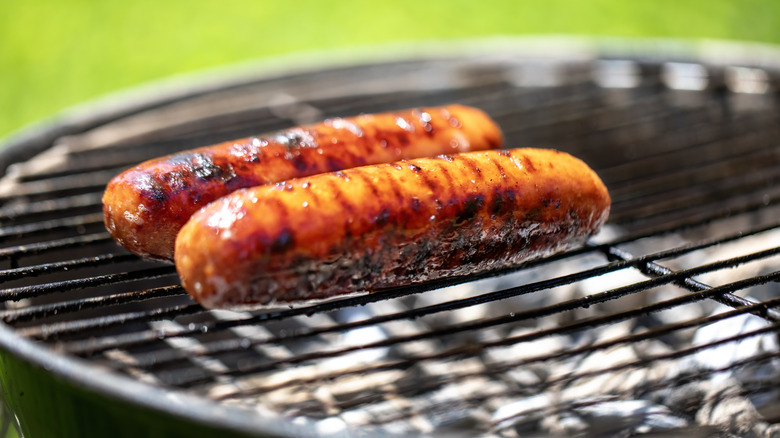
Hot dog grilling might as well be considered a national pastime. It's the classic staple at barbecues and just about any outdoor gathering. And while grilling a few franks may not seem like rocket science, there is some science at play, and cooking them requires strategy to get a perfectly juicy and crispy outcome. To help you get the best out of your weekend cookout, we asked Robbie Shoults, celebrity chef and third-generation owner of Bear Creek Smokehouse, Marshall Mercantile, and High Horse 1898, to share one of the most common grilling mistakes. "You really don't want to over-handle your hot dog while you're grilling them, as this will cause the dogs to dry out and possibly turn out tough. Let the heat from the grill do all the work!" recommends Shoults.
Whether you're worried about burning your hot dogs or just mindlessly turning them while chatting with friends, over-handling them can leave some parts overcooked and rubbery, and others without the browning and caramelized flavor. When you poke and prod, you also risk splitting the surface, which lets moisture and rendered fat release, leading to withered and shriveled spots. When you're moving them around too much, you're preventing browning from developing properly, instead of getting that flavorful caramelization. In some cases, you're leaving the inside cold, too. That's why Shoults recommends a less-is-more approach.
The right way to grill a hot dog
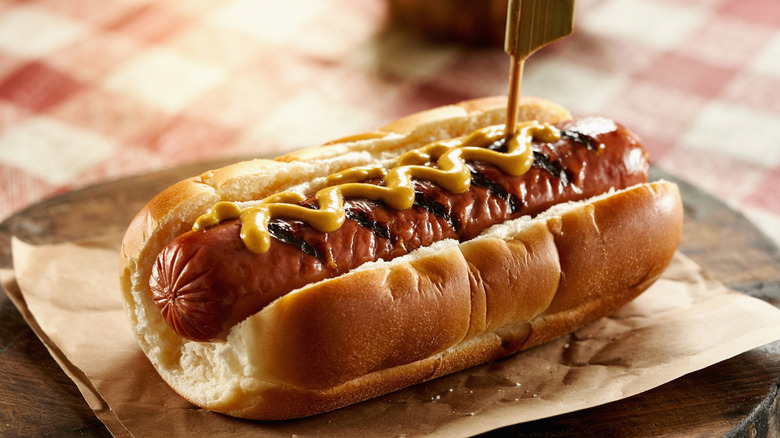
"When the hot dog comes in contact with the hot grill grates something happens called a Maillard reaction. The heat removes the moisture from the surface and the aminos and sugars react, giving the hot dog a delicious flavor and look," explains Shoults. It's the same browning that gives steak its seared crust or bread its toasty edge. You want to wait until the hot dog browns — not burns — so you get those crispy, blistered spots without charring it completely.
It all starts by preheating your grill to medium-low heat and aiming for that perfect hot dog temperature, which is about 155 degrees Fahrenheit inside. Too hot and you'll scorch the outside before the inside warms through. Too low and you'll never get the surface browning. After a few minutes, check the bottoms. If you see grill marks, it's time to turn. Roll the hot dogs just a quarter turn and let the new side sit undisturbed. Do this about three rotations, and you'll get an even, flavorful blister all the way around.
Want to level up your flavor and presentation? Try a shallow spiral cut before grilling to create more surface area. Those grooves crisp up beautifully and even hold toppings better. Butterflying hot dogs works too. Just slice the hot dog lengthwise and cook it cut-side down for a little extra char while keeping the inside juicy. No matter how you prep your hot dogs, the goal is to get an evenly browned, heated-through hot dog, which usually takes five to seven minutes, depending on their size.
Overall, letting the grill do most of the heavy lifting with minimal but purposeful handling is the difference between shriveled, dried-out dogs and plump, juicy ones. Follow these steps and don't be surprised if you become the designated grill master at every cookout from here on out.