

What 15 US Presidents Ate For Breakfast
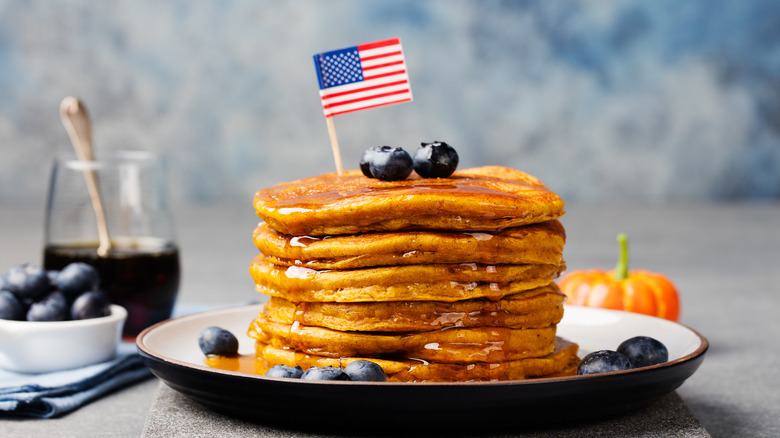
There have been more than 40 U.S. presidents since the country's founding in 1776, and, like the rest of us, they all had their own food preferences. American cuisine has changed quite a bit over the past two and a half centuries, so it's hardly surprising that George Washington's diet wasn't exactly in lockstep with John F. Kennedy's or Bill Clinton's. Many Americans today are unfamiliar with hoecakes, for instance, a breakfast item the first commander-in-chief was especially fond of.
Food and drink often serve as a way for politicians to show relatability. There's a reason why the electability of a candidate is often gauged by whether or not the average American voter would want to have a beer with them. So, it should be taken with a grain of salt whenever a politician announces that their favorite food just happens to be the specialty dish of the state they're currently campaigning in. However, behind closed doors, presidents get to eat whatever they want. Thanks to some forward-thinking documentarians, many of their tastes have been recorded for posterity.
George Washington - Hoecakes
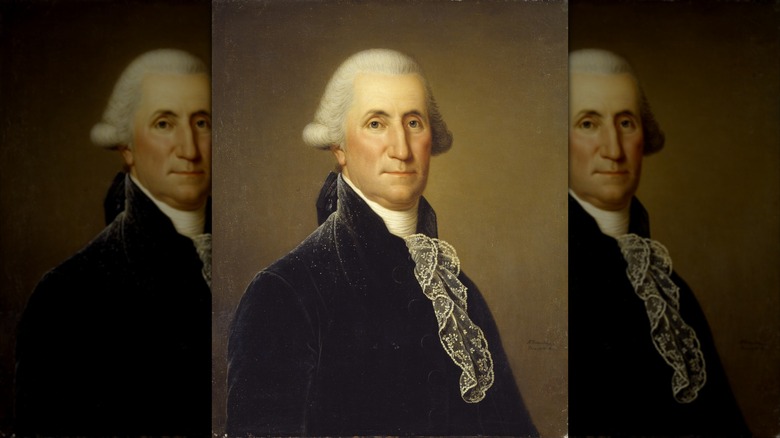
As the first president of the United States, George Washington has become a figure of mythic proportions over the centuries. But behind the iconic image of a lanky, cloaked figure crossing the Delaware or gazing imperiously down from an oil painting was a man with ordinary habits. Washington ate and had strong opinions about food. He and his wife, Martha Washington, were known for hosting lavish dinner parties at their Virginia estate, Mount Vernon. They loved to indulge in fine dining at these events, but when it came to breakfast, Washington favored a much humbler spread. In fact, he mostly stuck to just one dish — hoecakes.
Similar to pancakes and Johnny cakes, hoecakes are griddled flatbreads made with cornmeal. According to multiple sources, Washington ate them for breakfast every morning. His granddaughter, Nelly Custis Lewis, recalled that he would wake before sunrise, read until around 7 a.m., and then eat three mush cakes (an early name for hoe cakes) topped with honey and butter. He would wash those down with three cups of black tea.
John Adams - Milk
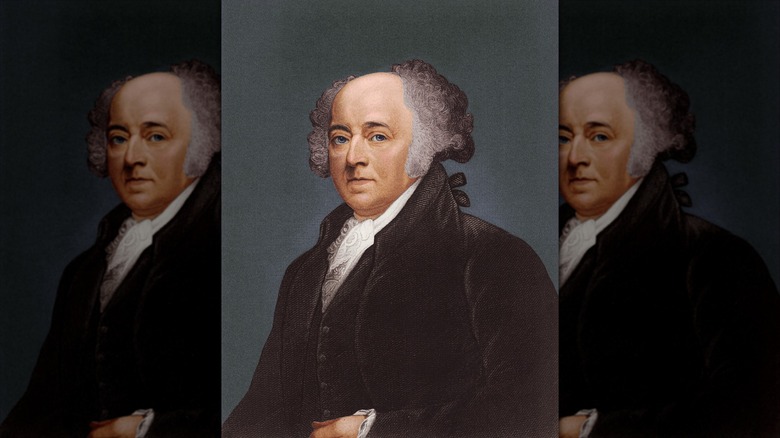
John Adams was the first vice president of the United States and the second president. Born in Massachusetts in 1735, he went to Harvard at age 15 and became a lawyer. He only served one term as president but lived long enough to see his son, John Quincy Adams, become the country's sixth commander-in-chief. Adams also lived to an astonishingly old age. At a time when the average life expectancy for white, college-educated men in America was under 50, Adams reached the age of 90.
So, what kind of breakfast does a person have to eat to live twice as long as their peers? Milk, apparently. Although there isn't much information on Adams' precise diet while he was in the White House, his lengthy letters and diary entries frequently mention milk as his only breakfast item. As a young lawyer in 1760, he finished a diary entry with the sentence, "I eat milk for breakfast," without any further explanation. A decade later, he revealed in another entry that he woke early, drank a pint of milk, and hopped onto his horse to visit his uncle. Seven years later, while in Philadelphia, he remarked in a letter to his wife, Abigail, that the city's wealthiest families drank milk for breakfast. This suggests Adams wasn't the only one who believed milk was an ideal source of energy in the morning.
Thomas Jefferson - Fresh-baked bread and cold meats
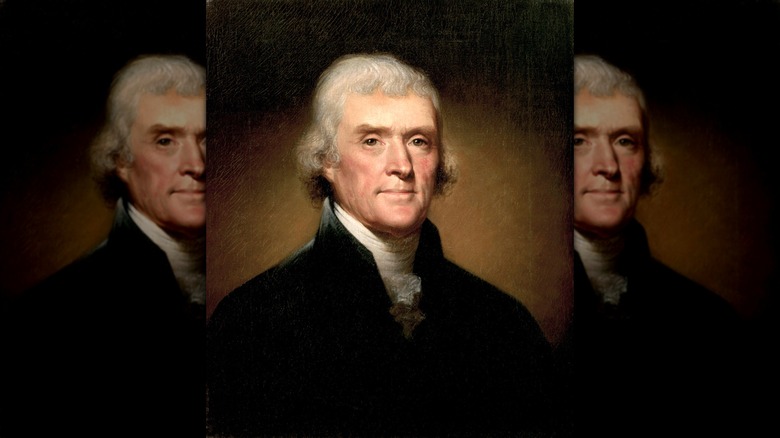
Thomas Jefferson was the third person to serve as U.S. president and is perhaps best known for being the mastermind behind the Declaration of Independence. Like Washington, he presided over a grand Virginia plantation that was constantly abuzz with guests. Jefferson began constructing his estate, called Monticello, in 1770 and resided there until his death in 1826. His daily routine always began at sunrise, and he claimed to get out of bed as soon as he could read the hands on his clock. After a flurry of letter writing, Jefferson would join his family in the dining room for breakfast.
The meal was hearty and substantial. At the time, most people only ate two meals a day, and the Jeffersons were no different. Breakfast had to be filling enough to fuel them through to supper, and Jefferson's typically consisted of fresh-baked breads and cold meat. Jefferson was particularly fond of the muffins, which were made simply with water, yeast, and flour.
Abraham Lincoln - An egg and toast
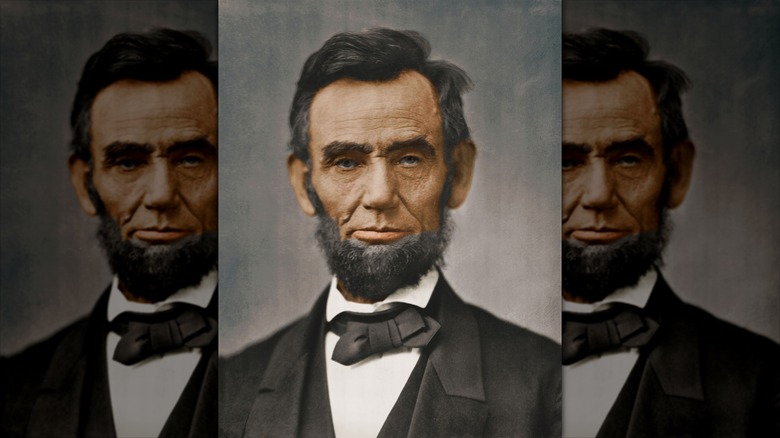
Abraham Lincoln is one of the most famous presidents in U.S. history, and his legacy, like Washington's, is shrouded in mystique. Remarkably tall and known for wearing a chin curtain beard, Lincoln remains visually recognizable more than a century after his tragic death. He guided the country through one of its most perilous events, the U.S. Civil War, and did so with integrity, eloquence, and a keen awareness of the historical weight of the moment. But while one could spend hours poring over the "Gettysburg Address" or reading up on the shocking events that led to his assassination in 1865, here we focus on what this consequential figure ate for breakfast.
Lincoln had a decidedly humble upbringing, first in Kentucky and then in Indiana. His tastes, it seems, remained modest throughout his life. One exception was Mary Todd's Courting Cake, a treat his future wife baked for him during the stormy days of their early relationship. His usual breakfast consisted only of an egg, a piece of toast, and a cup of coffee, which he ate between reading, studying, writing, and going through his mail.
Ulysses S. Grant - Mackerel and fried apples
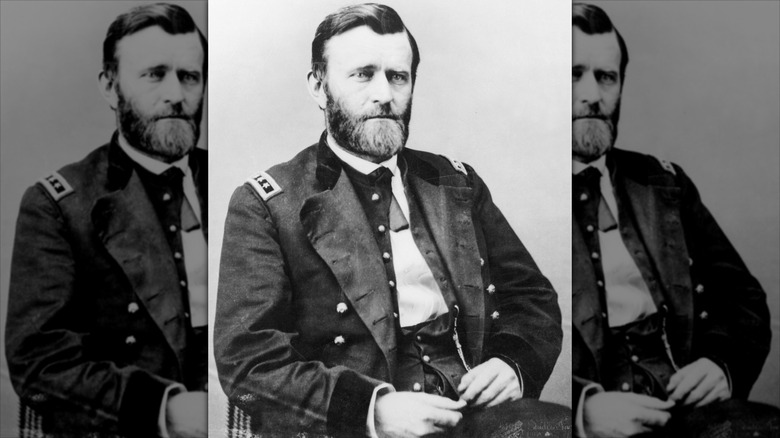
Ulysses S. Grant won the 1868 presidential election by a landslide. As commander of the Union army during the Civil War, he was a national hero, and his ascendancy to the highest office in the country came as little surprise. As part of his efforts to bolster Reconstruction, he sent federal troops into the South to protect Black Americans from continued violence and discrimination and remains a key figure in the country's history with civil rights.
Given Grant's busy schedule as a military man and commander-in-chief, it's hard to imagine him having the time or inclination to sit down for an opulent meal, breakfast or otherwise. Early on, this was true. Before he entered the White House, Grant usually enjoyed a breakfast of pickles and coffee. After he became president, however, he indulged in a much larger spread, usually involving mackerel, steak, bacon, fried apples, and flannel or buckwheat cakes.
Rutherford B. Hayes - Corn battercakes
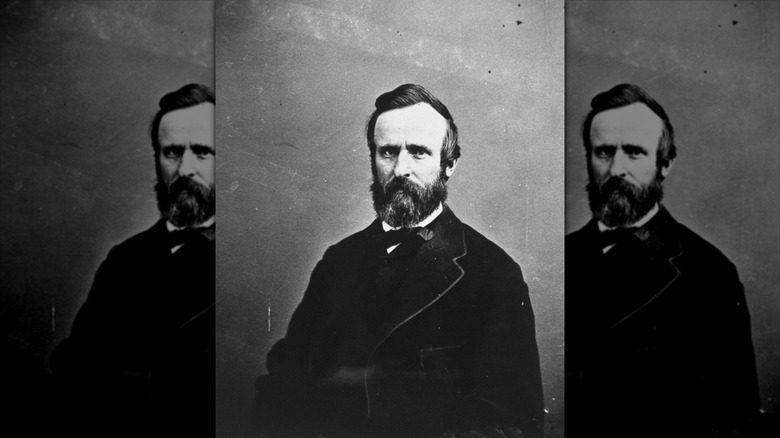
Rutherford B. Hayes' presidency was overshadowed by the questionable circumstances under which he attained the office in 1876. He lost the popular vote against his Democratic opponent, Samuel J. Tilden, and only won the election after a special commission was formed to rule on contested electoral votes from several Southern states. Despite being a staunch abolitionist and Union army veteran, he indirectly ended the Reconstruction era by agreeing to withdraw federal troops from Confederate states, effectively curtailing the rights of Black Americans across large swaths of the country.
Hayes had an enormously consequential presidency, but he and his wife, Lucy Webb Hayes, are often described as having stayed true to their humble Ohioan roots, even during their days in the White House. This was evident in their favorite breakfast food — corn battercakes. Made with cornmeal, flour, and buttermilk, they were far from gourmet, but as anyone who loves pancakes can attest, they didn't need to be fancy to hit the spot. Lucy Webb Hayes' personal recipe for battercakes is still available online for anyone who wants to try this 19th-century breakfast for themselves.
William Howard Taft - Steak
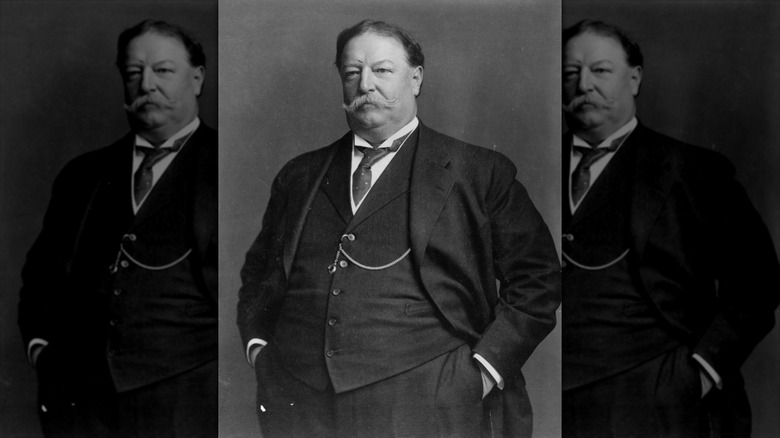
William Howard Taft was the country's 27th president and also happened to be the only person to have served as both commander-in-chief and, later, chief justice of the United States. He was also the heaviest president to date, weighing 354 pounds when he assumed the highest office in 1909. He was so concerned about his health that he enlisted the services of a British physician, Dr. Nathaniel Yorke-Davies, who provided a list of foods he could and could not eat.
As a result, President Taft's breakfast wasn't exactly mouthwatering for those of us who enjoy a sweet, carb-filled meal to start the day. It usually consisted of a 12-ounce steak, two oranges, lots of coffee, and toast. Sometimes it was even lighter, made up of just a few gluten biscuits and six ounces of lean meat. The coffee was always unsweetened, per Yorke-Davies' insistence that the politician avoid sugar. Although he struggled to lose weight, Taft lived to the ripe old age of 72. Considering that the average lifespan of American men born the same year was under 45, this was quite an achievement.
Theodore Roosevelt - Hominy
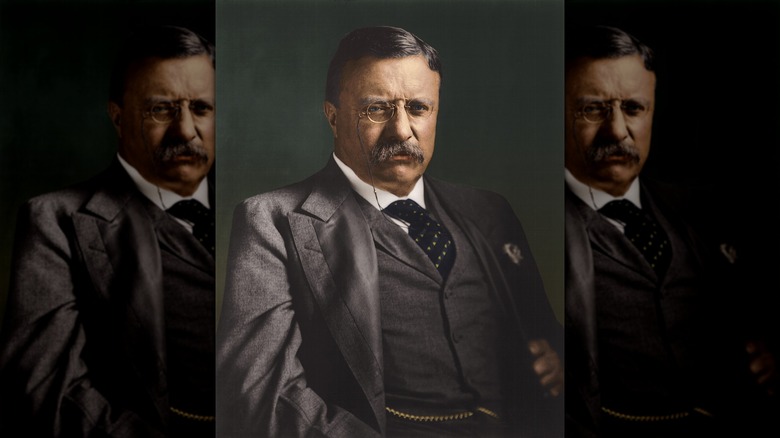
Theodore Roosevelt is widely known for being one of the faces on Mount Rushmore and for establishing the National Parks. He was a rugged outdoorsman, known for riding horses, driving cattle, and hunting. Aged just 43 years old when he assumed office, he is also the youngest person to serve as president, bringing a sense of daring to the office. Such an active lifestyle required a hearty diet, and President Roosevelt made sure to start his day by fueling up with the calories he needed for a session in the saddle or the White House.
Along with hard-boiled eggs, rolls, and coffee, Roosevelt was partial to hominy porridge. Made by soaking dry corn kernels in an alkaline solution to remove their hulls, hominy is an ingredient used in a wide range of recipes. It is equally tasty in desserts as in savory dishes, and, as Roosevelt could attest, it's also delicious when simmered into porridge and covered in butter and salt.
Franklin D. Roosevelt - Scrambled eggs
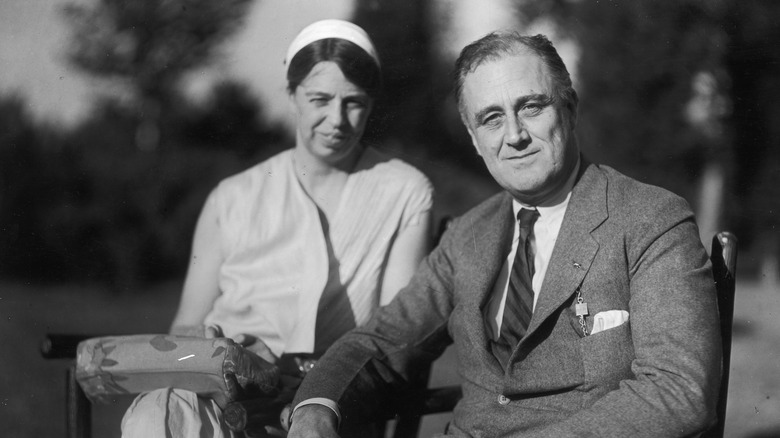
Franklin D. Roosevelt was yet another pivotal figure in the country's history, not only for his sweeping New Deal reforms following the Great Depression but also for guiding the nation through the existential threat of World War II. Although he became known for his policies that provided a safety net for low-income Americans, F.D.R. himself was a product of immense wealth. He was, after all, a distant relative of former president Theodore Roosevelt. Given his background, you might expect the 32nd president to have luxurious culinary tastes, but his favorites were decidedly humble.
Roosevelt's most beloved dish, in fact, was scrambled eggs. According to his presidential library, it wasn't just his favorite breakfast food; it was his favorite food, period (alongside fish chowder). He loved scrambled eggs so much that, according to biographer Joseph Lelyveld, he considered them to be a good luck charm and deliberately ate them for breakfast on election day his fourth time around to bolster his chances of winning. In the book "Franklin D. Roosevelt: A Political Life," Robert Dallek writes that, while in the White House, the president and first lady, Eleanor Roosevelt, started each day at around 8 a.m. with a simple breakfast of orange juice, toast, coffee, and, of course, scrambled eggs. Their only indulgence was eating the meal in bed.
Harry S. Truman - Bourbon, milk, and toast
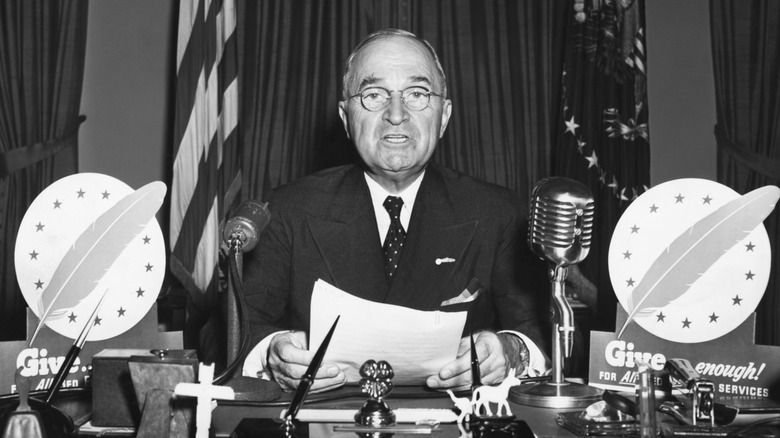
Harry Truman, the 33rd president, is usually remembered for assuming the office upon the death of Franklin D. Roosevelt in 1945. He remains the only person to have authorized the use of nuclear weapons against a foreign country when he gave the green light for the catastrophic bombing of Hiroshima and Nagasaki. He was re-elected in 1948. Despite being in the Oval Office during some of the most consequential moments in global history, Truman hasn't become a modern-day cultural icon the way F.D.R., J.F.K., and Ronald Reagan have, and unlike them, he is rarely remembered as being larger-than-life or especially charismatic.
When it came to food, Truman took a no-nonsense approach, explaining once that he'd learned to eat whatever was put in front of him during his days in the military. As with many presidents, Truman stuck with a regimented morning routine, and, despite his reputation, it contained a few surprises. He woke at 7:30 a.m., had a shot of bourbon and some orange juice, and went on a brisk walk around the White House grounds. When he returned, he would dig in to a breakfast of bacon, eggs, toast, cereal, and a large glass of milk.
John F. Kennedy - Toast with marmalade
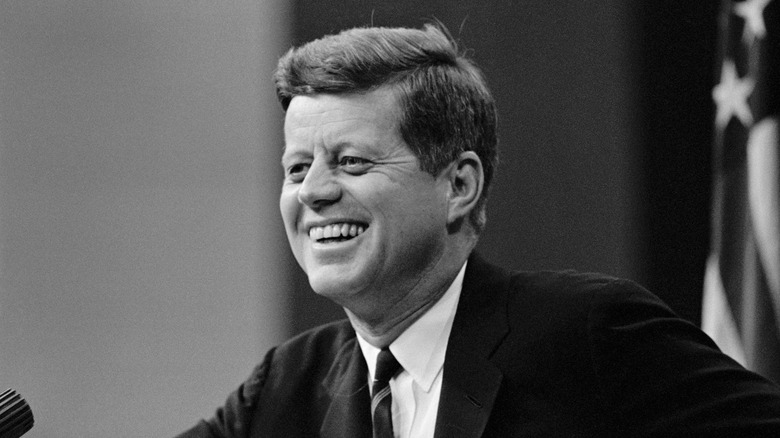
President John F. Kennedy is usually remembered for his youthful charisma, glamorous marriage to Jacqueline Kennedy, and shocking assassination three years into his presidency. He helped kickstart the space race, created the Peace Corps, and played a key role in the Cuban Missile Crisis of 1962. In other words, he was a busy man, and he kept a tight schedule. In fact, he woke at 7 a.m. every morning and often didn't go to bed until midnight. At breakfast, he supposedly read no fewer than six newspapers, an impressive feat by any standard.
Somehow, Kennedy found the time in between reading to eat, too. His breakfast of choice consisted of eggs, toast with butter and marmalade (which is not to be confused with jam), bacon, orange juice, and a cup of coffee. The president didn't eat fried foods, so the eggs were either poached or soft-boiled and the bacon was oven-broiled. He even ate this precise collection of foods while traveling, which was evidenced, tragically, by the recollection of the waiter who served him his final meal.
Richard Nixon - Wheat germ
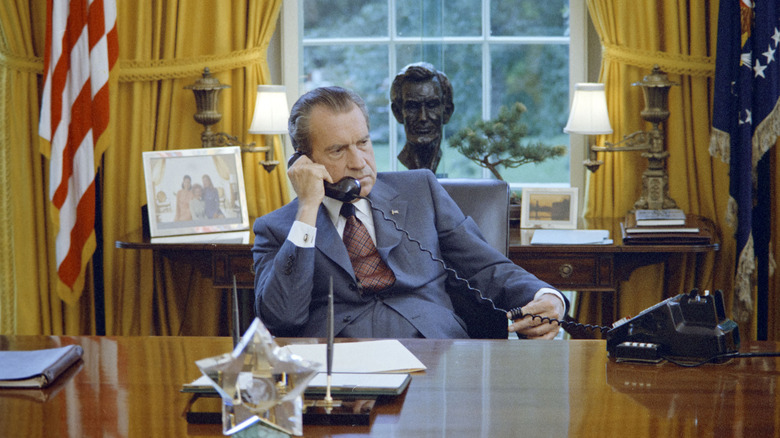
Richard Nixon is rarely singled out for his food preferences. You're much more likely to hear his name brought up in relation to political scandals than haute cuisine, unless, of course, you're having a discussion about Watergate Salad. But in between his duties as president and his attempts to distance himself from the infamous Watergate break-in, Nixon had to eat. The most talked-about staple of his diet was cottage cheese with ketchup, a pairing that might not instantly set your mouth watering. However, this was more of a lunchtime indulgence than a breakfast one, so we'll refrain from the requisite incredulity on this occasion.
For breakfast, Nixon was pretty consistent. According to a 1969 Washington Post article, he always had fresh orange juice, half a grapefruit, cold cereal, and coffee. It wasn't just any cereal, though. For Nixon, it was always wheat germ. He loved the stuff so much that he ate it at multiple points during the day, including before speeches. Again, this might not set your stomach growling with envy, but there is something endearing about a president with unpretentious tastes.
Gerald Ford - English muffins
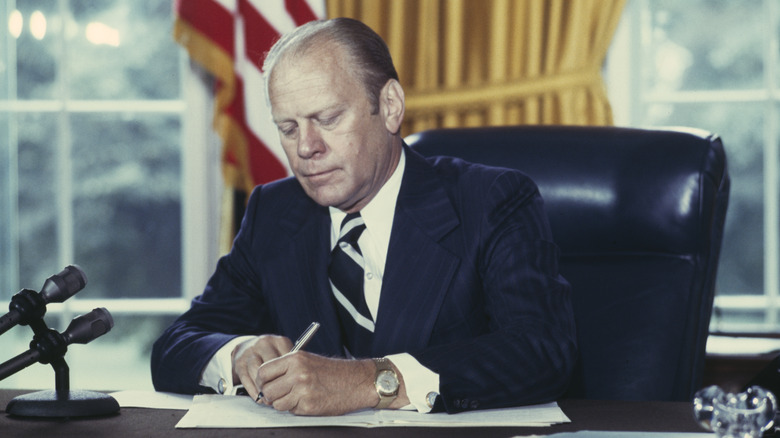
Gerald Ford assumed the presidency in the wake of Richard Nixon's resignation over the Watergate scandal. His time in office was brief, lasting only 895 days, but it contained plenty of drama, like the fraught end to the U.S.'s involvement in Vietnam. When it came to his personal life, however, Ford was pretty conventional. He enjoyed stamp collecting, golf, and bridge, and his food preferences were fairly straightforward as well. His favorite dish, for example, was pot roast with cabbage. For breakfast, he had an even more specific choice: English muffins.
Regular toast just wouldn't cut it, apparently. President Ford liked to begin his days with English muffins, fresh fruit, tea with lemon, and orange juice. In 1974, the press gained access to the president's residence and photographed him toasting his favorite source of carbohydrates in the family kitchen before adding a pad of butter.
Ronald Reagan - High-fiber cereal
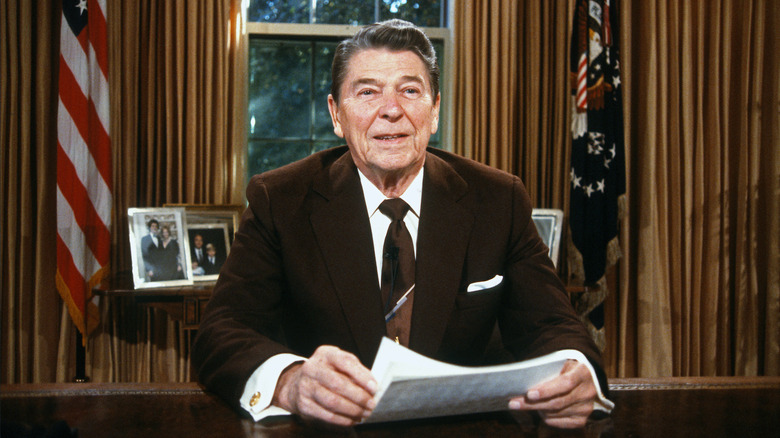
Before Ronald Reagan became the 40th president, he was a Hollywood actor, and he and the first lady, Nancy Reagan, seemed to be highly health conscious when it came to the foods they ate. Unlike future president Bill Clinton, Reagan was not known for regularly indulging in fast food. Nor were you likely to see him digging into a morning steak like William Howard Taft. The Reagans' breakfast of choice was bran cereal, and they rarely strayed from it.
In his memoir, "An American Life," Reagan recalled that he usually ate breakfast with the first lady at 7:30 a.m. and that the meal consisted only of fruit or juice, bran cereal, and decaffeinated coffee. This sounds pleasant enough, although you'd think that the president of the United States might prefer caffeinated coffee to face whatever unexpected global catastrophes inevitably come their way on a daily basis.
Bill Clinton - Egg McMuffins
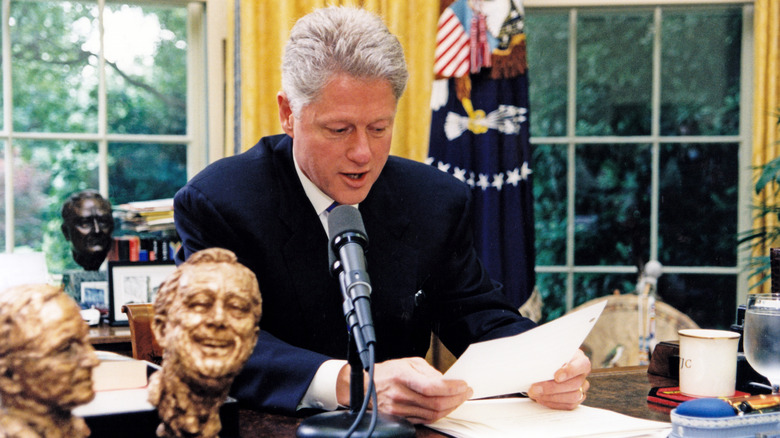
There was a period during his 1992 presidential campaign when Bill Clinton was grabbing headlines for his food preferences. This isn't all that uncommon. Any politician who has been foolish enough to eat a corn dog at a state fair or attempt to eat pizza with a knife and fork knows how reactionary the public can be about candidates' dining habits. But when it came to Clinton's diet, it was more of a long-running fascination than a momentary freak-out. A New York Times profile on the president-elect's eating habits detailed his love of everything from jalapeño cheeseburgers to cinnamon rolls and revealed that he was allergic to both chocolate and milk. He was also a well-known fan of the Golden Arches and particularly susceptible to an Egg McMuffin for breakfast.
Since leaving the White House, however, the 42nd president has changed his ways due to a health scare in 2010. These days, he reportedly starts every morning with a berry smoothie made with vegan protein powder and unsweetened almond milk.