

Use This Unique Seasoning On Your Asparagus And Never Look Back
We may receive a commission on purchases made from links.
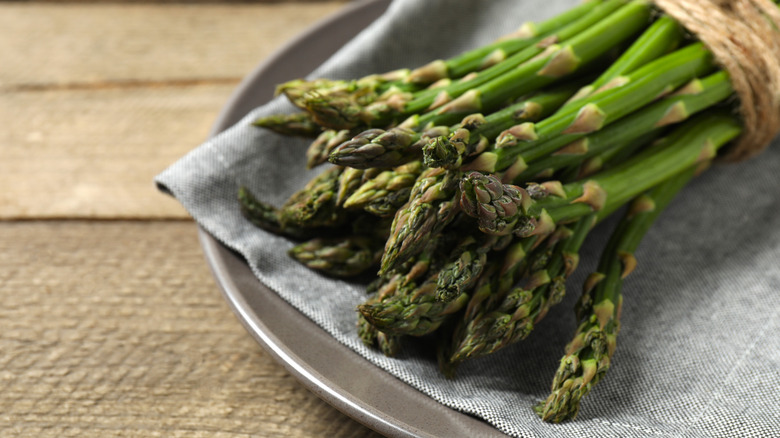
Asparagus can be a delicious vegetable on its own, especially at its peak in the spring, or when you transform it into a Michelin-star-like dish by using a ribboning technique. No matter how you cook it, though, the vegetable can tend to be a little one-note, seeking something to spice up the green shoots. In an interview with Chowhound, Nisha Vora, author of the cookbook "Big Vegan Flavor," recommends a sprinkling of a unique spice, seed, and nut blend called dukkah as a brilliant topping for asparagus.
If you're wondering what dukkah is exactly, you're not alone. Sometimes spelled duqqa, it's a Middle Eastern mix that has origins in ancient Egypt. The name is derived from the technique and action used to make dukkah, which is the Arabic word meaning "to pound." Traditionally, dukkah is made with hazelnuts, almonds, or macadamia nuts, along with toasted sesame seeds (essential), and coriander and cumin seeds. But it's not uncommon to see other nuts or seeds sneak their way into a dukkah, like pistachios, walnuts, peanuts, black peppercorns, nigella seeds, or even black sesame seeds. While dukkah can be purchased in a store or online, it's simple to make your own at home, and you can play around with different ingredients depending on your tastes, or what you already have in your pantry. Once you've made the exciting spice blend, it will keep for about two weeks in your pantry, or longer in the refrigerator or freezer.
Dukkah adds pizzaz to your cooking
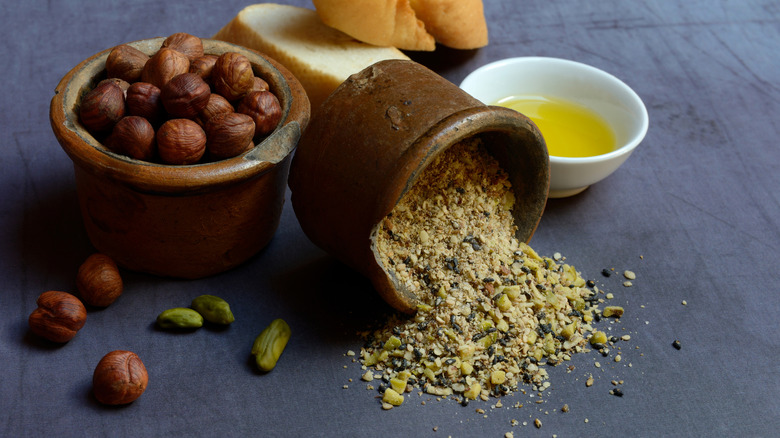
Whether roasted, steamed, grilled, or braised, a healthy topping of dukkah over the cooked asparagus is the perfect way to add a contrasting, crunchy texture to the tender asparagus spears, along with an array of flavors. Not only is it delicious, but dukkah adds a bit of protein from the nuts and seeds, and therefore makes an asparagus dish feel more filling and substantial. If you'd like to turn asparagus into a fancy side dish at a dinner party, spread some labneh seasoned with salt, ground coriander, and lemon zest on the bottom of a platter, add the asparagus, and then spread a generous shower of dukkah all over the whole platter, followed by fresh herbs.
There are endless creative ways to use dukkah in your cooking. You can use dukkah to encrust meats before roasting, or dip bread in good-quality extra-virgin oil followed by a dip in a small bowl of the spice blend, as is common in Egypt. Dukkah is a wonderful topping for other roasted vegetables like carrots, or even mixed into thick strained yogurt with fresh herbs for a creamy yet crunchy dip. Dukkah is also delicious for a savory twist on ricotta toast: Spread fresh ricotta on a pan-fried slice of sourdough, rub the bread with a halved clove of garlic as soon as it's out of the pan, then drizzle the ricotta with a bit of fancy olive oil and a sprinkling of flaky salt. Then, top it with a generous dusting of dukkah.
Static Media owns and operates Tasting Table and Chowhound.