

10 Iconic Foods And Drinks That Were Invented In California
From Silicon Valley to Hollywood, California is renowned for its warm weather, technological innovations, and cultural importance. People from all around the world have long been flocking to the Golden State, making it a melting pot of cultures and the arts.
Learning that your favorite musician or film originated in California is practically routine, but what about its culinary inventions? You may be surprised to learn that some of your favorite dishes actually originated from California. Not only has the identity of its residents influenced its food, but also its progressive culture. Rather than a strict adherence to culinary rules, Californian food prioritizes ingenuity. As is the case with many other California inventions, its food rises to the needs of its distinct consumers, whether that be the desire for novelty or convenience. These California-born foods are a testament to the state's long history of being at the leading edge of modernity and culture.
Monterey Jack cheese
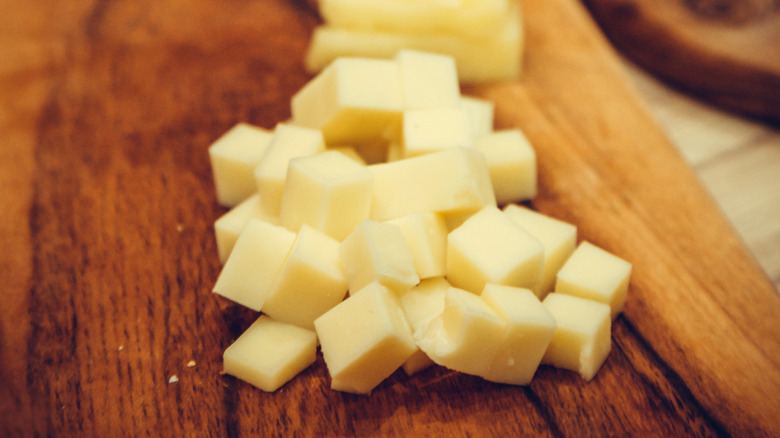
Monterey Jack cheese gains its name from its birthplace: Monterey, California. This semi-hard, white cheese has mild taste and great meltability, making it an excellent choice for most dishes.
Monterey Jack cheese has a complicated history. According to cheese historians (or cheese-loving historians), 18th-century Franciscan missionaries at the Carmel mission in Monterey County invented Monterey Jack. According to this origin story, the missionaries created it based on the Spanish-style cheeses they enjoyed in their home country. A door-to-door cheese saleswoman named Dona Boronda is also named as its inventor. When her husband was seriously injured and unable to work, Boronda began manufacturing and selling the cheese to care for her large family. Another Monterey resident, Domingo Pedrazzi, created a semi-hard, white cheese which he pressed with a house jack — allegedly giving the cheese its name.
Despite its complicated history, one man is irrefutably the reason for Monterey Jack cheese's popularity: Scottish dairy farmer and businessman David Jacks. Although it is believed that he did not invent the cheese (possibly even purchasing the recipe Boronda), his large dairy farm allowed him to increase production exponentially. As a result, the cheese bears his name, despite its convoluted genesis.
California burrito
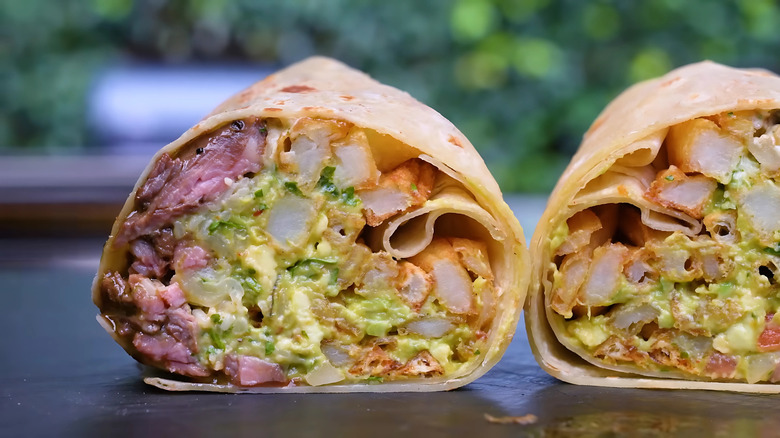
In 1980s San Diego, a young man working behind the counter at the Mexican restaurant Lolita's noticed something strange — a regular customer would order a burrito from the menu, unwrap the burrito, add fries he had brought himself, before rerolling and enjoying his meal. After a few times, the worker's intrigue became too much to resist and he tried the customized burrito himself, which became a key feature on the restaurant's menu.
This is the tale behind the California burrito – an almost normal burrito, except for the addition of fries. This one simple addition elevates the already tasty Mexican meal to a delicious fusion of Mexican and American cuisine. In a way, this is symbolic of California's culture: many cultures coming together to make something distinct, yet somehow true to its roots. Today, the California burrito can be found at many Mexican restaurants across the country. Or you can make it yourself, like its inventor was said to have done.
Cheeseburger
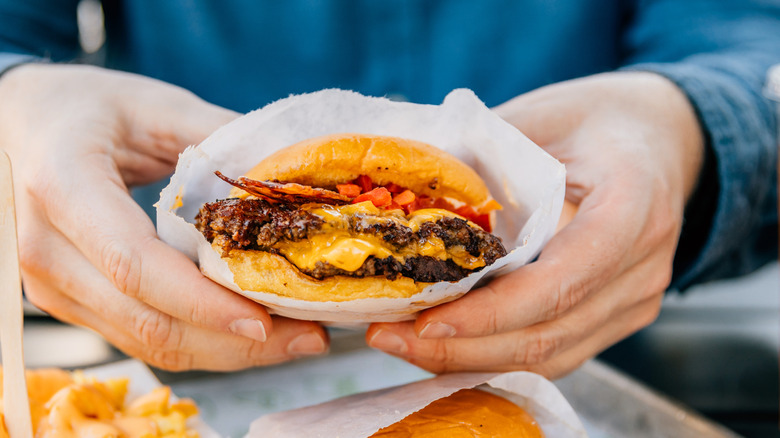
There are few things more iconically American than a cheeseburger. It's not to be confused with its predecessor, the hamburger, which allegedly originated from the opposite coast in Connecticut. The cheeseburger has its roots in sunny California, when a Pasadena hamburger stand, The Rite Spot, began including it on its menu.
On a fateful day in 1924, Lionel Clark Sternberger, The Rite Spot's owner's son, created the first cheeseburger. While its inventor and place of origin are seemingly clear, the story of why the cheeseburger was made is disputed. One tale draws parallels to the California burrito's beginnings — a customer's strange request became a menu staple. However, another narrative reveals Sternberger's ingenuity. After burning a burger, he may have decided to add cheese instead of wasting the food. Regardless of its origins, it was soon clear that the cheeseburger was a huge hit and consequently became a permanent fixture on The Rite Spot's menu. Today, the cheeseburger appears to be a permanent fixture in American cuisine.
French dip sandwich
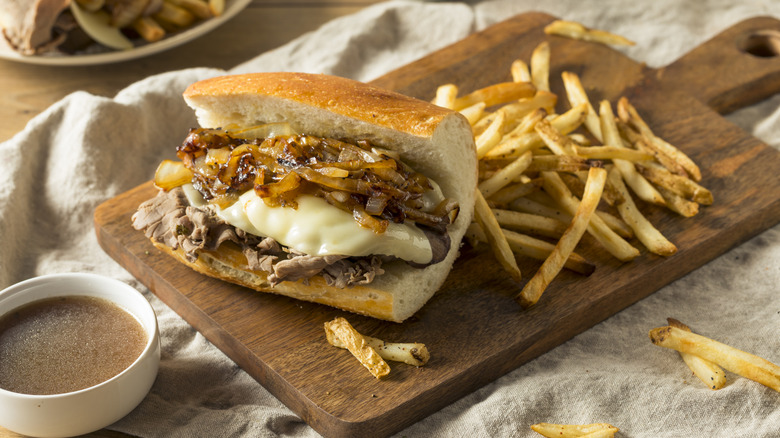
The French dip sandwich is an au jus-dipped roast beef sandwich topped with grilled onions and white cheese. It is clear that it is a Los Angeles invention. What's less clear is which Angeleno invented it.
Two LA restaurants, Cole's and Philippe's, contend for the title of the home of the original French dip sandwich. According to Philippe's origin story, Philippe Mathieu created the sandwich on a whim in 1908 to feed a hungry worker. According to those who believe Mathieu is the original creator, the name French dip is reportedly a reference to both a popular fashion trend at the time, called "French dip," and Mathieu's heritage. However, Henry Cole's story states that the sandwich was created unintentionally when he dropped a customer's French bread into gravy.
With its origins still up for question, it is anyone's guess which story is actually true. Regardless, French dip sandwiches have spread across state lines and become a diner classic.
Taquitos
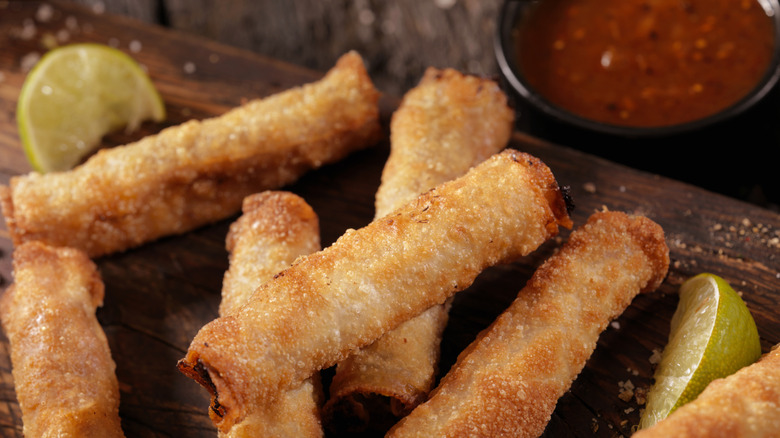
In the 1940s in San Diego, Ralph Pesqueira Sr. was asked by local factory workers to create a handheld meal that could be eaten quickly. Pesqueira Sr. came up with the beloved taquitos using tortillas from his tortilla factory, El Indio. This dish is reminiscent of the Mexican flauta, a fried tortilla filled with meat and cheese, but flautas are larger in size. The taquito met the factory workers' demands and soon gained notoriety as a delicious and convenient lunch option.
Today, taquitos can be found in the frozen aisle of most grocery stores. What was once made for factory workers in San Diego has now become a convenient meal for many American families. Taquitos further show what makes California cuisine so special — its ingenuity and cultural influences. Many foods were created for taste, but taquitos were created both for taste and necessity.
Korean tacos
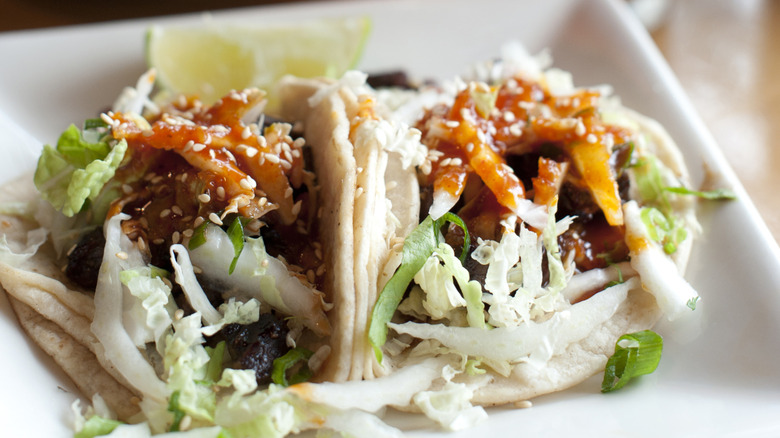
Despite the over 7000-mile distance between them, the flavors of Korea and Mexico met in California to form a mouthwatering union: Korean tacos. Korean tacos, as you can likely guess, are corn tortillas filled with bulgogi beef and other Korean staples, like kimchi or radishes.
Unlike some of the other foods mentioned, Korean tacos are a relatively modern invention. An LA-based food truck named Kogi, run by Mark Manguera and Roy Choi, announced its next location via Twitter. This strategy seemed to work, as customers would rush to be in line to try Kogi before it left that location. In 2008, it began selling Korean tacos. This invention quickly took off, further boosting the food truck into culinary fame.
Manguera's and Choi's invention is almost symbolic of the Californian spirit. Not only did they utilize Twitter, a Silicon Valley invention, to their advantage, but they also created something that would appeal to a wide array of palates.
Fortune cookies
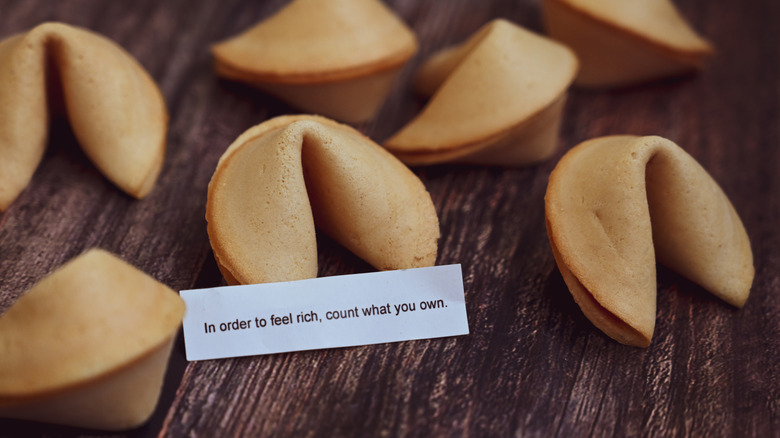
Fortune cookies are an integral part of Chinese takeout meals. However, did you know they actually have Japanese roots?
The fortune cookies popular in takeout today seem to descend from a similar miso and sesame-flavored Japanese cookie. These cookies, named tsujiura senbei, not only tasted different, but they looked different from the ones enjoyed today, too. These predecessors were large, dark-colored, and with the fortune placed between the outside bend, meaning there was no need to crack open your cookie to find your unique message. When Japanese immigrants began arriving in America during the early 1900s, the cookie began to change into what we know as the fortune cookie today: a crispy, buttery, vanilla cookie. The Japanese Tea Garden in San Francisco is believed to be the first restaurant to offer the cookies after a meal during the early 20th century.
You may be wondering: Why is the fortune cookie associated with Chinese cuisine rather than Japanese? Unfortunately, this is due to post-World War II xenophobia against Japanese-Americans. Following Pearl Harbor, American sentiment towards Japanese immigrants greatly diminished, and many were forced to close their businesses, move houses, and be placed in Japanese internment camps. This caused a shift in the fortune cookie production, leading to Chinese-Americans producing the cookie and selling it in their businesses.
Popsicles
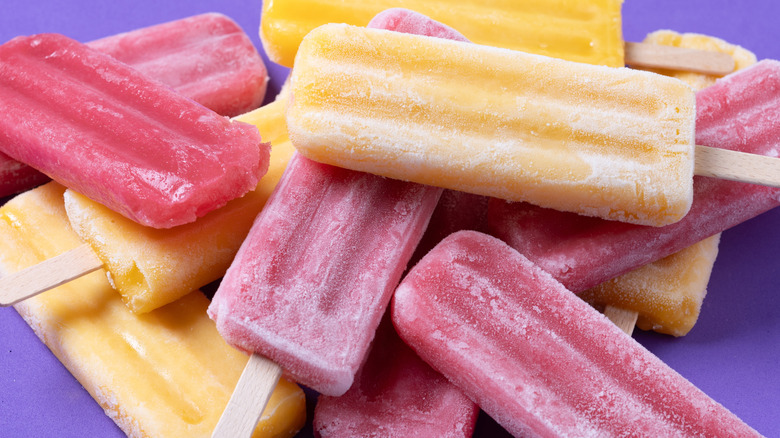
Did you know that popsicles were created by accident? At 11 years old, Frank Epperson left his drink with a stirring stick in the chilly San Francisco air overnight and found it frozen the next morning. In 1923, Epperson patented and sold his "Eppsicle," which eventually became known as the "popsicle." Although Popsicles are a brand name (owned by Unilever), it is used almost universally to refer to any fruity frozen dessert on a stick.
Epperson's creation is a testament to the entrepreneurial spirit that seems integral to California. Over 100 years later, kids across America are begging their parents for the same snack young Epperson created in his childlike absentmindedness.
California roll
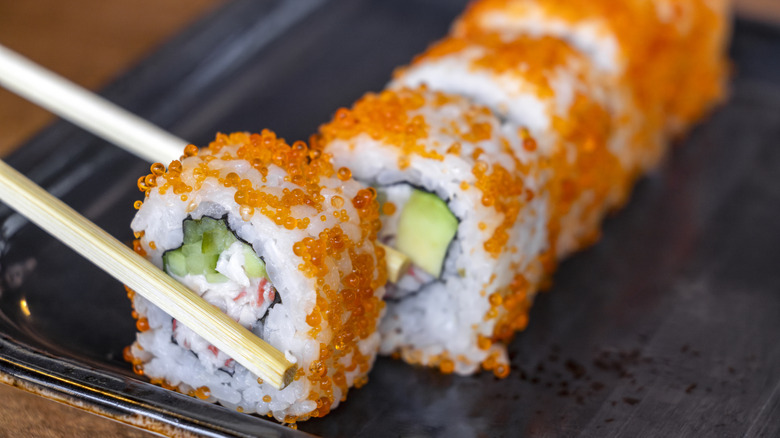
It should come as no surprise that the California roll gets its name from its home. The California sushi roll is an "inside-out" sushi roll, with white rice wrapping a nori, real or imitation crab meat, avocado, and cucumber.
LA's Little Tokyo is the origin of this iconic sushi roll. It is unclear which sushi chef actually invented the roll. Some believe it was Ichiro Mashita who came up with the California roll as a response to the lack of available fresh fish in LA at the time. Others state that it was Ken Seusa, who sought to appeal to 20th-century Americans' tastes.
Regardless of whether it was made out of scarcity or creativity, the California roll is an incredibly popular roll served at most sushi restaurants. This sushi invention is indeed a testament to California's cultural diversity, and how the state's chefs seem up to the task of meeting the diverse needs of diners.
Hot fudge sundae
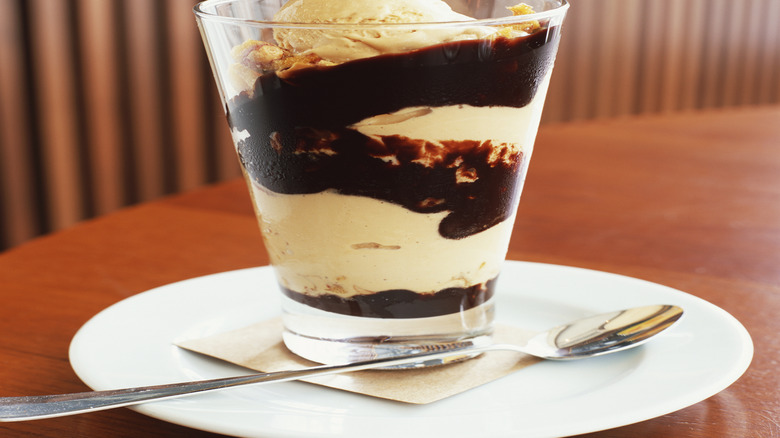
In Los Angeles in 1906, Clarence Clifton Brown, an ice cream parlor owner, had an ingenious idea to add hot fudge to ice cream. After finding a recipe that didn't completely melt the ice cream, but that also didn't go cold upon impact, Clifton figured it out and began serving the iconic sundae at his ice cream shop. Customers on a hot summer day in LA couldn't resist this new dessert combination, and Brown's parlor became known for the treat.
Today, hot fudge is almost synonymous with sundaes, and it would be hard to find an ice cream shop that doesn't offer hot fudge as a topping. What makes Brown's invention remarkable is his perseverance in making two opposing elements (hot fudge and cold ice cream) work together. Hot fudge sundaes are great for their simplicity, allowing consumers to add whatever toppings they want and make it truly their own.