

It's Probably A Good Idea To Avoid Chicken With This Label
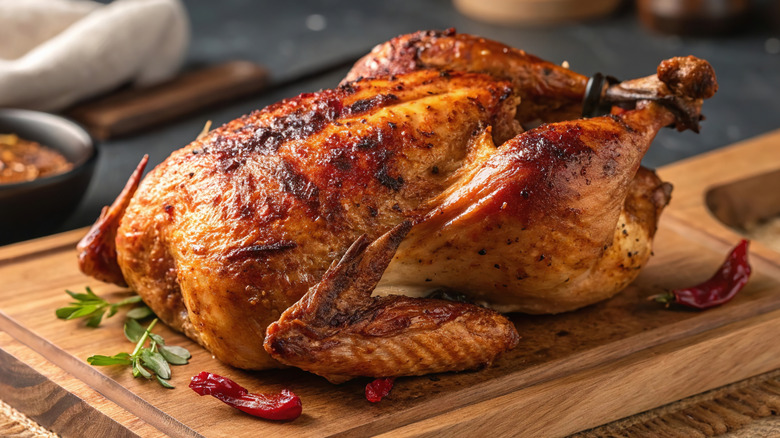
When looking for a whole chicken to roast, you're most likely going to be guided by size, price, and perhaps whether or not it's organic. But supermarket chicken labels come with a whole host of other qualifiers, among which you might see that the bird has been water chilled, air chilled, or neither of the two. We're here to tell you that water-chilled chicken is probably best avoided. But doing that is not as simple as you might think.
First off, what's the deal with chilling chicken? To meet FDA food safety standards, chicken carcasses need to be brought down to a temperature of under 40 degrees Fahrenheit within 4-8 hours of slaughter. This is to prevent the growth of harmful bacteria such as salmonella, which thrive in temperatures between 40 and 140 degrees Fahrenheit. The most efficient way to do this is by plunging the birds into a vat of cold water.
The water-chilling method has been the standard for many years and still remains the most prevalent way of processing chicken in the U.S., but it's worth being aware of the implications. The first is that during this bath, water is absorbed into the chicken, where it remains until cooking. If you're paying by the pound, you're getting less chicken for your buck, and meat that doesn't always brown as well as it should.
Perhaps what's more concerning is not the amount of water, but what's in it. It's a solution of chlorine designed to kill bacteria, but the fact that the chickens are using the same bath water so to speak increases the risk of cross contamination.
But here's the catch. If you've been avoiding the water-chilled label and opting for the seemingly regular chicken, we have bad news for you. Anything that is not labelled one way or the other should be assumed to be water-chilled chicken.
Look for air-chilled chicken instead
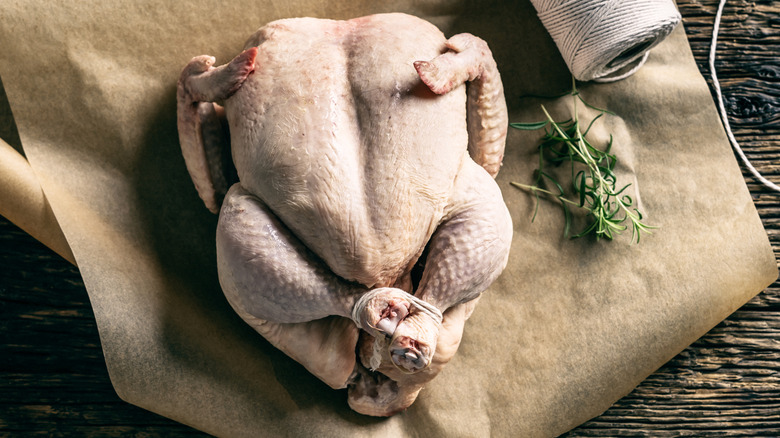
If all of this water-bathed chicken chat has put you off your roast dinner, choose air-chilled chicken instead. The process for air-chilling chicken involves hanging carcasses in what's essentially a giant refrigerator. Some use only chilled air, while others mist the chickens with chlorinated water as they hang — though the quantities absorbed are negligible compared to the dunking method of water-chilled chicken.
The price of air-chilled chickens is higher by weight, but fans of this method say that the meat is more flavorful and tender. Without the added moisture it's also easier to cook. Marinades and chicken dry rubs absorb more effectively into the skin, the bird cooks more quickly, and the skin will crisp up nicely.
Air-chilled chickens are the most common option in the EU, and have been produced in the U.S. since 1998. Despite being readily available, sales of air-chilled chicken only account for a small portion of the market. This is perhaps due to the higher price tag or a lack of awareness about the different chilling methods.
There is some concern that the air-chilling process is less efficient, meaning the chickens take longer to cool to a safe temperature. However, a small scale study found that the overall incidence of harmful bacteria in air-chilled chickens is 20% lower than when using traditional water chilling.