

Why Ground Beef Is Recalled So Often
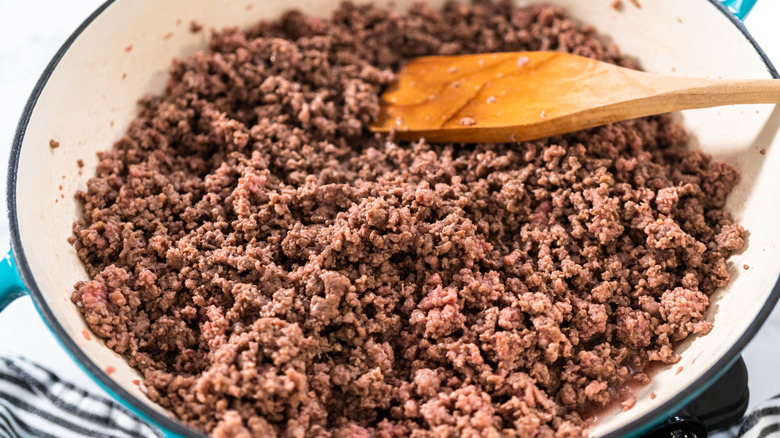
If you've noticed that ground beef is commonly the subject of food recalls, that's no coincidence. E. coli is a common culprit in some of the biggest ground beef recalls in recent history, but other pathogenic contamination like Salmonella and Listeria monocytogenes can occur, too. Ultimately, the reason ground beef is recalled so often from grocery stores, fast food chains, and restaurants has to do with how it's processed, as well as the integrity of the meat's sourcing and handling.
Ground beef — while tasty when made into burgers or Bolognese — is a risky food from a safety standpoint. It's often ground before it's packaged and shipped to stores. The grinding process itself exposes the meat's surface area to equipment, air, and other potential sources of bacteria, which is one of the reasons ground beef doesn't last as long in the fridge as whole cuts. What's more, ground beef usually combines multiple cuts to achieve a certain fat-to-meat ratio in each package. Because of this, bacterial cross-contamination from one zone of the animal to another is more likely to occur than in whole, isolated cuts of beef.
Still, this doesn't mean that you need to swear off ground beef altogether. If you do choose to continue eating and cooking with this ingredient, just make sure to practice food safety.
How to safely cook with ground beef
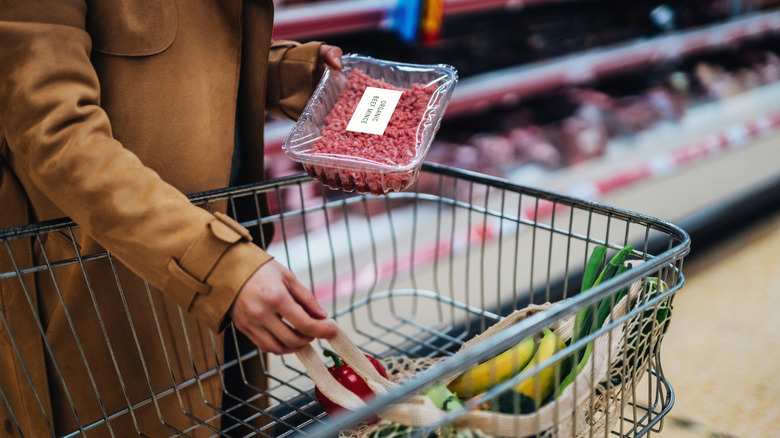
Foods get recalled if they pose serious danger and illness. While you can't always predict (or control) where restaurants source their beef, you can choose where you eat — and how you cook beef — wisely. For starters, avoid washing raw ground beef since this increases the risk of transferring food bacteria to food surfaces and nearby ingredients. Also, never cook your burgers "rare." While it might be fine to leave a steak pink in the center, the entire surface area of raw ground beef has been exposed in the grinding process, so you need to cook the entire patty, center and all, to at least 160 degrees Fahrenheit.
Finally, let's talk about sourcing: Factory farms and large slaughterhouses are often the subject of beef recalls since the risk of contamination increases when animals are kept in close quarters. Plus, historically, producers don't always catch the presence of E. coli and other dangerous food pathogens before they ship the meat to stores and restaurants — resulting in some of the worst recalls in U.S. history.
To stay on the safe side, buy smaller-scale ground beef from a local source like the farmers market or meat that's been ground on site from a local butcher. If that's not possible, look for high-quality beef at the store. Just keep in mind that high-quality and organic meat is still susceptible to contamination.