

The Likely Reason You Won't Find Dry-Aged Steak At Texas Roadhouse
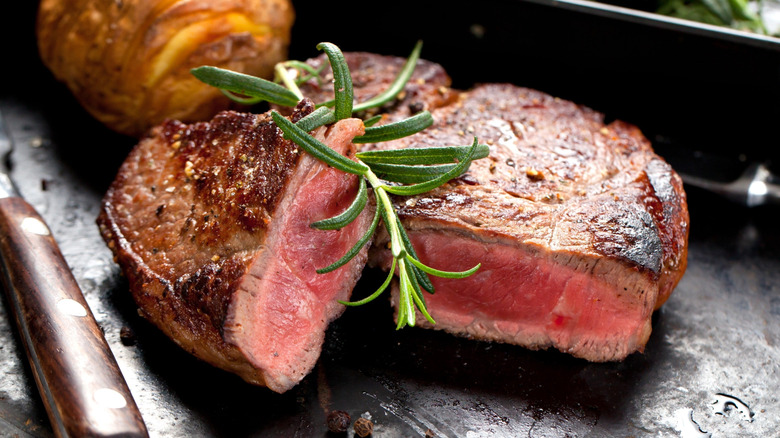
Texas Roadhouse's menu never lacks for variety — even after you settle on steak for dinner, you can choose from an impressive ten different cuts. However, having a lot of steaks doesn't make it a fancy butcher shop, which means you're not going to find dry-aged beef for purchase. The company has never made any statements on why it doesn't offer dry-aged meat, but it's likely because each restaurant butchers its steaks in-house.
It's complicated to fully explain what dry aging does to beef and steak, but the main effect is moisture evaporation, which creates savory, complex flavors and an extra-tender texture that are highly prized. This requires time and space in ample quantities: The steaks must be strung up in a humidity- and temperature-controlled environment and left to dry for at least 60 days in most cases, through you can go shorter or longer.
It's unlikely that most Texas Roadhouses have enough space in their kitchens to dedicate to this process. A solution would be to slice and age the meat off the premises, but the company guarantees that all of its steaks are freshly cut on-site. This famous policy explains why it's not feasible for the chain to dry-age beef at every location. You may not find dry-aged steak at the grocery store for similar reasons. However, steaks at the Roadhouse don't go right from cleaver to plate, either. Each store actually does age its beef for a relatively short amount of time.
How long Texas Roadhouse actually ages its steaks
Besides the in-house butchering, there are lots of things you should know about Texas Roadhouse and its steaks. All the cuts on the menu are Choice-grade beef and aged for different times, with tenderloins sitting for two weeks while all other cuts take 22 to 25 days. Texas Roadhouse has not released further details on how the process is done, but we would guess that it uses wet-aging.
The big difference between dry-aging and wet-aging beef is that the wet method involves sealing the meat in plastic instead of leaving it out to dehydrate. This allows it to soak up its own juices, improving the tenderness and moisture retention. Wet-aging is also a lot more convenient for a chain restaurant, as it requires less space and creates a subtler flavor that pairs better with condiments and toppings. Texas Roadhouse offers steak accoutrements like horseradish, peppercorn sauce, and a smothering of mushrooms, onions, and gravy or cheese. The intense flavor of dry-aged steak might compete with these offerings.
Another well-known trait of dry-aged beef is that it's quite expensive. At online vendors, a single dry-aged steak usually costs over $40, and can even command prices of over $100 for large, prized cuts like ribeye and porterhouse. Part of Texas Roadhouse's appeal is the relatively affordable prices for its full steak dinners, so dry-aged beef may not mesh with its current image and customer base.