

The Pantry Staple That Cuts Through Stuck-On Gunk In Your Toaster Oven
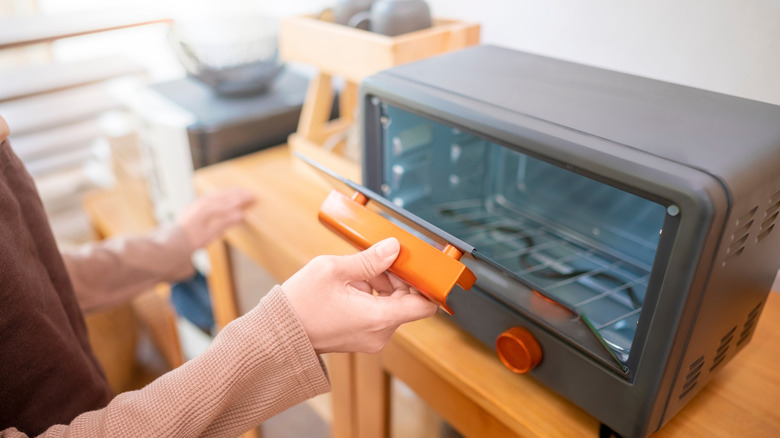
A toaster oven might start as a glorified bread browner, but once you have one, it quickly becomes indispensable. But the more you rely on it, the gunkier it gets. What starts as a few crumbs quickly turns into blackened streaks of grease spatter mixed with food particles and dust, which then gets baked on with every cycle. Soap and water barely make a dent once that film hardens. That's where this pantry classic steps in: baking soda. Mixed with water, it forms a paste that clings to metal and glass, softening the grime without harsh chemicals. The slight grit acts like a polishing agent, breaking up the carbonized layer so it wipes away instead of smearing around. Unlike abrasive powders or steel wool, baking soda's gentle alkalinity dissolves grease but won't scratch enamel or stainless steel.
It's a little non-toxic TLC for the little oven that probably pulls more than its weight in your kitchen. A toaster oven uses far less energy than firing up a full-sized oven, and it usually gives better results than a microwave, which tends to reheat unevenly and can make bread rubbery. But all that efficiency only pays off if the machine itself stays in good working order. A regular elbow-grease session powered by baking soda paste clears away buildup before it turns into a permanent stain, keeps lingering odors from passing into tomorrow's meal, and restores the reflective shine. It's a trick that protects the tool that protects your time, your food, and your power bill.
Good as new
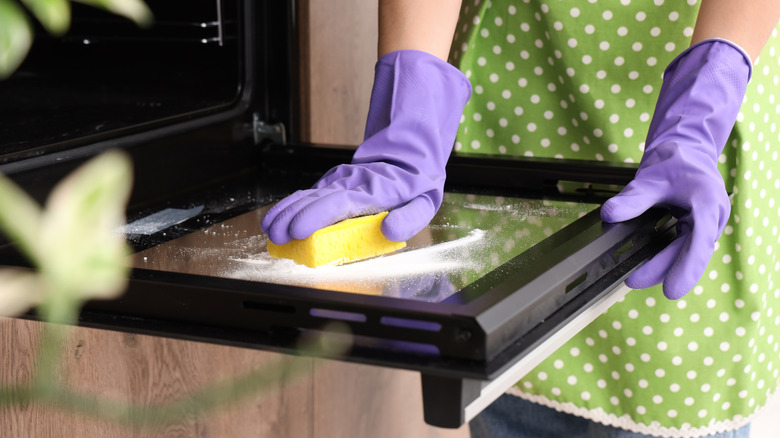
To try it, scoop a few tablespoons of baking soda into a small bowl and add water until you have the consistency of toothpaste. Unplug the toaster oven, give it a shake over the trash to clear out crumbs, then smear this paste over the oven's exterior and interior walls, door glass, racks, and trays. Let it sit for 10-20 minutes (longer for heavy buildup). When you return, scrub gently with a sponge, rag, or even a paper towel; you'll notice the paste darken as it lifts away gunk. Rinse with a clean damp cloth, and repeat on stubborn spots. Avoid the heating elements themselves, which should only ever be wiped with a dry or slightly damp cloth.
What makes this trick so effective is the chemistry. Baked-on grease is a mix of oxidized fats, food sugars, and airborne particles that fuse into a polymer-like crust under heat. Soap alone can't easily penetrate, but baking soda's mild alkalinity loosens the bonds while its micro-crystals provide mechanical lift. The result is like microdermabrasion for your kitchen appliances.
Once you see how well it works, you can expand the method; toaster trays, baking sheets, oven doors, even stovetop drip pans all respond to the same paste. One cheap box of powder is a veritable toolkit for keeping your small oven, and much of your kitchen, cleaner, safer, and ready to cook.