

You Can Easily Turn Homemade Focaccia Into Pizza With One Extra Step
We may receive a commission on purchases made from links.
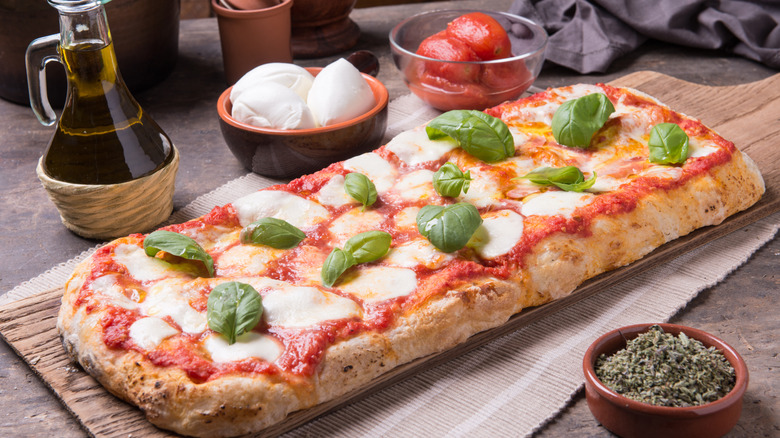
A good homemade focaccia is rich, salty, and fragrant. Though focaccia was traditionally used as a dipping bread for salty soups, it can now be modified in almost any way you can imagine — even as a pizza crust. With its distinctive olive oil flavor, crispy crust, and soft, airy center, it actually makes the perfect pizza base. Tasting Table spoke to Tony Gemignani, 13-time World Pizza Champion and chef owner of Tony's Pizza Napoletana in San Francisco, to find out how to turn homemade focaccia into pizza.
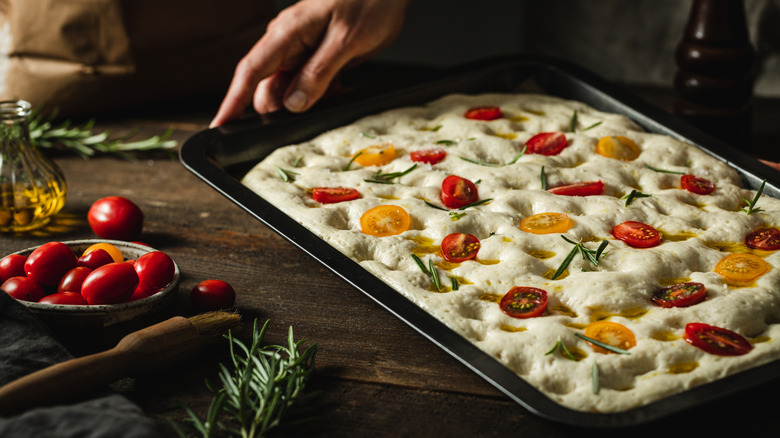
Gemignani told us that the best tool to use for parbaking your dough is a deep pan. He says, "I recommend Lloyd pans for Sicilian or focaccia-style pizzas. Coat the pan with Crisco, which grips the dough better than olive oil, preventing it from sliding back." Next, you want to properly prepare the focaccia dough so that it can be used as pizza crust. Gemignani recommends that you "Stretch and dimple the dough into the corners, ensuring even thickness, then drizzle extra-virgin olive oil on top. Allow the dough to rise for several hours."
You can tell that your focaccia pizza dough is ready to stretch if it feels soft but slightly firm when you press a finger into it, and slowly begins to rise back about halfway to its original shape. Once the dough has properly risen, Gemignani says to "add more olive oil, rosemary, and sea salt, then bake in a 500 [degrees Fahrenheit] oven until golden brown." He also recommends "using a baking steel beneath the pan [to] help crisp and brown the bottom."
More expert tips for making pizza with homemade focaccia dough
Gemignani also offered us some insight into the best type of focaccia for pizza dough. He says, "High-hydration doughs paired with high-gluten, high-protein flours work best." This is because it creates an airy, open crumb with a good, chewy texture. The combination of a high-hydration, high-gluten dough means you'll have larger air bubbles, a softer crust, and a better texture. The added hydration also allows for a crispier exterior and better flavor development. A roasted garlic focaccia with lots of olive oil has optimal hydration for pizza dough.
He also told us what to use to improve the color and texture of your focaccia pizza crust. He says, "I also recommend adding a browning agent such as low diastatic malt, honey, or sugar." These ingredients caramelize at lower temperatures and promote the Maillard reaction, which gives your crust a golden brown color and the ideal crispiness you're looking for. Finally, he added that "A double rise is essential for a light, airy texture and improved digestibility."
What toppings can you add to a focaccia pizza? Because focaccia is so light and airy, we recommend not weighing down the dough with a lot of heavy toppings. The best pizza toppings for focaccia are ones that have a lot of flavor, can be cut into thinner pieces, and will crisp and brown nicely in the oven. Try to pick three or less, and avoid large chunks of heavy meat like chicken breast or large pieces of vegetables that are fibrous or have a high water content, like cucumbers, zucchini, and bell peppers.