

Think Twice Before Buying One Type Of Lobster At The Grocery Store
We may receive a commission on purchases made from links.
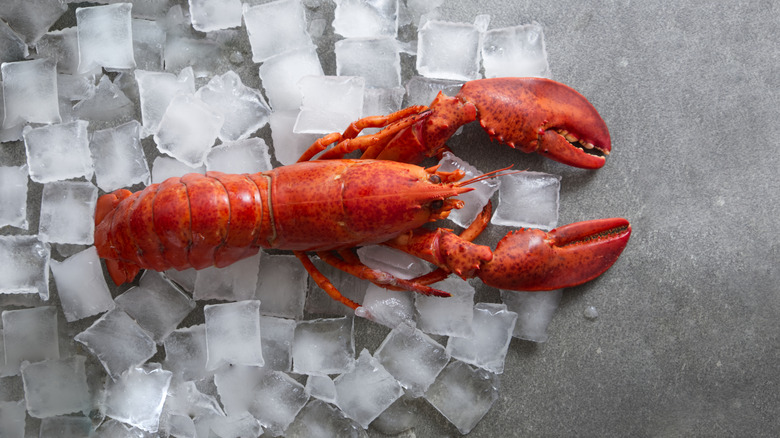
In "Infinite Jest" author David Foster Wallace's landmark essay "Consider the Lobster" — a journalistic exploration of the Maine Lobster Festival — he memorably wrote, "[L]obster is posh, a delicacy, only a step or two down from caviar. [...] In the U.S. pop-food imagination, lobster is now the seafood analog to steak, with which it's so often twinned as Surf 'n' Turf on the really expensive part of the chain steak house menu." So, surely canned lobster must be a huge stride towards accessibility, right? Not exactly. In Tasting Table's roundup of 14 canned goods that are way too overpriced for what they're worth, canned lobster ranked alongside other easily skippable offerings like gourmet soups and imported tomatoes.
Canned lobster is typically a combination of claw, knuckle, and tail meat packed neatly in saltwater brine. Back in the 1880s, before the advent of refrigeration, canned lobster was a more popular offering even than live lobster. Suddenly, folks who didn't live in coastal areas had easy access to lobster, which was abundantly populous and traditionally eaten by the lower and working classes. But, nowadays, utilitarian shelf-stability no longer needs to be the top priority for modern foodies.
We have fridges and freezers at our disposal. As such, if you're going to cook with lobster at all, we recommend ditching the canned stuff in your pantry. Canning lobster interrupts its flaky, tender texture, which is arguably the most important aspect of the meat's appeal. Perhaps unsurprisingly, stuffing luxe lobster meat into a can and then leaving it for weeks or months on end impacts its quality.
Canned lobster meat isn't even as accessible as it seems
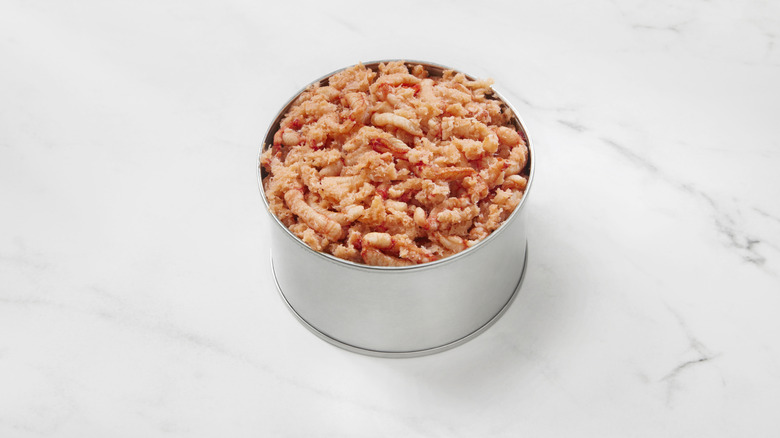
While it's true that canned lobster meat can be a shelf-stable and simple way to upgrade homemade seafood dishes, it still doesn't make this product worth buying, or even all that accessible either. A single 3.2-ounce can of Scout Atlantic Canadian Lobster retails for a whopping $29.95 on Amazon. Granted, Scout's offering is just one brand (and certainly one of the better options, with committed sustainability practices and a Spanish lemon olive oil canning brine). Bar Harbor brand canned lobster meat, on the other hand, runs for $19.38 per 6.5-ounce can at Walmart, which is cheaper but still wicked expensive for canned food.
It's also worth noting that, a lot of the time, canned lobster meat tastes more like the inside of an aluminum can than anything like the sweet, tender lobster chunks that foodies might reasonably expect from it. Meanwhile, for the same price ($29.95), Maine-based purveyor Lobster Anywhere sells 6-7 ounces of fresh frozen lobster tails, and ships them for free all across the U.S. There's no reason to relent and buy the canned stuff.
If you're craving a more low-key taste of lobster flavor, look to Better Than Bouillon's premium lobster base. This highly-concentrated paste packs major seafood savoriness, sans tinned can taste, and at $8.14 per 8-ounce jar (enough to make 9.5 quarts of broth), it's a long-lasting fridge staple that can satisfy a lobster craving on a dime. Or, use canned crab meat, scallops, or pollock as an alternative in your go-to lobster recipes.