

The Effortless Trick For Picking The Juiciest Pomegranates At The Store
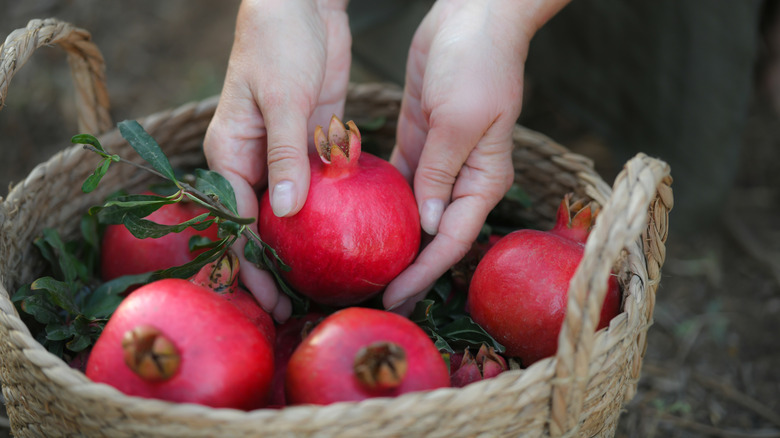
Pomegranates arrive cheerfully in markets just as the days begin to turn cold, their ruby skins glowing like lanterns lighting up the dreary, gray months ahead. They're not the most common fruit in American kitchens, but they've been cultivated for centuries, as far back as the Bronze Age, across the Middle East and Mediterranean, celebrated for both their beauty and their tart-sweet flavor, and associated with myth and cultural identity. They're worth seeking out for their balance of tart and sweet, as well as the drama they bring to a table, and choosing the right one at the store is simpler than it seems.
The simplest trick for choosing a good one is to pick it up. A ripe pomegranate should feel unexpectedly heavy in your hand, almost dense for its size. That heft signals plump arils brimming with juice, while a lighter fruit often means the seeds inside have dried or the chambers are hollow. Comparing a few side by side makes the differences obvious. No scale needed, just trust the weight.
Color is another sign, though less exact and more of a vibe. Pomegranates range from deep garnet to lighter rose, depending on the variety, but look for skins that are richly hued, firm, and taut. Small surface blemishes are normal, but avoid fruit that feels soft, spongy, or has large cracks, which can mean it's past its prime. The skin may also develop angular ridges as the arils swell beneath it, which is a good sign that the fruit is ripe and full. After a few tries, your hands will learn the difference.
Seeds without splatter
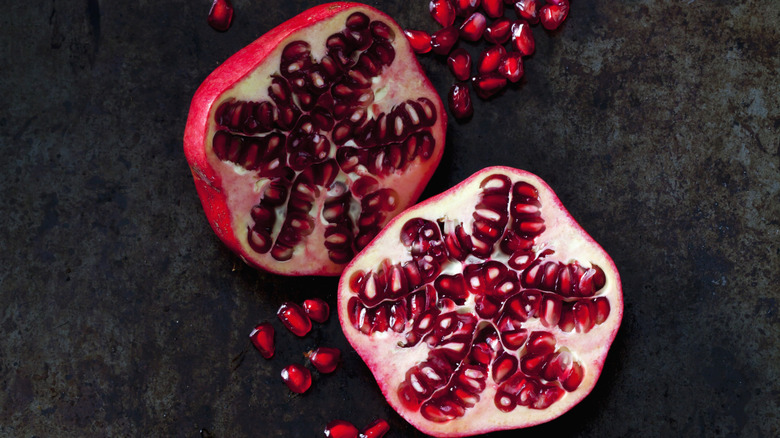
Bringing home a perfect pomegranate is only half the challenge; the rest is liberating the seeds without splattering the kitchen. The easiest method is surprisingly low-tech. Start by scoring the skin lightly, not deep enough to get to the seeds, but slicing only through the outer layer in a shallow cross or around the crown. Then gently pry the fruit apart under a bowl of cold water. Submerging it keeps juice from spraying, and it separates naturally, the arils sink while the bitter membrane floats to the surface. Continue prying the seeds gently, allowing them to wiggle free from the pith and pop out under the water. A quick skim and strain leaves you with a bowlful of edible rubies, no mess required.
Once you have them, the uses are broader than most people imagine. Beyond tossing arils into green salads, try folding them into couscous with herbs and pistachios, or scattering them over roasted squash. Blending the seeds in a food processor creates a vivid garnet juice that's tangy enough to sip on its own and dramatic in seasonal cocktails or mocktails. Stir them into yogurt parfaits, churn them into sorbet, or even use the juice to glaze meats the way Middle Eastern cooks have done for centuries.
Part of the pleasure of pomegranates is their versatility; they offer crunch, juice, and color all at once. And because they're so tied to the season, from Rosh Hashanah tables to solstice feasts, they carry a sense of occasion. A few extra minutes of consideration in the produce department can reward you with jeweled brightness in the middle of autumn and into the winter.