

Why Tofu Can't Be Considered An Ultra-Processed Food
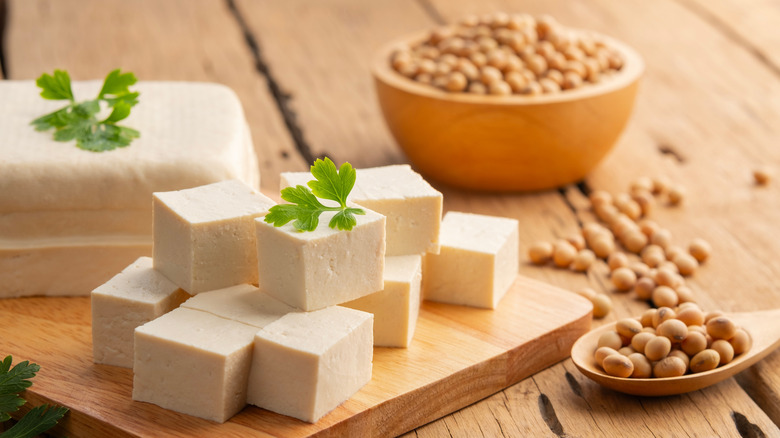
Made by soaking and grinding soy beans with water, boiling them, and adding a curdling agent — tofu is not all too different to cheese. Squeezed to remove any liquid and left to set, it is not any more processed than it, either. In fact, one of the seven myths everyone needs to stop believing about tofu is that it's an "ultra-processed" food, a term that groups it in the same category of foods like soda and white bread. When it comes to foods like these, what makes them "ultra-processed" as opposed to simply "processed" is not just the presence of added ingredients, but how many of them they contain.
Harvard Medical School defines food processing as any form of altering by adding ingredients. But, processing only becomes "ultra" processing when the addition of those ingredients borderline on excessive, leading to copious amounts of salt, fat, sugar, dyes, or preservatives. So, while tofu is a processed food, it could never be considered an "ultra-processed" food because it does not contain any added ingredients apart from water and a coagulant — an ingredient that, paired with the soybeans, is responsible for its classification as a greater source of calcium than milk. So, while the word "processed" has a negative connotation, tofu goes to show that some amount of it is not only safe for you — but beneficial. Too much of it, on the other hand, is not, with studies showing a correlation between the consumption of "ultra-processed" foods and an increased risk of chronic diseases.
Cooking with tofu
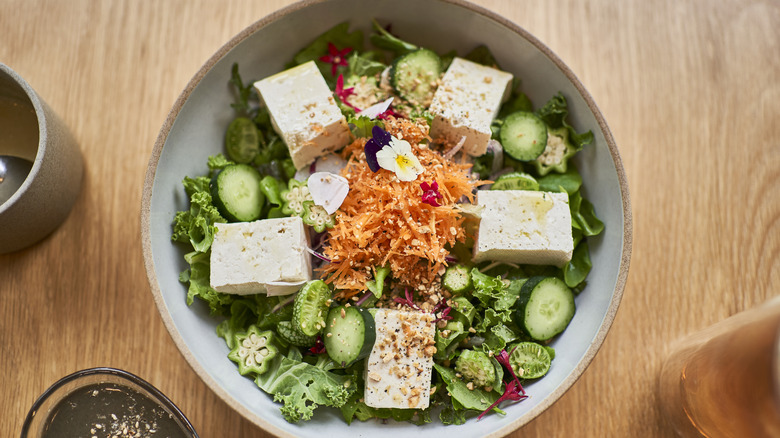
Now that you have the green light to consume as much tofu as you like, all you need to do is learn how to cook it — and cook it right. Of course, there are a wide array of store bought tofu brands to choose from. But, there are also different varieties of tofu, each delivering a different texture. Typically, silken tofu is best for soups and stews while the firm, medium firm, and extra firm varieties work in scenarios involving the stove top, oven, or grill. But, with the exception of silken tofu, every variety of tofu is going to require a certain amount of pressing first.
Pressing your tofu is essential to ensure its texture holds up throughout the cooking process and absorbs flavors. Rest assured, no tofu press is actually needed — simply wrap your block in a towel, balance a cutting board on top, and make use of your canned goods by using them as a weight on top. You can also experiment with freezing or boiling your tofu prior to cooking it, which will further draw out moisture and make more room for flavors to seep in. Any next steps — such as frying, marinating, or grilling your tofu — will depend on your method of preparation. In fact, some dishes might not require any cooking at all. Fortunately, we have 22 recipes that will make you fall in love with it instantly, whether it's cooked, fried, baked, or served soft and cold.