

16 Facts About Burrata Cheese You Should Know
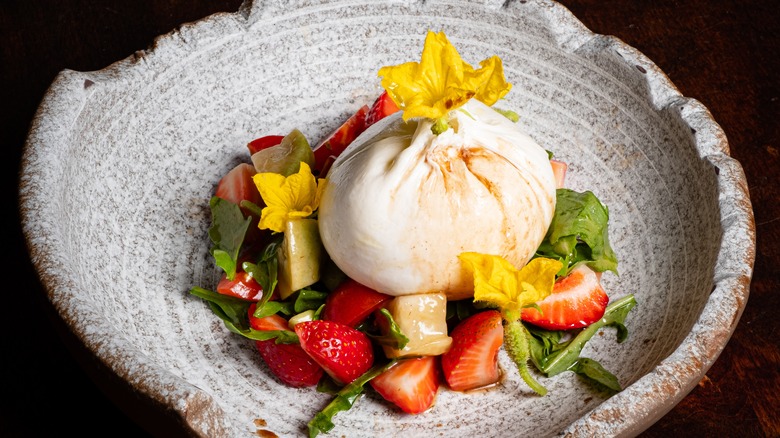
There's no disputing the fact that burrata is currently trending in countries around the world. Though the cultural and culinary origins of this cheese can be traced back to southern Italy, chefs have since discovered that it vibes well with global ingredients like miso, corn, and avocados, too. This article will give you a primer on burrata so that you know what to expect when purchasing and consuming it, how to better incorporate it into your recipes, and how to make and store it.
In curating this guide, we have consulted three burrata experts: Mark Federico, owner of Narragansett Creamery; chef Francesco Lamanna, a Calabrian native who is responsible for the fabulous dishes at San Babila in Manhattan's Upper East Side; and Amy Sherman, the editor-in-chief of The Cheese Professor. Together, their insights elucidate why burrata is such a coveted cheese, as well as how nuanced it can be.
Burrata is only about a century old
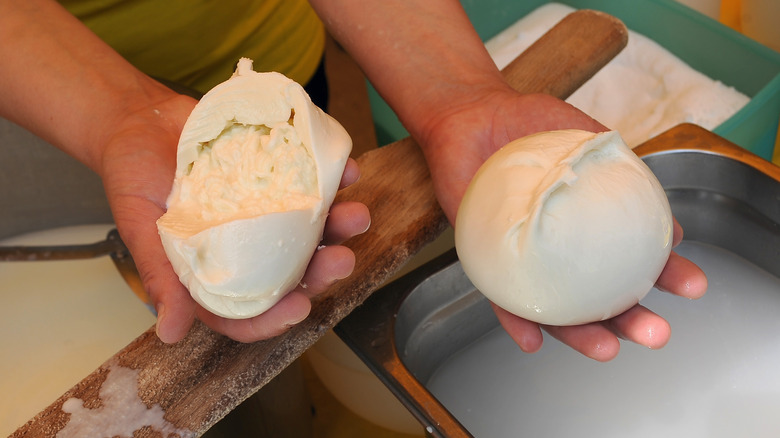
Though the crusade to avoid wasting food has truly taken off in light of global warming, folks have been saving every last morsel for centuries — often for economic reasons, or else in the face of scarcity. We can thank Italian cheesemongers in the 1920s for having the creativity to repurpose extra mozzarella and cream into balls of burrata. Who exactly had the revolutionary idea is up for debate, though plenty of evidence points to a man named Lorenzo Bianchino Chieppa.
Regardless, it is generally believed that the responsible cheesemonger lived in southeastern Italy, near the city of Andria in the Puglia region. By the 1930s, burrata had become popular among other cheesemongers in the area and was very much in vogue. Even today, the integrity of burrata di Andria is safeguarded by a Protected Geographical Indication (PGI), and it is worth a try if you are in the area.
This cheese is also known as the queen of Italian cheeses
Since burrata's early days, when it was made in smaller batches using hyperlocal milk, technology and demand for the cheese have skyrocketed. By the 1950s, factories had started to produce burrata en masse, and it wouldn't be long before the winds of globalization introduced the creamy cheese to consumers around the world. Google search trends for burrata have steadily risen over the past few decades, not only in the United States, but also in countries like Sweden, the Netherlands, and Belgium.
Meanwhile, Italy has been exporting more and more of the cheese to meet global demands, even while the domestic market remains strong. Like mozzarella, burrata is considered an elegant cheese, and it has intriguing textures and a superb flavor to boot. With all this information at hand, it becomes clear why burrata has justifiably earned the nickname, the "queen of Italian cheeses."
Burrata is a soft cheese
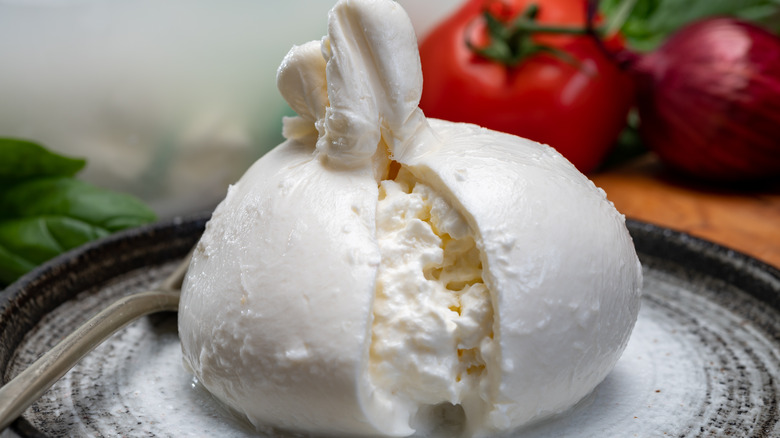
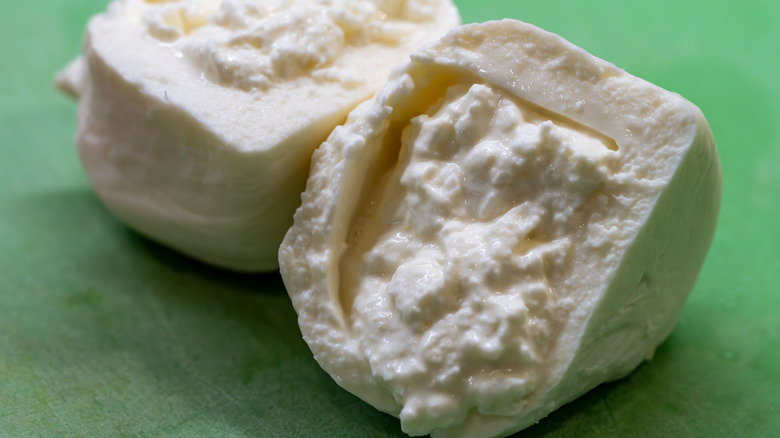
Although burrata consists of two textures — a creamy center encased in a more structured shell of mozzarella — it is nevertheless considered a soft cheese. This is no ambiguous classification and hinges on both moisture content and production technique. Mark Federico explained to us that soft cheeses like ricotta, mozzarella, and burrata possess moisture contents between 55% and 70%. Burrata's high moisture content is largely responsible for its short shelf life, which we'll touch on more later.
Meanwhile, semi-soft cheeses like Gouda, Monterey Jack, and Muenster feature moisture contents ranging from 45 to 55%. Federico noted that these cheeses have a smoother, tighter texture because of their cheese cultures. Finally, hard cheeses like Parmesan, asiago, and cheddar won't score above 39% on the moisture scale. "During the manufacturing process, the curds are heated and stirred to remove much of the moisture," said Federico. "These cheeses are aged to produce the expected flavor profile."
Burrata is made using stracciatella and mozzarella
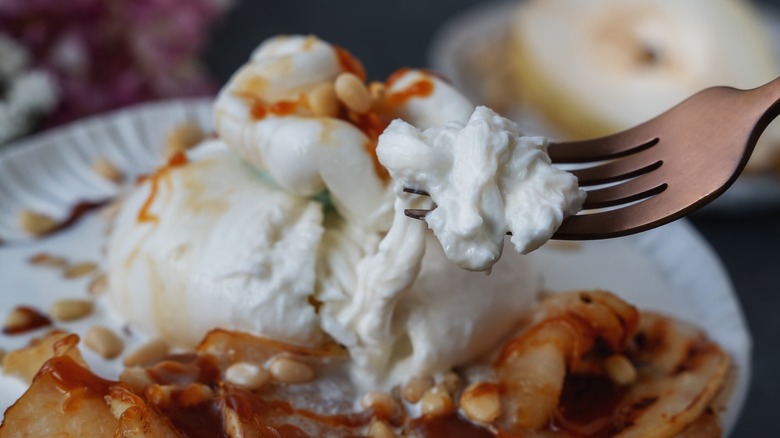
"[Burrata] is not an easy cheese to make," said Francesco Lamanna. It requires you to first prepare and shred mozzarella, a cheese that consists of milk, rennet, citric acid, and kosher salt. While Amy Sherman believes that burrata "is not difficult to make," she did note that "it takes time to learn how to pull and stretch the curds." These mozzarella shreds are then combined with cream and a bit of salt, at which point the mixture is known as stracciatella (this mixture has no relation to the soup or the gelato, except in name).
The stracciatella is then stuffed into a casing of mozzarella. Years ago, cheesemongers would blow into fresh mozzarella to give it shape, but now, air compressors are often used. Still, Lamanna shared that the mozzarella needs to be pliable enough not to break, while the filling should not be too heavy. Finally, each ball is pinched at the top to secure the filling, giving burrata an artisanal, graceful appearance. "Like many Italian traditions, it demands patience, skill, and respect for the ingredient," said Lamanna. "Great burrata is always handmade — it carries the heart of the cheesemaker in every bite."
In Italy, you might find burrata wrapped in asphodel leaves
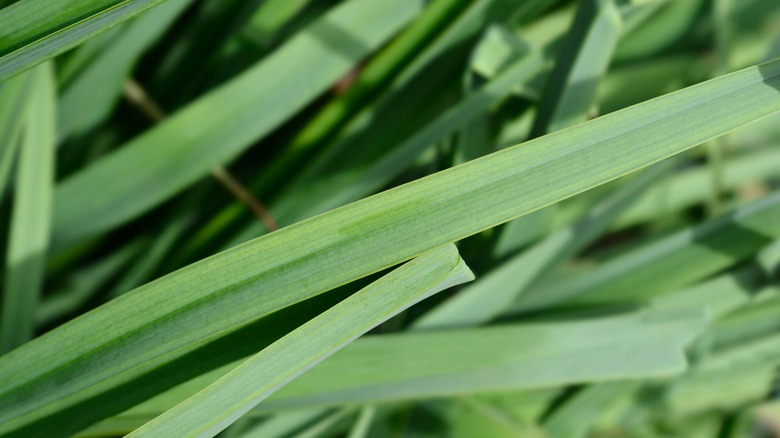
Leaves have traditionally been used to transport, preserve, and serve many food items over the years. Examples include Greek dolmas (grape leaves), Gujarati patra (taro leaves), and steamed fish (banana leaves). In Italy, asphodel leaves were traditionally used to keep burrata moist. Long and thin, these leaves are part of a perennial plant that explodes into beautiful blooms of pink, yellow, and white hues.
The asphodel leaves also functioned as a kind of litmus test for the burrata; if they were still vibrant and fresh, one could reasonably presume that the cheese inside was, too. In Europe, asphodel can often be found growing wild, and you might find small burrata producers still using the plant's leaves to wrap burrata. Finding burrata wrapped in leaves elsewhere is not out of the question, even if only for decorative purposes, but plastic is more common in the modern day, especially for commercial products.
Burrata is especially noteworthy when served at room temperature
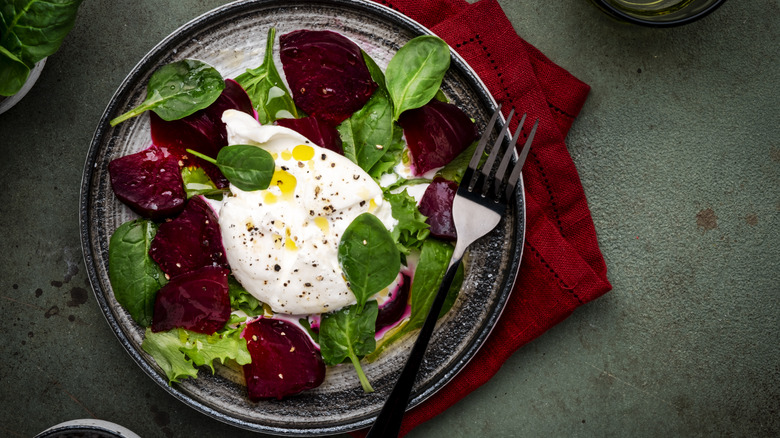
Some foods hit the palate differently when served at room temperature — Port wine, for instance, or a bowl of guacamole. Scientists reason that this happens for a few reasons: First, the volatility of aroma molecules changes with heat, and second, our taste buds may be more sensitive to food when it is warmer.
Ultimately, the best way to serve burrata is often on its own at room temperature. Like many other cheeses, you can better appreciate the complexities of burrata if you have the patience to let it sit on the counter for half an hour or so before consuming it. Sweet and sour notes alike may surface during that time. In addition to flavor, the warmer environment will improve the texture of burrata; refrigeration tends to make burrata balls too firm. Indeed, Francesco Lamanna shared that the two distinct textures of a burrata ball are part of what makes it so appealing; he described how the mozzarella casing should be elastic, yet seamlessly meld with the creamy filling in each delicious bite.
Italian burrata is sometimes made with buffalo milk

While cow's milk is the norm for making burrata, buffalo milk is occasionally used as a substitute in Italy. Amy Sherman explained what makes buffalo milk burrata unique. "It is higher in fat, and even richer and creamier than the cow's milk burrata," said Sherman. Part of this textural difference can be attributed to the fact that buffalo milk has a lower water content than cow's milk.
Francesco Lamanna told us that there are distinguishable flavor differences, too. "Cow's milk burrata is what most people know," he said. "It's light, clean, and versatile, with a subtle sweetness that makes it easy to pair with many dishes." This is in contrast to buffalo's milk burrata, which he described as richer, tangier, and more nuanced. He further painted the picture by comparing the cow's milk burrata to a refreshingly crisp white wine. Meanwhile, "buffalo's milk burrata is its full-bodied cousin — deeper, more layered, and meant to linger on your palate," he said.
This cheese is known for its complex, buttery flavor
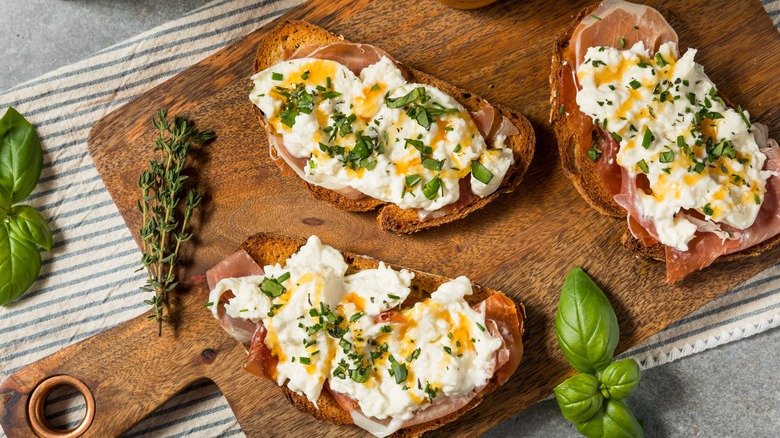
Though butter is not an ingredient in these tasty balls of cheese, you will certainly be able to taste notes of it, especially when you delve into the creamy centers. "The name — burrata, from burro ('butter') — reflects its indulgent texture," Francesco Lamanna said. He went on to describe burrata's flavor as "milky, buttery, and light," noting that the cheese is never the same each time. "Because it's fresh, its character shifts with the seasons."
Indeed, the cows' diet can also make a noticeable difference. "Some slight changes in the flavor may occur between winter and summer depending on whether the cows are grazing on grass," Mark Federico said. Another similarity burrata shares with butter is that while it is rich, it is also host to a range of subtle flavors. Because soft cheeses are unaged, "what you taste is the pure sweetness of milk," Lamanna said. "Burrata, in particular, is about celebrating freshness; it's delicate, almost fleeting."
You'll likely be able to find burrata in a standard grocery store
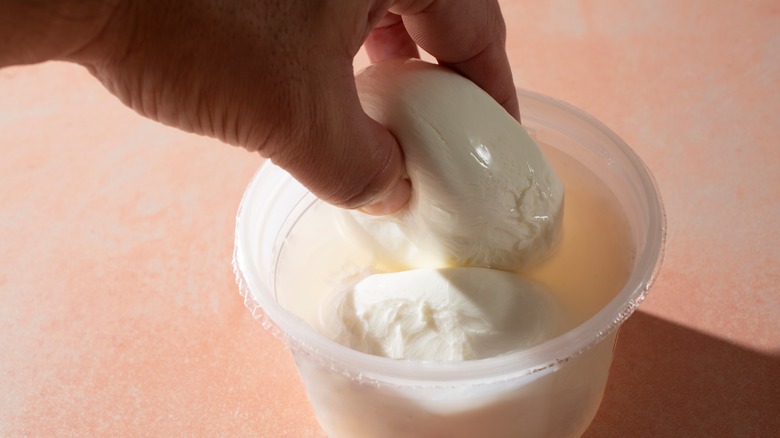
From Aldi to Whole Foods, burrata is commonplace at many brick-and-mortar grocery stores across the United States, especially since the popularity of this fancy cheese has been booming over the past decade or so. Traditional variations are sold under brand names like BelGioioso Cheese and Narragansett Creamery, but unique products like Trader Joe's truffle burrata are occasionally available, too. Vantia is one of our top brand recommendations for burrata that is versatile enough to be used in a variety of recipes.
Look for burrata in the refrigerated section next to other cheeses; the balls will likely be packaged in plastic tubs, and you can repurpose the brine for later recipes. Because burrata is best consumed fresh, though, you might enjoy it more when sourced from a local farmer. Either way, you'll probably find that burrata comes with a slightly higher price tag than mozzarella due to the additional ingredients and production steps.
The demand for burrata rises during the warmer months
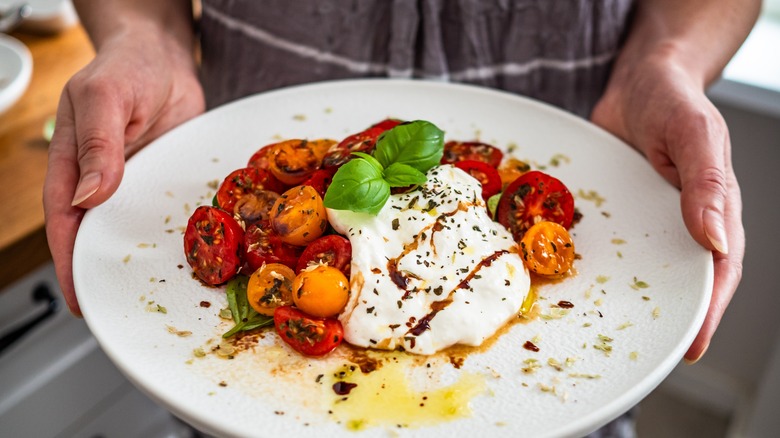
Because burrata pairs so well with tomatoes and stone fruits like peaches, apricots, plums, and cherries, burrata sales often rise when the weather turns warm. Strawberries are also a great complement for burrata, so you may even start to see more of this cheese in the springtime. The craze continues until pumpkin spice season, when figs, pears, and apples commonly star alongside burrata on menus. In addition to the boost given by complementary produce, Amy Sherman said that there tends to be higher consumption during spring and summer seasons because there is more milk production.
While your local cheesemonger may sell out of burrata more quickly during the warmer months, the supply of commercial varieties may remain more stable. If you don't like the looks of what you find on grocery store shelves, however, see if you can source some high-quality burrata from a specialty shop online. It may not be economical or eco-friendly enough to ship burrata to your doorstep on a regular basis, but splurging for a special occasion is nevertheless an option.
One serving of burrata is not always the whole ball
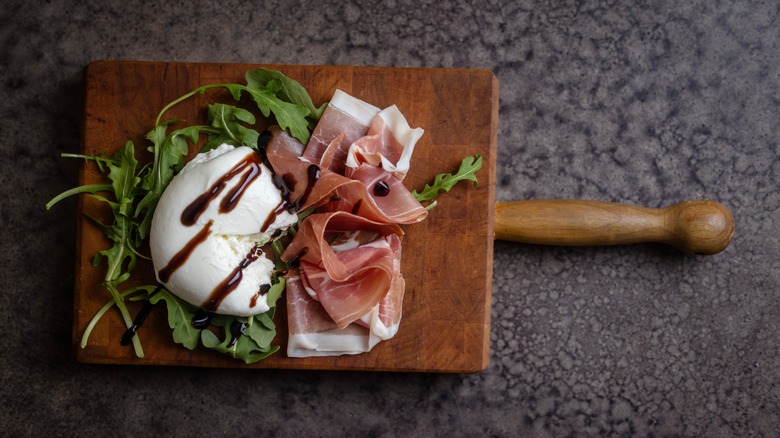
When being served burrata at a restaurant, the ball may already be broken up — for instance, when the cheese is used as a topping for pizza. However, burrata is so aesthetically pleasing in its whole form that this is not always the case. Even though burrata is usually served in whole balls, these portions are often meant to be shared with one or two other people. So if you have a 4-ounce ball in front of you and the serving size is only 1 ounce, you can split it between friends or save some for later.
Of course, no one is going to stop you from eating the whole ball if you want to do so, but knowing that you aren't expected to commit to such a large hunk of cheese can help you savor each bite without feeling unnecessary pressure. If you can find the bite-sized burratina, however, you might just pop the whole thing into your mouth.
Burrata has a short shelf life
"Burrata is not just a fresh cheese; it's a super-fresh cheese," said Amy Sherman. She shared that in order to best savor burrata's famously soft texture, the cheese should be eaten within a few days of manufacturing. Francesco Lamanna shares a similar thought, saying that you should waste no time in eating soft cheeses with high moisture content; he also noted that hard cheeses, like Parmigiano Reggiano or Pecorino, are completely different. "If burrata is the poetry of the present, hard cheeses are like novels — you savor their richness over time."
But if you don't feel like you can eat that much burrata over the course of a day or two, take heart: When covered in water or brine in an airtight container, burrata can typically last up to five days in the coldest part of your refrigerator. That said, its quality will noticeably diminish as the clock continues turning. Finally, as you might expect, this cheese does not hold up well to freezing, so don't even try.
There's no wrong time of the day to eat burrata
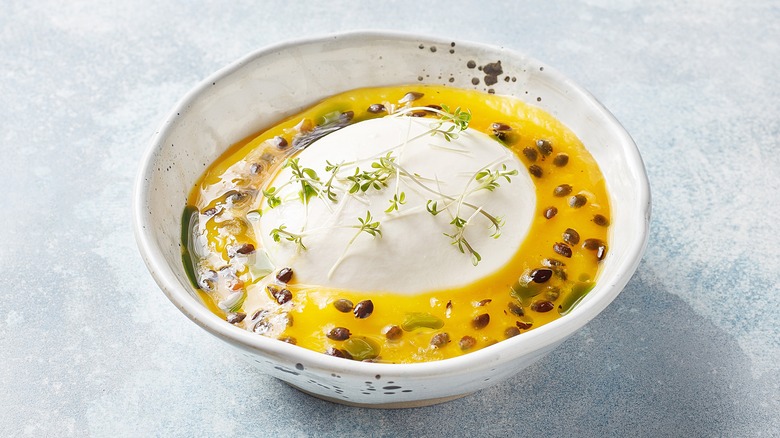
If you are in the mood, you could easily eat burrata for breakfast, lunch, dinner, and even dessert. That's because this cheese is versatile enough to star in sweet and savory dishes alike. For instance, you could add burrata to avocado toast in the morning, then incorporate it into gnocchi alla vodka for an impressive lunch or dinner. Mark Federico shares that burrata can be served as dessert with fresh berries and honey. We agree: Adding burrata to fruit cobbler is a delightful twist on a summertime classic.
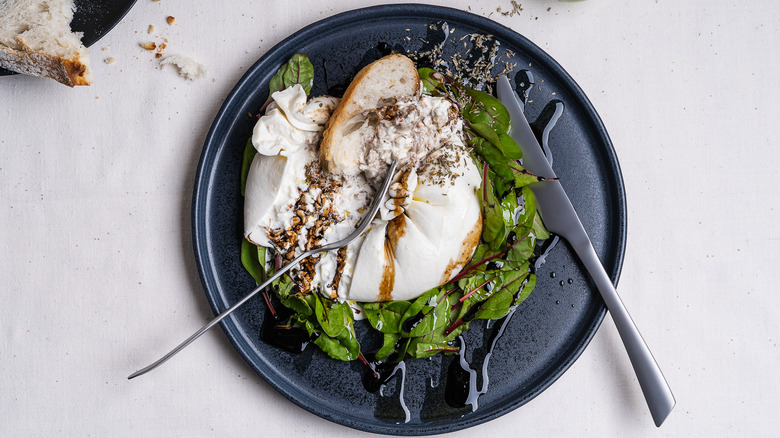
As a bonus, you might not even need to put in that much effort to do burrata justice. Amy Sherman suggested serving it in a salad alongside fresh fruits, especially figs, stone fruits, and tomatoes. Francesco Lamanna said that when he is in Italy, he enjoys eating burrata "just as it was intended," and that means it's served with bread, olive oil, and tomatoes. "It's the perfect expression of Mediterranean simplicity," he explained. Another straightforward way Lamanna likes to eat burrata is with figs, Italian olives, and basil oil. "It feels like the flavors of summer on a plate," he said.
Like most cheeses, burrata pairs well with wine

Cheese and wine are a match made in heaven because the varying levels of tannins, acidity, and sweetness in wine contrast well with the fats and proteins of cheese. That's why you'll often find cheese and wine served as one of the final courses of a meal in French restaurants. But you shouldn't just serve any wine alongside a ball of burrata. If you have ever sipped a glass of wine while sampling from a cheese board, then you already know that certain cheeses taste better with certain wines. Although red wine is often preferred for cheese tasting because it contains more tannins and therefore mingles with the flavors of cheese to a greater extent, it is not necessarily what you want to pair with burrata. Dark wines — like cabernet sauvignon, malbec, and Shiraz — can be too overwhelming for soft cheeses.
Instead, connoisseurs recommend that you select a light wine with some acidity when eating burrata. For instance, a glass of crisp, fruity rosé could play nicely with burrata, as could a glass of white wine, such as pinot grigio or sauvignon blanc.
Burrata can be used across many cuisines
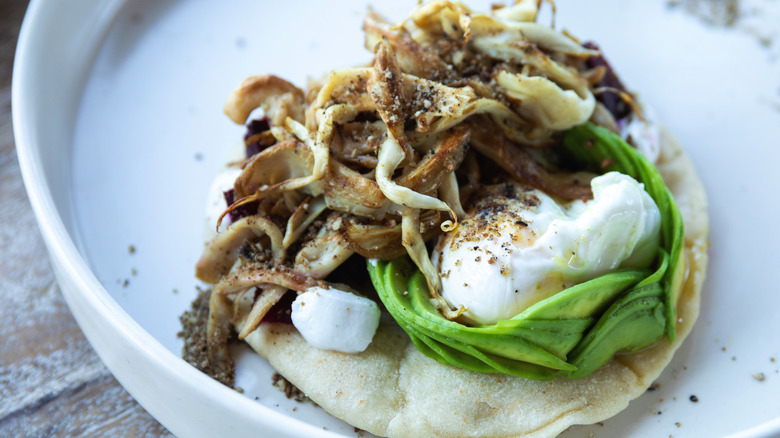
Though burrata shines alongside fresh Italian produce, you shouldn't restrict yourself to just one cuisine. "Burrata has this beautiful ability to unite different cuisines without losing its identity," said Francesco Lamanna. So feel free to get creative in the kitchen; after all, burrata has only been around for about a century, and you might just discover a fantastic new use for the cheese.
Indeed, chefs are figuring out ways to capitalize on burrata's flavors and textures in cuisines as far apart as China and Mexico. "Lately, [burrata] has been used on top of the Indian dish butter chicken, providing a cooling contrast," said Amy Sherman. Lamanna shared a few delicious pairings. He said that he has incorporated burrata into a caprese-style taco or paired the cheese with Japanese food in the form of miso-roasted eggplant. He also mentioned that the cheese shines alongside sumac and roasted peppers.
You can make vegan burrata at home
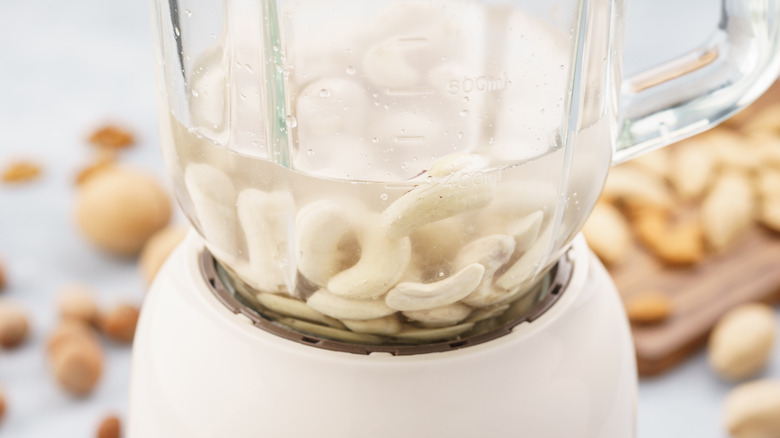
If you are plant-based or plant-curious, there are a few ways you can make vegan burrata at home using ingredients like cashews, soy milk, and coconut cream. Most recipes ask that you heat a few ingredients over the stove until they thicken, forming an approximation of burrata's soft interior. This mixture may also be strained through a cheesecloth to make it thicker. Mimicking the outer layer of burrata can be more difficult, though. Many recipes forgo a separate layer altogether, simply instructing home cooks to secure the balls in plastic wrap before submerging them in ice water to give them more structure.
While nutritional yeast is an indispensable ingredient for many sharp vegan cheeses, such as those that mimic cheddar, some vegan burrata recipes don't include it. Other ingredients like white miso paste and garlic can help add flavor in lieu of nutritional yeast. On the other hand, an acidic ingredient, like lemon juice or apple cider vinegar, is always needed to provide tanginess.