

12 Mistakes To Avoid When Eating At A French Restaurant
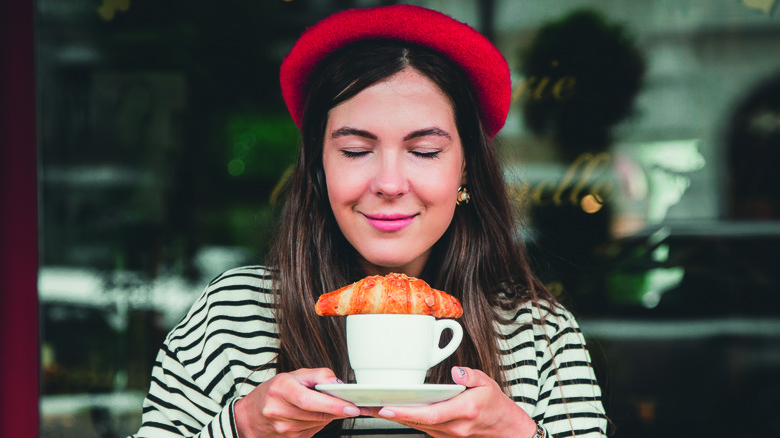
French cuisine is celebrated the world over for its delicious sauces, use of locally sourced seasonal ingredients, innovative chefs, and intricate, centuries-old traditions and techniques. While French restaurants evoke images of haute cuisine — fancy kitchens, world-famous chefs, and artfully presented plates of delicately flavored food — French cooking is also a gastronomic feast of rustic cooking, soups, stews, and roasted meats that balance sophistication and simplicity, tradition and taste.
Some of the best restaurants in the U.S. are French, with over 70 that have been awarded at least one Michelin star. But while French restaurants in America are synonymous with being "posh," there is a trend toward more relaxed French-style bistro restaurants. Whether it's haute cuisine or a simple croque monsieur, a six-course taster menu or a bowl of steaming bouillabaisse, authentic French restaurants take pride in their traditions, and many have strict rules around etiquette. To help us navigate the cultural implications of eating French, we asked Whitney Cardozo, owner, proprietress, and chef of Chez Foushee, and Paul Denamiel, owner and executive chef of Le Rivage in New York City, to help us out. These are the major mistakes you should avoid when you dine out at a French restaurant.
Not making a reservation
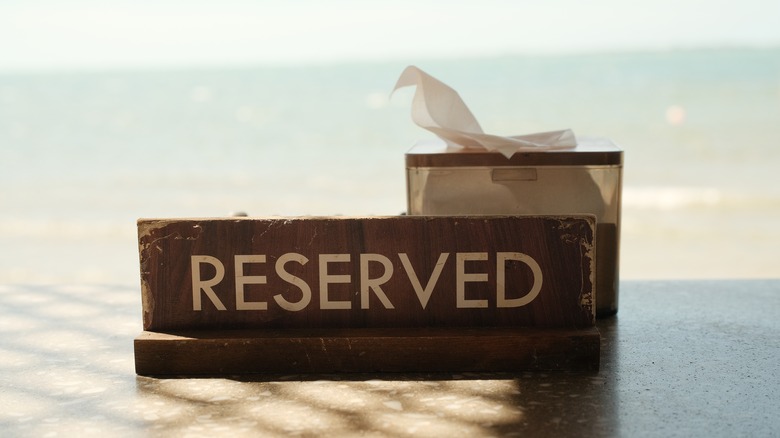
In France, not making a reservation is a huge faux pas, and as many U.S.-based French restaurants are French-owned or run by chefs who have trained in France, it's polite to reserve a table. Paul Denamiel told Tasting Table, "Reservations are very important. In French dining culture, a table is yours — not a timed slot to be turned over quickly. Reserving shows respect for the kitchen and staff, and it allows us to prepare for you properly." While French restaurants based in the U.S. aren't as strict when it comes to reservations, the cultural niceties remain important.
While this isn't a mistake unique to French restaurants, not reserving in advance means that the chef might be unable to accurately order and prepare the correct quantities of food for your meal, which in turn means you may not be able to order certain items on the menu, or you may have to wait for longer periods of time. Practicalities aside, French dining is a leisurely event. Few French restaurants aim to turn tables fast; in France, it is common for meals to last the entire evening, so not reserving means you may be turned away, as the restaurant may be filled for the whole of the evening, with no slots available even if you are willing to wait.
Booking a table at a French restaurant in advance is simply a matter of respect. It shows that you are keen to eat there and that you value the traditions and cultural guidelines of the French dining culture.
Asking for substitutions
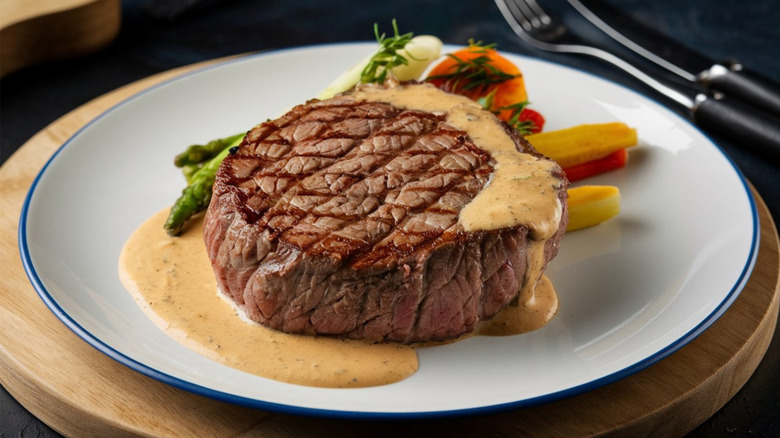
In French restaurants, the chef reigns supreme. Dining in a French restaurant is a culinary experience that focuses 100% on the food and wine. French cooking relies on a series of techniques and formal cooking skills that make it one of the most highly respected cooking styles in the world. Considering that the menus and meals that are put together in French restaurants are often considered art, asking for substitutions is considered rude. If you are eating in a top-end French restaurant, it is almost sacrilege.
Paul Denamiel told Tasting Table exclusively, "As chefs, we build dishes with balance in mind — the sauce, the seasoning, the garnish all play a role. When someone asks for major substitutions or extra sauce, it can disrupt that balance." Whitney Cardozo adds, in an exclusive interview with Tasting Table, "It is one thing for a guest to request no croutons due to an allergy, but it's not okay to ask for a dish to be made without peppers or eggplant simply because you don't like them. ... Adding or subtracting ingredients alters the dish created and disrupts the kitchen's workflow, and on a busy night, this is a significant distraction."
French dining, even in the U.S., eschews the American mode of swapping out ingredients or tailoring your meal to your own taste. While a U.S. based French restaurant may be a little less strict than one in France, it is still seen as bad taste to make changes to a dish that the chef has been worked on until they consider it perfect. We suggest you play it safe and only swap out ingredients if you have food allergies or specific dietary requirements.
Treating staff impolitely
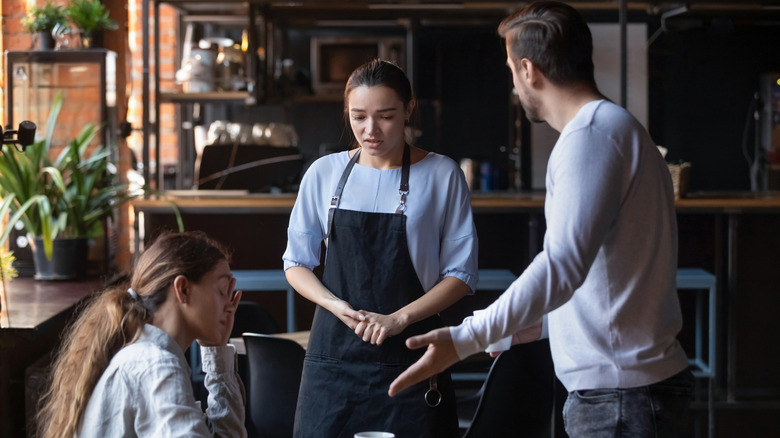
Treating staff politely should be a no-brainer, whatever restaurant you are eating in, but it is particularly important to treat staff in a French restaurant with respect for several reasons. Staff within a French restaurant are often highly trained. Paul Denamiel told us, "Training is ... rigorous. In France, being a server is considered a profession, not a stepping-stone."
Staff in a French restaurant are considered integral to the experience — they are there to elevate your meal and should be treated as highly trained experts in their field. Staff will be well-versed in the menu and its ingredients and should be able to talk you through all the dishes on the menu with expertise. This is also true when it comes to selecting your wine. In France, wine plays a huge part, and the waitstaff or the sommelier will have been specifically trained to have a huge breadth of knowledge on wines available, including being able to advise which wines are best to pair with the food you have chosen.
It's important to note that, unlike in France, where tips are often small or non-existent, French restaurant staff in the U.S. still rely heavily on tips. But like their French counterparts, they are considered highly skilled and should be afforded the same respect you would give to the chef.
Expecting refills or freebies
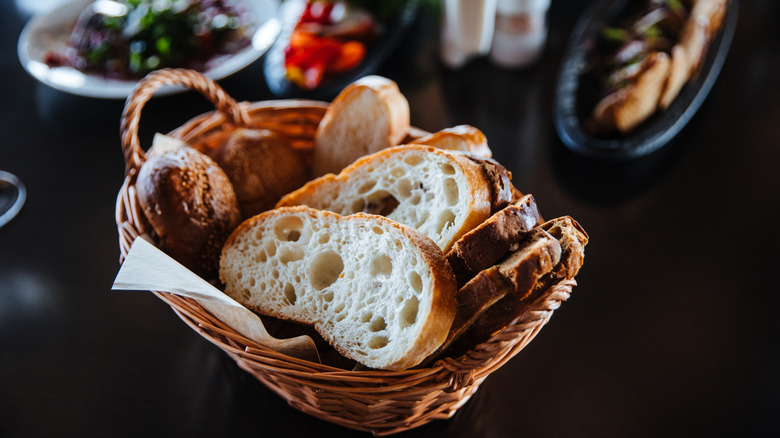
Free refills have become part of American culture, along with the customary basket of bread served before a meal. However, the opposite is true in France, where refills of soda drinks are actually against the law. So when it comes to a French restaurant in the U.S., can you expect free refills or not? Paul Denamiel told Tasting Table, "Bread is always offered, but it's not unlimited the way some American restaurants do it. French dining is more measured — it's about balance, not excess. Asking isn't impolite, but it's good to understand that the culture is a bit different."
Free refills are strongly associated with America's fast food culture, which is, in many ways, the opposite of French dining culture. French dining is all about small, perfect bites of lovingly crafted food that should be enjoyed slowly, rather than the quick consumption of large quantities of easily prepared food. Of course, there may be the odd French restaurant that has adapted to the American way of doing things, but in general, you should think twice before asking for an extra basket of bread, and never assume your refills will be free.
Not allowing staff to do their jobs
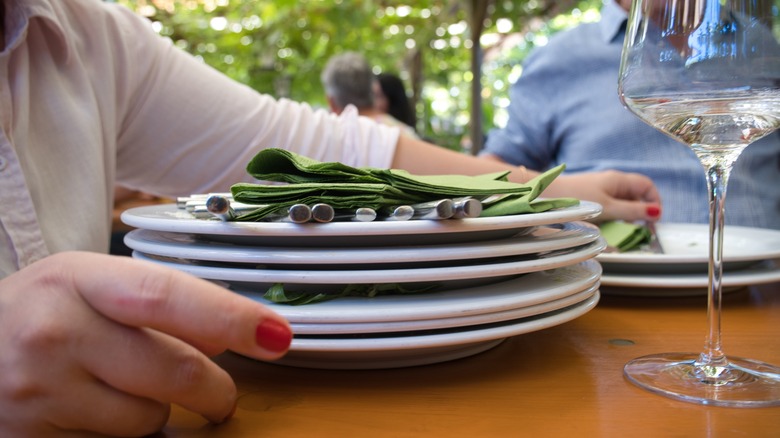
It's often tempting to be helpful to staff in a restaurant, to stack plates or pick up fallen items, but service within a French restaurant is a carefully choreographed routine where every person plays a role. The relationship between staff and diners is designed to cultivate a certain ambience and relies on decorum from both sides to work.
French staff are often traditionally trained. In much the same way that asking a chef to substitute chicken for pork may be seen as an insult to their cooking, stacking plates or picking up a dropped fork may imply that you think the waitstaff are not doing their job well.
"[My staff are] knowledgeable, attentive, and trained to guide you through the dining experience with care," Paul Denamiel told Tasting Table, and he said that stacking the plates yourself on the table is disrespectful. Allow your server to demonstrate their skill by letting them explain how the menu works and inviting them to share their opinion on the wine list. The chef and staff work together to deliver you a holistic journey, and skipping their carefully crafted explanations negates the work that has gone into the dining experience. This is particularly important in French dining, where the provenance of food and preparation of ingredients are curated down to the very last microgreen.
Misunderstanding portion size
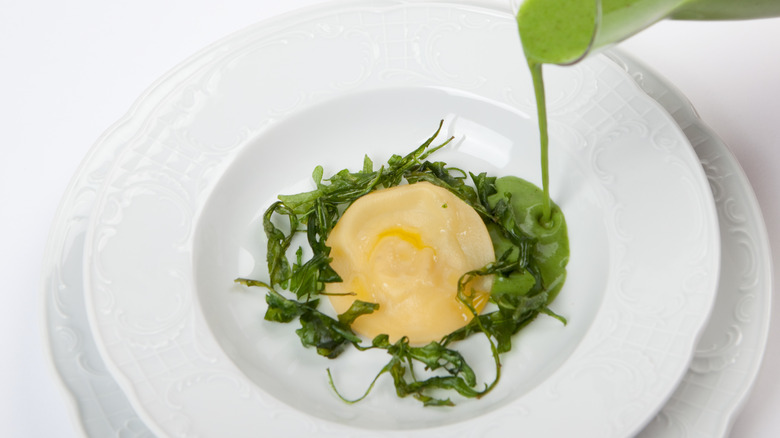
In France, portions are typically small and delicate. The French philosophy around eating is "everything, but in moderation." Paul Denamiel told us in an exclusive interview, "French dining is about quality, not quantity. Smaller portions allow you to savor multiple courses and flavors without feeling overwhelmed. ... French meals are meant to be enjoyed slowly, with wine, bread, and conversation. It's not about leaving stuffed, but satisfied."
The French style of eating is leisurely; meals are an occasion to be savored. Lunch can often be three courses, and a fine dining menu can stretch anywhere from six to 10 courses. Portion sizes need to be small when eating several courses of food at the same time, but it's proven that eating more slowly allows your body to properly register the food you are consuming, signaling when it is full. In France, the aim isn't to finish your meal so stuffed that you feel nauseous, but to end lightly replete.
Authentic French restaurants in the U.S. maintain the French way of eating, serving smaller portions of high-quality food. If you have a big appetite, consider that the dish you are ordering may be half the size you're used to. To remedy this, Whitney Cardozo told Tasting Table, "For the guest looking for a big meal we offer several courses, such as appetizers, salads, entrées, and dessert. We do not have people leaving hungry."
Not trying the tasting menu
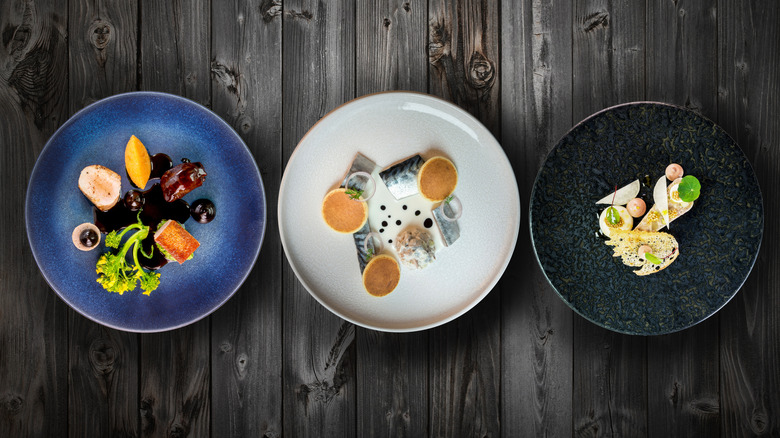
The tasting menu is often the pinnacle of fine dining. It offers the chance for a chef to showcase their skill and repertoire and for you to indulge in the best the restaurant has to offer. The tasting menu was created by the French as part of the haute cuisine revolution in the 1970s, which transformed French food from its traditional rustic style — focusing heavily on stews, soups, and cassoulets — to a more refined style. A restaurant's tasting menu is a way of demonstrating a chef's technique and should take you on a journey from savory to sweet that can last usually anywhere between four and 10 courses.
Not trying the tasting menu in a French restaurant is a mistake because you may miss out on a restaurant's best flavors. Paul Denamiel told Tasting Table, "Tasting menus are a wonderful way to experience the breadth of French cuisine because they allow the chef to guide you through different flavors, textures, and traditions." However, he adds, "They're not the only way — even a classic three-course meal can capture the essence of French dining if done with care."
Some chefs will tell you the à la carte menu is the best way to ensure you have as much choice as possible. Whitney Cardozo, for example, told Tasting Table that tasting menus tend to be expensive and restrictive, giving diners what the chef wants to serve rather than what they want most. "It is also not convenient for those with dietary restrictions, which are often not taken into consideration," she said. For many diners, though, the tasting menu is where food becomes art and eating becomes an event. It allows you to experience the best in-season food, try dishes you may never have ordinarily ordered, and possibly learn a little about French culture and tradition.
Not exploring the wine list
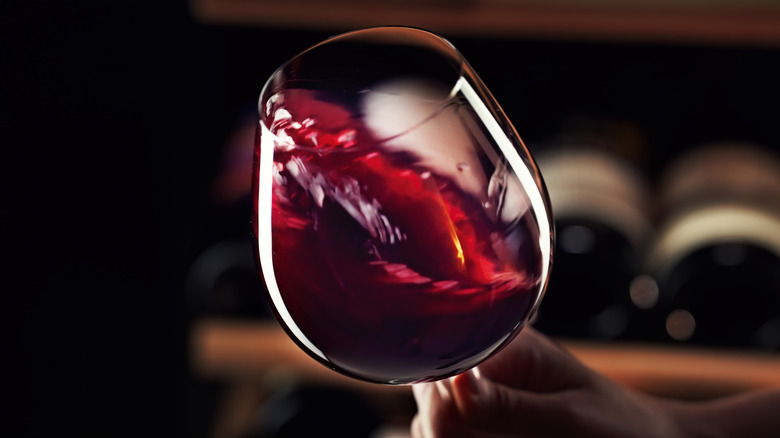
French wines are among the best in the world, with a long history dating back to Roman times. But if that doesn't encourage you to dive into the wine list at a French restaurant, then you should know that the French consider wine with a meal a way of life – it would be rude not to indulge.
In French restaurants, wines are critical component of the meal, designed to enhance your experience by accentuating the flavors of a dish and adding to the ambience. It is quite common to have a different wine with each course: a champagne aperitif taken before the meal, a white with fish or chicken, a robust red with dark meat, and perhaps a dessert wine to finish. However, when it comes to wine, choose what brings your joy. As Whitney Cardozo told Tasting Table, "I definitely subscribe to planning your wine with the food you have chosen, not the other way around. We recommend picking what you like or want to try, not what you are supposed to like."
A top-end French restaurant will have a sommelier to help you when choosing wine and pairing it with your meal. If you opt for the tasting menu, the wines are usually pre-chosen to accompany each course, but the French take great pride in their wine, so even in less salubrious establishments, staff should be able to help you choose a wine to go with your meal. Paul Denamiel told us, "Start with honesty. Tell your server or sommelier what you typically like to drink, even if it's as simple as 'I like something light and crisp' or 'I prefer bold reds.' You don't need to know French regions by heart."
Forgetting your table manners
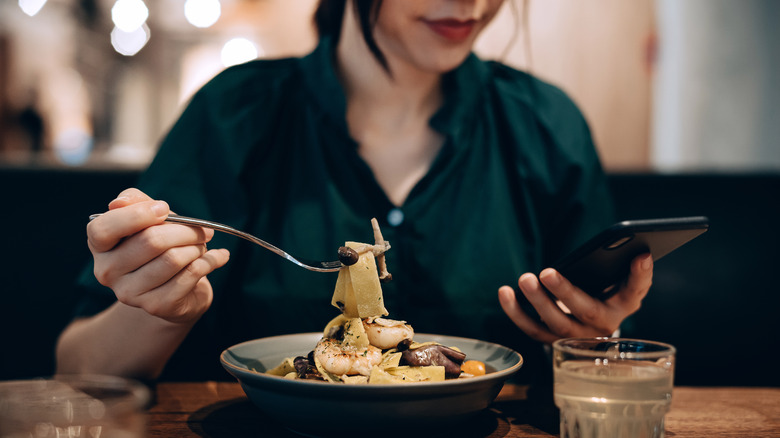
Table manners of course exist outside of French restaurants, but the French are very particular when it comes to them. Minding your manners is a matter of respect, not only for your fellow diners but also for the chef and the establishment. In a culture that puts such a heavy emphasis on food, it's important to follow their rules.
The French are sticklers for manners, which includes waiting until everyone is served before starting to eat. In France, the host will usually say "bon appétit," and this is the signal to start. In the U.S., it's enough just to wait until everyone is ready. Try to keep noise to a minimum, keep cell phones off the table, and never take a call at the table. In France, you are expected to remain at the table for the entire meal, however long that takes, but in the U.S., if you need the bathroom or a break, simply ask to be excused between courses. To indicate you are finished, put your cutlery parallel to each other and slightly to the right. What is the biggest mistake you can make in a French restaurant? Paul Denamiel told us, "The worst of all is calling out, 'garçon'!!!!"
Expecting Americanized versions of French food
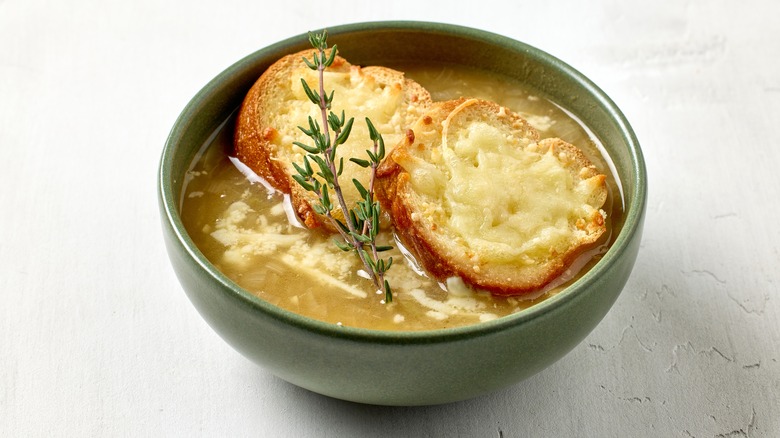
In the U.S., we have become accustomed to Americanized versions of French dishes. In America, French onion soup is loaded with cheese, coq au vin is a watered-down version of the much more alcoholic French recipe, and the traditional steak tartare recipe contains cognac, which is removed in the American version. If you are visiting an authentic French restaurant in the U.S., they may serve you food the French way, so it's important to manage your expectations when visiting your local French restaurant. This consideration extends to how you order your steak; in France, steak au poivre, or peppercorn steak, is often served rare to medium-rare. In fact, it's not uncommon in France to eat steak blue, which is almost completely rare with just a light sear on the outside. If you need your steak more well-done, make sure you ask for it.
Chef Paul Denamiel told Tasting Table that he thinks there's a way to marry the two cultures: "It's about respecting tradition while making sure guests feel at home." For instance, at his restaurant Le Rivage, Denamiel has created a French Onion Soup Burger, which perfectly pairs classic Americana with a traditional French dish.
Not asking staff to explain the menu
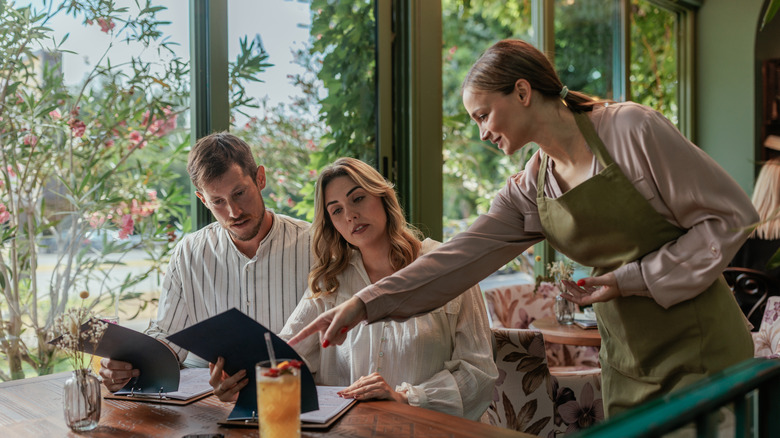
In many French restaurants, the menu may be in French or contain terminology that you don't understand, and there are certain words and phrases that are essential to know in French restaurants. From amuse-bouche to hors d'ouvre, from confit to cassoulet, the menu can be a linguistic minefield. But rather than guessing what's on the menu, don't be afraid to ask the staff to describe dishes to you.
We asked Whitney Cardozo how to navigate this tricky obstacle. She told Tasting Table that it's totally acceptable to simply ask the server to describe the dish, saying, "Servers are trained to tell you descriptively what each menu item tastes like and what wine pairs nicely." She said she personally trains the waitstaff to understand the components of each dish. Paul Denamiel agrees, telling us that the language around French food is so technical that he would never expect anyone to know all the terms. He encourages questions, saying, "We love when guests show curiosity, it's a chance to share the story behind the food."
Not dressing appropriately
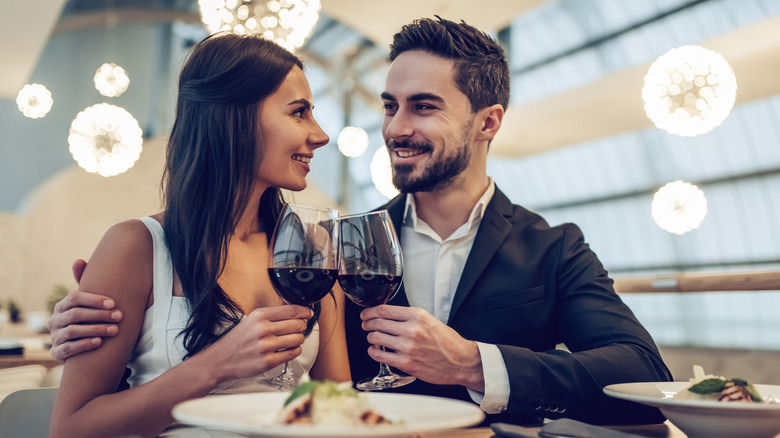
Dressing for dinner may seem an antiquated tradition, but as Paul Denamiel tells us, "Presentation matters in French culture — from the food to the table to the guests." Sure, if you are grabbing a coffee and a croissant from your nearest French café, you can get away with jeans and a hoodie, but for traditional and fine-dining French restaurants, not dressing appropriately is, well ... inappropriate. Denamiel explains, "Dressing well adds to the sense of occasion and respect for the experience. It doesn't mean you need to be in black tie, but making an effort shows you value the meal and establishment."
Dressing for the occasion is about demonstrating respect for the establishment, the French tradition, and the care and dedication that have gone into creating your meal, but it's also about setting the scene for a memorable occasion. Whitney Cardozo told Tasting Table exclusively, "It's important because the experience, ambiance, food, and service have a certain sophistication in every aspect of the restaurant. It has been thoughtfully planned with intentionality and attention to detail." When it comes to French dining, don't underdress for the occasion.