

The Only Scent Your Tuna Steak Should Give Off That Indicates Freshness
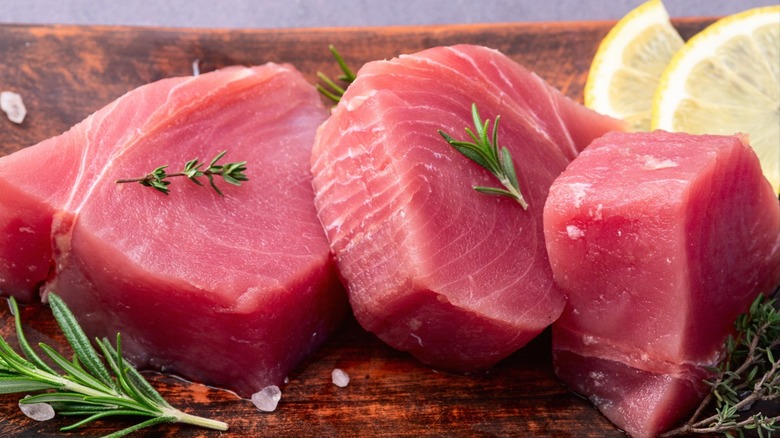
For fresh tuna fans, nothing beats a well-prepared tuna steak. With a perfectly seared salt-and-pepper crust and a pink, juicy inside, they don't call them steaks for nothing. But cooking tuna at home can feel intimidating for the uninitiated. Perhaps the most important tip you need when cooking with tuna is knowing how to determine if it's fresh. The best method — give it a sniff.
Chef Jim Haurey, owner of The Grange in Warwick, New York, says that fresh tuna should be nearly odorless. "A faint hint of blood, or, more accurately, the iron in the blood, is about all you should smell," he said. The chef spoke to us in an exclusive interview about mistakes everyone makes when cooking tuna steaks.
Because so many tuna recipes call for medium-rare, health and safety must take center stage. Factor in their often high price tag, and the stakes (pun intended) for successfully navigating these fishy waters couldn't be higher. So get your nose stuck in.
If you're planning on having tuna for an evening meal, buy your steaks on the same day. The fish can go bad after only a day or two, so freshness is paramount. It only takes a day or two for raw tuna to go bad in the fridge, so if you don't have time to cook it right away, freeze it. Wrap it with aluminum foil or plastic wrap and put it in an airtight, freezer-safe container, where it will stay in good condition for up to three months.
For fresh tuna steaks, just follow your nose
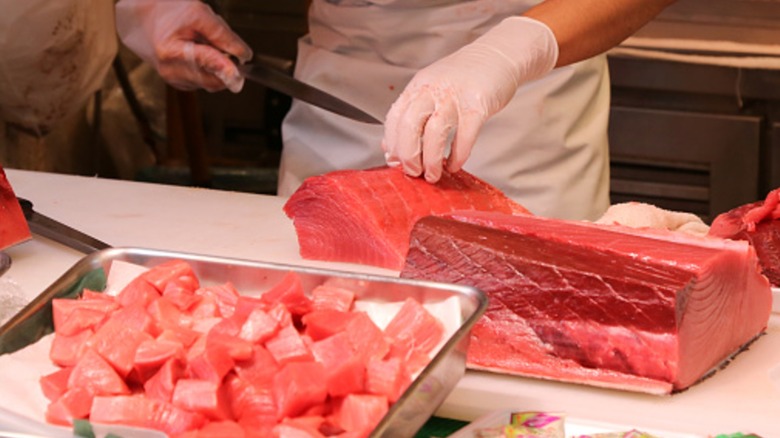
The human body is built to react to food that has spoiled. "The nose knows," is a good rule of thumb to keep in mind when cooking tuna steaks. In case of a line call, it's always better to be safe than sorry — always trust your instinct. Stinky indicators that your fish isn't fresh for consumption include a strong fishiness, a sour or rancid stench, and an ammonia-like odor. More than just unpleasant, these olfactory offenders arise from the bacterial breakdown of the fish which can lead to foodborne illness if the fish is consumed. Safety always comes first. If you're worried about the financial loss, you should be able to get a refund, as long as the tuna is within its best-by date. There really is no reason to take chances with stinky fish.
If it's passed the nose test, you can assess other ways to immediately tell that your tuna steaks are not the freshest, such as texture and color. The color of the tuna should be a bright, vibrant red. There should be a slight sheen to it and the texture should be firm, with a good heft (after all its a steak) but not flaky, slimy or mushy. Once you're sure your tuna is the freshest, you can try one of these tasty tuna steak recipes. Just be sure you know how to cook tuna steak without it drying out.