

10 Underrated European Beers Hiding On American Shelves
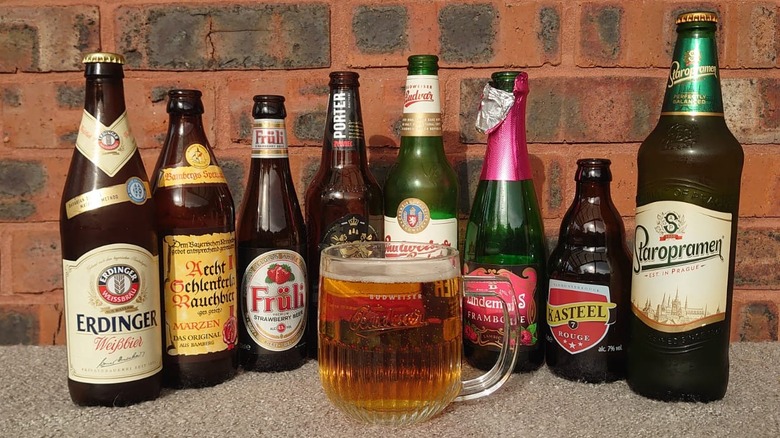
I live in the U.K. and, as such, I have excellent access to European beers. It's often a hot debate with my beer-loving friends about which of these beers is the best. To my surprise, a lot of these beers haven't had a big impact in the U.S.A. This led me down the rabbit hole of wondering which European beers were popular in America and which ones were being overlooked. After a lot of research, including speaking to my American colleagues, I found my answers. This list won't include any popular options such as Heineken, Stella Artois, Guinness, or Peroni. Instead, it will focus on those European beers that are still available to American consumers but are often overlooked.
With a little marketing push or the right trend, I wouldn't be surprised if any of these beers blow up in popularity. Being a beer lover and having traveled extensively through Europe, I've not only drunk all these beers but done so close to the source. This has given me a great insight into what separates a bad beer from a good one, including the beers that America is currently sleeping on. If you're an American beer-lover, you can see this as a checklist you need to tick off as soon as possible.
Staropramen (Czech Republic)
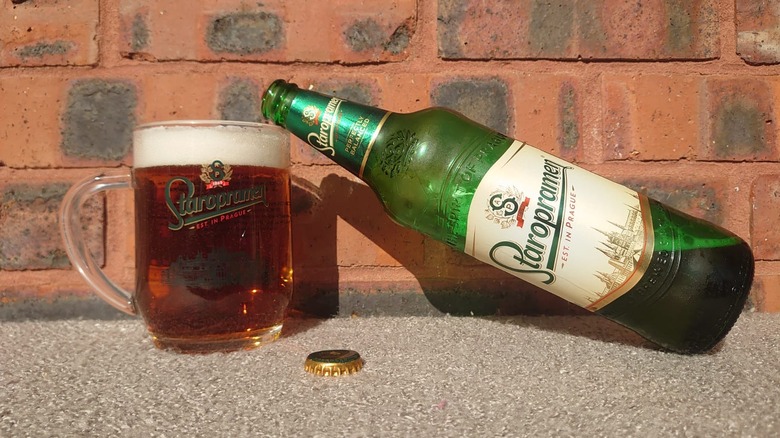
In my view, this is the best lager in Europe, if not the world. One of my first vacations was to the Czech Republic capital of Prague, and my hotel overlooked the Staropramen brewery. Back then, I knew little about the beer, but that would soon change. Czech beers are generally fantastic, with Pilsner Urquell not making this list only due to its greater popularity. I love a crisp and refreshing lager, but many of them can be severely lacking in taste. Staropramen offers both a maltier and fuller body than many of its rivals, while still being an incredible thirst-quencher. The malty taste has a slight biscuit quality, and it is balanced by some elegant floral hops.
There is a subtle sweetness upon first tasting, but both that sweetness and its herbal bitterness sit nicely in the background. Its bottled and canned offerings come in at 5% ABV, making it a great sessionable beer. That ABV puts it at the upper end of standard lagers, so it avoids feeling too thin. I think this list of qualities makes it incredibly versatile, as it's the type that can be easily enjoyed on a quiet evening indoors or at a summer barbecue. As it says on the neck of the bottle (and as shown in my picture), it is perfectly balanced. Over the past couple of decades, I've seen Staropramen slowly but surely gain popularity in the U.K. I wouldn't be surprised if American beer drinkers soon witness a similar trajectory.
Super Bock (Portugal)
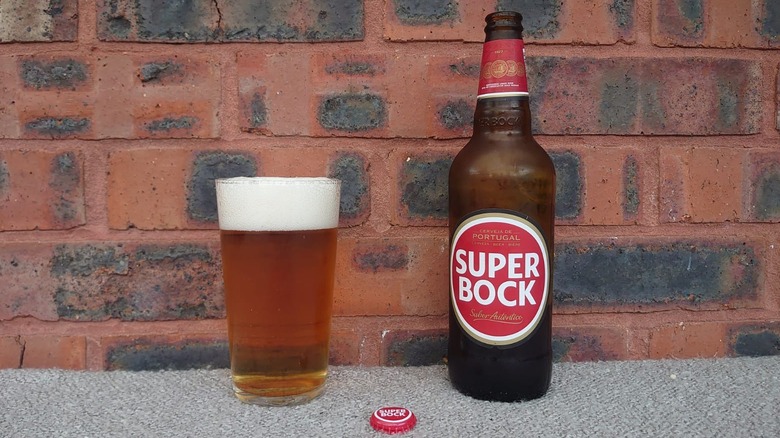
Portugal isn't well-known for its beer industry, especially compared to its Iberian rival, Spain, which produces the likes of Estrella Damm and San Miguel. However, Portugal still manages to produce one of the best lagers on the continent in the form of Super Bock. As with Staropramen, I think lagers are at their best when they give you the crisp refreshment you crave, along with deep flavor. Even in the U.K., Super Bock is underrated as it's rare to find it in bars, and not all large stores stock it.
In the glass, there is a golden hue that you expect from excellent lagers. While not always true, the deeper color usually indicates a deeper level of flavor inside. That's exactly what you get here after you enjoy its light grain aroma. There is a smooth malt taste on the palate that has an underlying subtle sweetness. A gentle hop bitterness and a clean finish show why this is an excellent lager. A 5.2% ABV allows it to pack a little punch while still allowing you to enjoy several bottles. It's a beer I've enjoyed on rainy nights in England and in a sunny Lisbon café. It shines perfectly well in both scenarios. Being a crisp lager, the flavor isn't mind-blowing here, but it's much better than many of the most famous lagers in Europe.
Erdinger (Germany)
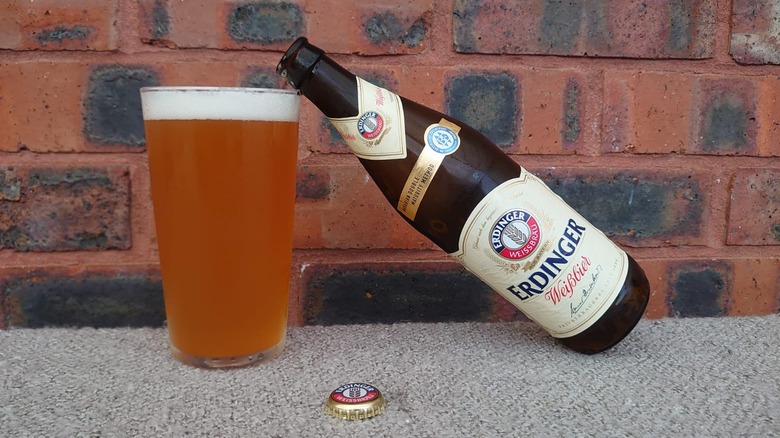
Erdinger was one of my first introductions to a non-lager beer, and I've been in love ever since. It is a standard bearer for German weissbier and probably the best example of it. Weissbier translates to "white beer" and is a type of wheat beer that comes from Bavaria. One of its most distinctive features is its cloudy appearance once poured. The best of these beers has a deep flavor without being too heavy on the stomach. The aroma here is lovely, as you'll most likely find subtle notes of banana and citrus. These notes and the cloudiness come from the unfiltered yeast, which is standard with these types of beer.
To describe a beer as "bready" sounds like a negative, but after a taste of Erdinger, you'll see how it can be a delicious tasting note. Added to the bready malt are some subtle spice and fruity notes. It has a creamy mouthfeel but remains surprisingly crisp. These qualities allow it to pair well with many foods, but especially hearty red meats, such as sausages. It is still brewed in Bavaria and has been since 1886, growing to become the largest German wheat beer brewery. For American beer lovers, it allows you to get a delectable taste of German brewing tradition that often gets overlooked by trendier beers.
Murphy's (Ireland)
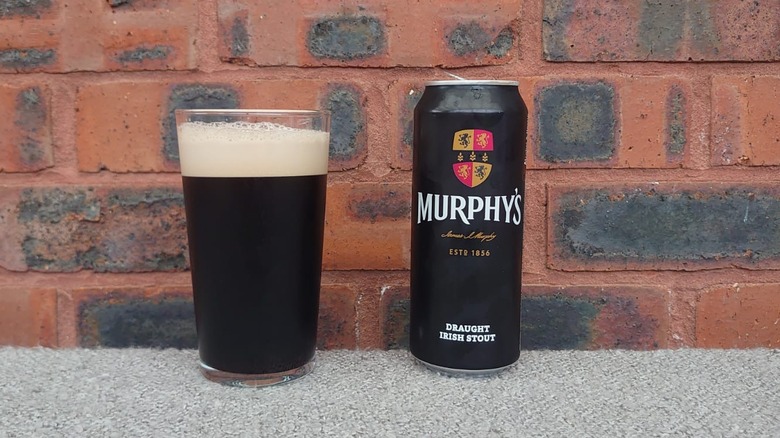
Guinness obviously doesn't make this list, due to it being far from underrated. However, many excellent Irish stouts beyond Guinness deserve some attention. I think the best of these is Murphy's. Of course, there are similarities, but it has a significantly different tasting profile from Guinness. It has been brewed in the Irish city of Cork since 1856 and has a softer and more approachable tasting profile than you get with the more famous Irish stout. Once poured, it takes a little time to settle into the distinctive, near black-and-white difference between the body and the head.
Once you start drinking Murphy's, you'll instantly see how smooth it is. You'll get some lovely flavors coming through, mostly in the form of chocolate and caramel. Some roasted malt and subtle sweetness help to give it impressive depth. The can contains a nitrogen widget that helps simulate a pub pour, and it works very well. While Guinness is undoubtedly the king of Irish stout, I've found that many of those who enjoy it often can't have more than a couple of beers without feeling full. Murphy's is much lighter on the stomach, while being equally impressive in flavor. If you enjoy Irish stout, then you may be surprised at just how gorgeous Murphy's is. Is it better than Guinness? That's debatable, but after tasting, you'll probably agree that Murphy's deserves a similar level of popularity.
Żywiec Porter (Poland)
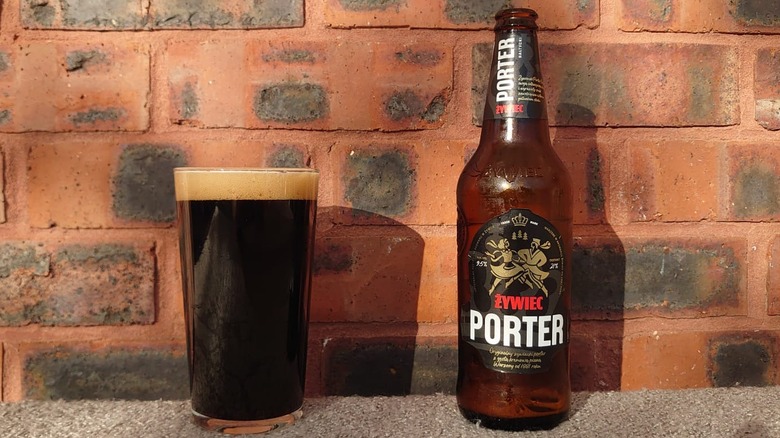
In my view, Poland is probably the most underrated country when it comes to beer. Żywiec is one of the leaders and has a great range of different types of beer. Perhaps its most distinctive is this Baltic porter. Brewed since 1881 and using four different types of malt, it's an extremely rich and potent beer. It's a dark lager which comes in at an ABV of 9.5%. The aroma is probably the most striking on this list. There is a sumptuous dark chocolate combined with a touch of coffee. Along with those, you get some molasses and dried fruit. That wide range of smells hints at a full-bodied beer, and you won't be disappointed.
Many of the aromas come through in the tasting experience, but are joined by some roasted malt and a lovely caramel. Despite its high strength, it's elegantly smooth, and you'll get no alcohol burn. Instead, you'll get a nice warmth throughout. It's an incredibly robust beer and may be an acquired taste. It's one you'll sip like a good wine instead of guzzling it down (like you might with a light lager). If you've never had a Baltic porter before, you may either love or hate it. However, for many beer lovers, it's a dark classic that combines both strength and elegance.
Kasteel Rouge (Belgium)
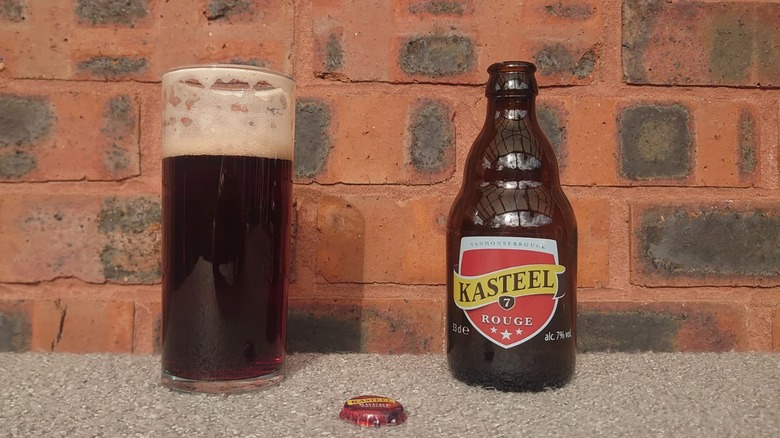
Which European country produces the best beer? Opinions would most likely be split, but Belgium is a strong contender. Behind the global powerhouse that is Stella Artois, there are a huge number of impressive beer brands in the country, with Kasteel being one of them. The brewery proudly states that its flagship bottle, Kasteel Rouge, is the first strong fruit beer ever brewed. It comes from a base of Kasteel Donker before being blended with cherries. Due to this, the aroma is incredibly intense. You get hit with an explosion of cherry before a few other smells present themselves in the form of darker fruits and chocolate.
As with the nose, when tasting, you are immediately hit by the sweet cherry. You need to get used to its tartness, but once you do, you'll find a base layer of caramel and cocoa to keep it grounded. Many fruit beers are fairly weak, but Kasteel Rouge goes the other way with an ABV that is usually 8%, but is 7% for U.K. drinkers. Despite that high alcohol level, it's dangerously smooth and goes down almost as easily as fruit juice. It's a fairly obvious statement, but how much you enjoy this beer depends on whether you like the taste of cherries or not. If you do, you'll see this as a sumptuous sipper. It stands well on its own, but would also be a lovely companion to a wide range of sweet treats.
Czechvar (Czech Republic)
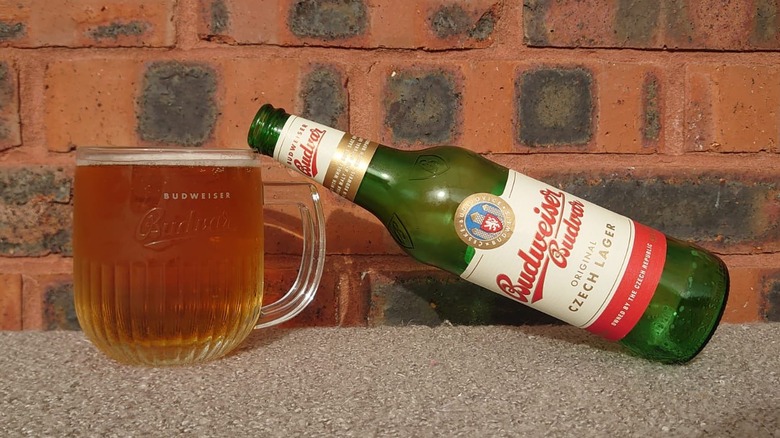
I was very confused when I saw that Budweiser Budvar wasn't sold in America. I was wondering how this incredible lager could have been missed. Very quickly, I realized that it was indeed sold, just under the name Czechvar. As you may suspect, this difference is due to trademark disputes with the American Budweiser. Conversely, Budweiser is sold simply as "Bud" in much of the European Union for the same reason. Trademarks aside, Czechvar is another beer that showcases how the Czech Republic is a powerhouse of crisp yet tasty lager.
The aroma is surprisingly deep for a pilsner. You get some fresh bread and grassy hop smells, along with a floral quality. As soon as it passes your lips, you'll notice a lovely, rounded malt sweetness that comes from a light caramel. You get a little bite from the Saaz hops that come in the form of a herbal bitterness. The finish is incredibly smooth and soft. It's a sessionable beer that can be enjoyed all night long without ever feeling full or bloated. Many beers fail to replicate the taste of a genuine European pilsner. The name "pilsner" derives from the Czech city of Pilsen, and if you want to try the real thing directly from source, Czechvar is a shining example.
Fruli Strawberry Beer (Belgium)
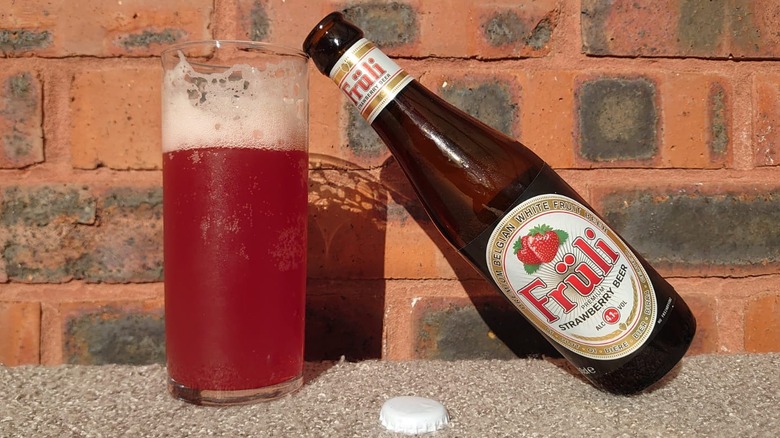
We've looked at some heavy and strong beers on this list, but Fruli Strawberry Beer is at the other end of the spectrum. This is a more playful beer with an ABV of 4.1%. Here you'll get a base of Belgian witbier combined with strawberry juice that adds up to a bright and refreshing drink. That strawberry infusion is immediately evident in both the look and aroma. Along with the expected fruity smell, you also get a little soft wheat and perhaps a touch of citrus. Upon tasting, the strawberry is incredibly bright and almost overwhelming at first, but you quickly get used to it.
It's blended beautifully and presents with a smooth and creamy mouthfeel that makes it effortlessly drinkable. As with the nose, there is a zesty quality that aids in it feeling crisp and clean. The biggest drawback to many fruit beers is how they can feel artificial and syrupy. That doesn't happen here, with the beer remaining light and only having a very slight tang. It's a fun beer that feels indulgent without being at all heavy. Again, how much you like a fruit beer depends on your love of the fruit, but this is another fantastic option that deserves more love.
Schlenkerla Weizen (Germany)
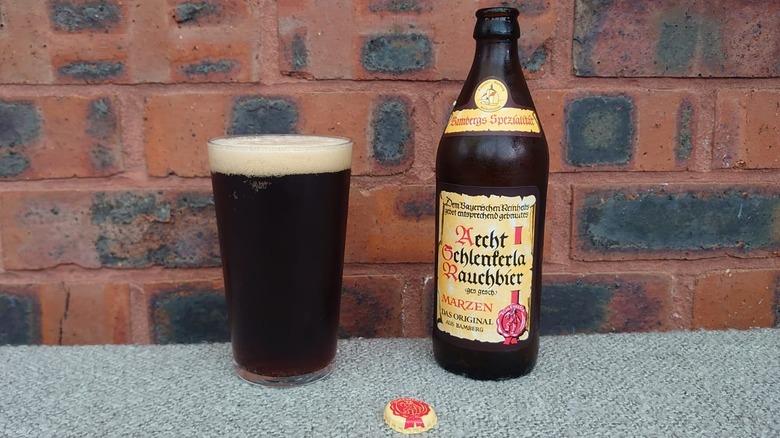
Schlenkerla Weizen is another hugely underrated beer. This is a type of Rauchbier, which is made from malt that has been dried under a smoky fire. Along with this, it's also a Bavarian wheat beer, giving you a double insight into the special world of German beer brewing. It adds up to a beer that has many of the similarities you associate with a mainstream German beer, along with the unique qualities of its smoked method. Upon pouring, it has a dark brown body with an amber tinge when light shines through it. You instantly notice the smokiness in the aroma, but there are other notes of banana and yeast.
The smoky qualities far from dominate the palate, but instead, sit nicely in the background as a foundation to the overall experience. Caramel is the most delicious of its unique notes and works well with the sweet malt. There is a touch of general fruitiness as well, but it's hard to pick out exact notes. As with whiskey, when wheat is used, it often gives drinks a softer and creamier mouthfeel than other grains. It's what makes this beer so fascinating, as that softness contrasts against the earthy and smoky flavors. Not everyone is going to like smoked beers, but Schlenkerla Weizen is an approachable beer. It's perfect for accompanying a cookout but is versatile enough to be enjoyed on any occasion.
Lindemans Framboise (Belgium)
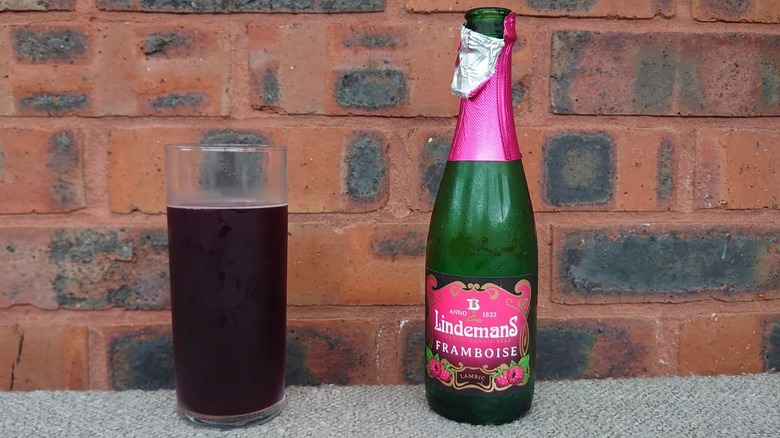
My final entry is the third from the great country of Belgium. I mentioned before how many fruit beers aren't very strong, and this is a good example as it only has an ABV of 2.5%. In the case of Lindemans Framboise, that's probably for the best because it's astonishingly easy to drink. This is a lambic beer, which is a type of sour beer that uses a unique fermentation process. The result is a beer that almost feels like a cross between sparkling wine and lager. The fruit used here is raspberry, and it shares many of the qualities that I noted with the Fruli.
The aroma gives you a fresh burst of fruit, but most important is how it sits on the palate. It starts off with a huge hit of tangy acidity, so it's best to begin with a sip rather than a gulp. You'll soon notice how beautifully the raspberry flavors develop in your mouth. It does dominate the drink, so it's hard to pick out any other notes, but that's not a negative as far as I'm concerned. Its finish is very much like many white wines, as it's crisp and dry. It's another example of brewing mastery and how looking beyond the popular options can allow you to find some truly special beers.