

Why This Old-School Kitchen Feature Isn't As Bad As You Think
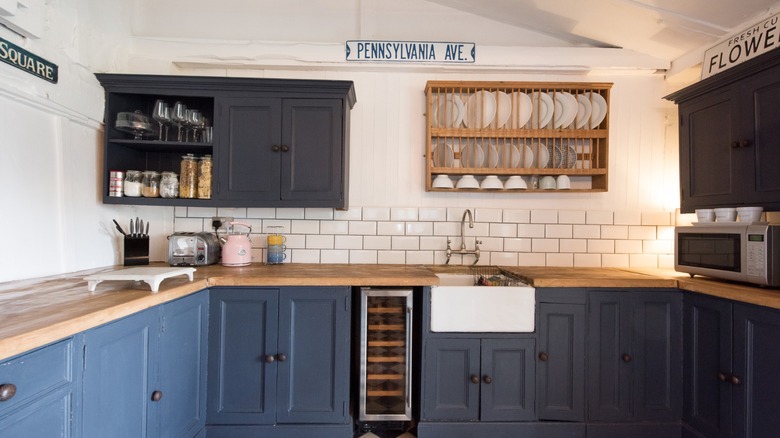
What do you have above your kitchen cabinets? Do they go right to the ceiling, or do you have a gap there? Once upon a time, a kitchen soffit, the wall-like structure that extends from the ceiling to the top of the cabinets, was all the rage for filling that space. It gave the kitchen a much cleaner look and also had some practical function for hiding elements that were unsightly but necessary. Modern kitchens often leave them by the wayside, but there's still reason to keep them around.
We spoke with design expert Artem Kropovinsky from Arsight Studio to get his perspective on kitchen soffits. "Soffits in the kitchen might look old-fashioned, but can conceal pipes or wiring, and in some cases provide a clean solution to the space, if designed well," he told us. So it really depends on the space you have and how it's laid out, as well as the purpose of the soffit in the first place.
For some, soffits are one of those barely remembered vintage design touches. They began to fade from kitchen designs in the early 2000s. Ceiling heights rose from an average of 84 to 96 inches to well over 100. This change affected how cabinets looked, particularly the space above them. If you have an extra foot above your cabinets, do you want a soffit that's going to span that entire gap? The bigger it gets, the more noticeable it becomes and the less appealing it is to many people. Most kitchens were designed in a way that eliminated them altogether.
Where soffits work
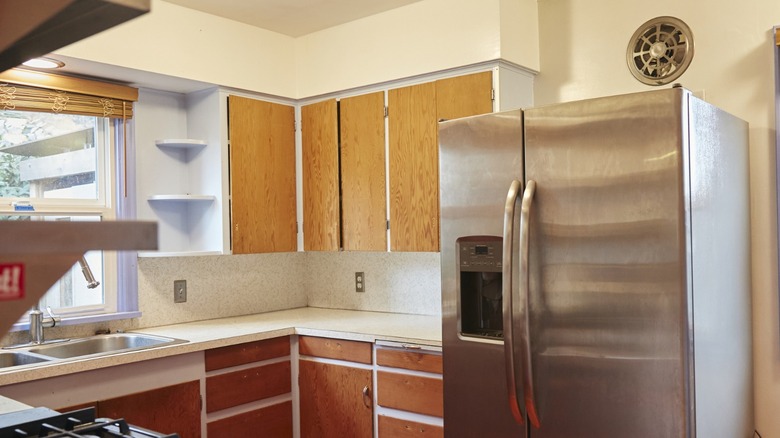
The use of soffits dates back to the 1940s. They were a clean and efficient way to tighten up the design of the kitchen so there were no unsightly gaps. It gave the cabinets a streamlined appearance when they couldn't reach the ceiling. The ability to hide ventilation for an oven hood, wiring for lights, or stray pipes was a practical secondary benefit.
Even though soffits have been phased out in many modern kitchens, there's still reason to keep them, as Kropovinsky points out. If the alternative is having exposed wiring or plumbing, that's much more unappealing than what can be perceived as an old-fashioned design element. Depending on the kitchen's design and layout, soffits can create a more streamlined and smooth look than removing them might.
Soffits can be painted to match cabinets for that seamless look, or a contrasting color to make them sharper. Ornate cabinet details like crown molding, art pieces, recessed lighting, or even LED strip lights could also enhance the overall aesthetic.
If your kitchen has soffits and you're worried they look dated, but removing them isn't practical, a few modern design tweaks might be all you need. Any kitchen design will be based on your personal preferences and the space and materials you have on hand, but soffits don't have to keep you stuck in the last millennium.