

Duncan Hines Vs Betty Crocker: Which Brand Makes The Better Cake Mix?
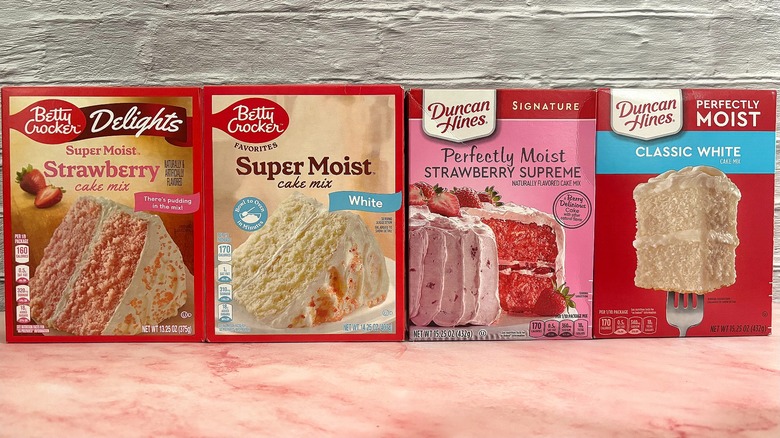
I'm probably not alone in thinking that there are entirely too many boxed cake mixes available on the market. I mean, who really needs to choose between 10 different types of chocolate cake mix? Decision fatigue is real when it comes to the baking aisle, and though there are endless creative uses for boxed cake mix, more often than not, you'll just want to accomplish one simple goal: baking a stellar cake. And now, you don't even have to suss out different brands — I've done that for you.
Duncan Hines and Betty Crocker are two of the most ubiquitous players in the boxed cake mix game, and each promises tantalizing results, so I bought four comparable mixes from each brand (strawberry, yellow, white, and devil's food) and made some cupcakes to put them to the test. Each was made according to package instructions without any fancy, flavorful substitutions, and I'll note what was required for each in its slide — though most used the same ingredients and measurements, there were some notable differences in a few. I judged each based on its texture and overall flavor, and while the two brands fared similarly, there was one definite winner. Keep reading for my full comparison.
Duncan Hines Classic Yellow
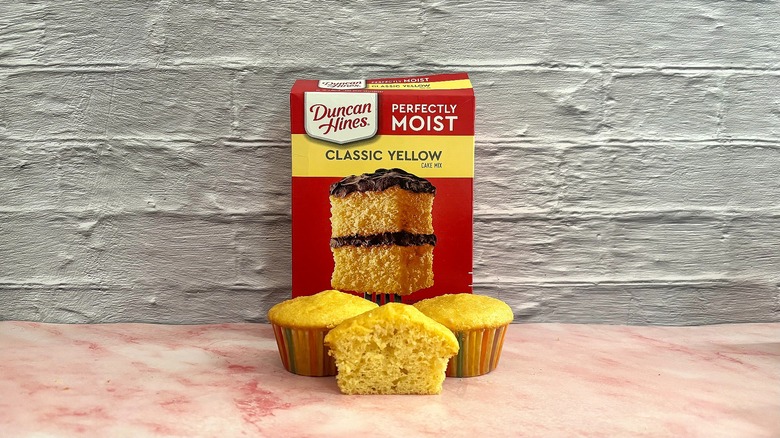
First up is Duncan Hines' classic yellow cake mix, which I can confidently say is a good and easy cake mix to make in a pinch. It requires a cup of water, three eggs, and ½ cup of vegetable oil. Everything gets beaten together for a couple of minutes in a bowl before being poured into the prepared cupcake tins (or cake pan, or whatever you happen to be using). Bake, cool, and eat.
I really enjoyed Duncan Hines' yellow cake mix. As you can see from the photo above, it had a nice crumb to it, even if slightly uneven. It was moist on the inside, and the rich flavor from the egg yolks (and, I'm expecting, some vanilla) came through clearly. Texturally, it was slightly denser than some other mixes on this list, but I didn't mind that — it just added to the moist interior. All in all, not a bad mix in the slightest.
Betty Crocker Yellow
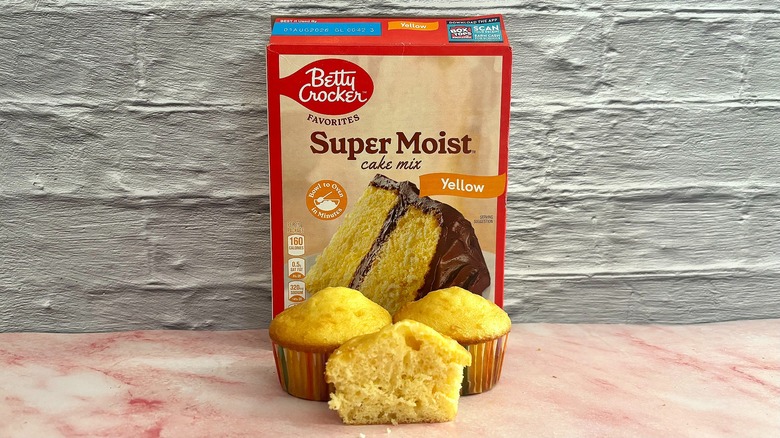
This recipe was almost identical to Duncan Hines', with one small difference — rather than ½ cup of vegetable oil, Betty Crocker's yellow cake mix called for ⅓ cup. I can't definitively say why it wanted less oil, and I don't think that made a huge difference in the final product, but it's worth noting nonetheless. This, too, was a dump-and-mix cake mix (as were the rest on this list), and its simplicity can certainly be appreciated.
Deciding between the two yellow cake mixes was no easy task. I had to take a few bites of each to accurately parse out the differences, and I don't think the average consumer would notice a huge difference unless they were really looking for it. You can sort of tell from the above photo that Betty Crocker's was slightly more moist — its crumb is clinging together and is more pillow-y than the last. It also had a richer, deeper vanilla flavor. When trying them side-by-side, Duncan Hines had a somewhat artificial quality that I hadn't noticed when tasting the brand on its own. Betty Crocker wins in the yellow cake department, but only by a hair.
Duncan Hines Classic White
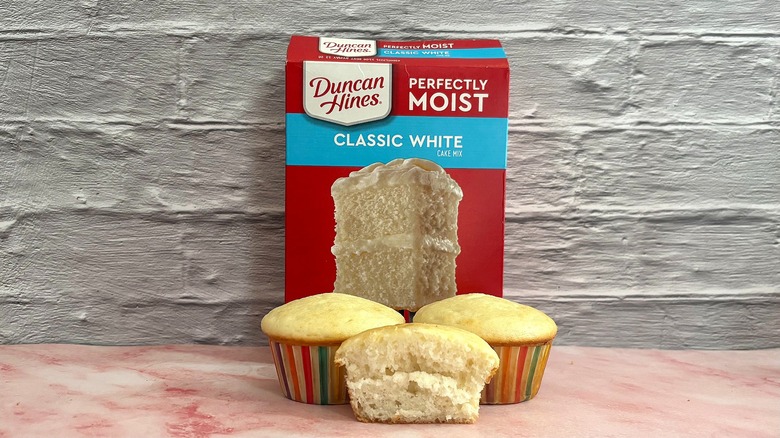
Up next, we have white cake mix. I know what you're thinking — I compared yellow cake mix and white cake mix? Really? Before you poo-poo my taste-testing decisions, white and yellow cakes are actually quite different from one another in both flavor and texture. White cake (which only uses egg whites) will have a more delicate crumb and a lighter flavor than its cousin cake. Now that we have that out of the way, here's the dirty deets on Duncan Hines' white cake mix: It takes a cup of water, three eggs, and ½ cup of vegetable oil. Beat, bake, chow down.
I see white cake as yellow cake's sophisticated counterpart, and Duncan Hines certainly fits the bill. With a gentler flavor than the yellow cake mix, it still conveyed some of that same vanilla essence, but without the punchy edge that egg yolks give to yellow cake. Texturally, it's fairly close to angel food cake, with a much lighter crumb structure than yellow cake, though still plenty moist throughout. Personally, I may prefer white cake to yellow — it's a no-frills alternative that's neutral enough to let any frosting shine, and it has a minimalist appeal to it.
Betty Crocker White
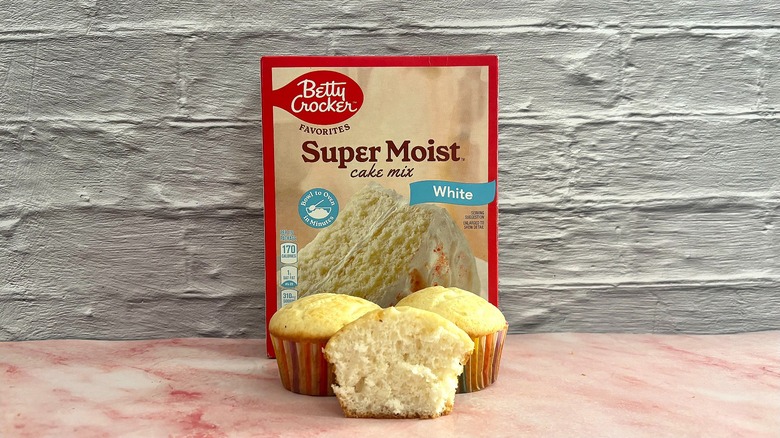
Betty Crocker's white cake mix gives the baker the option of using four egg whites or three whole eggs. In the spirit of keeping everything as uniform as possible, I went with the egg white option. The other ingredients required are ¾ cup water and ½ cup vegetable oil, setting this mix slightly apart from the rest.
There was a definite textural difference between the two white cake mixes. Compare the pictures — Betty Crocker's saw a significantly higher rise, and it boasted an even crumb that had more of a delicate angel food cake texture. Though, being a little higher and lighter also seemed to make it a bit dryer, but not enough to be unpalatable (especially when paired with frosting). The two cakes were yet again similar in flavor, but I'd still give a slight edge to Betty Crocker's for the same reason its yellow cake was superior — when compared side-by-side to Duncan Hines', Betty Crocker's had a more natural flavor.
Duncan Hines Devil's Food
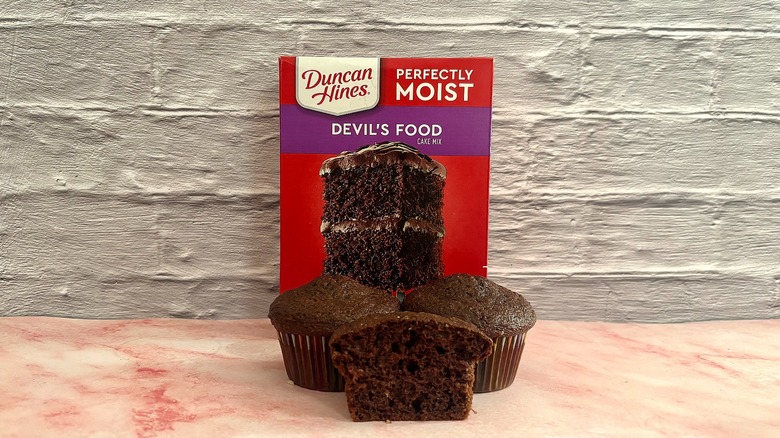
Each brand has various chocolate, double chocolate, and triple chocolate cake offerings; in an effort to do as fair a comparison as possible, I chose devil's food cake to be the chocolate cake mix of choice. What makes the two types of chocolate cake different? Well, devil's food cake will typically have a richer chocolate flavor and a fluffier texture than your average chocolate cake might. Duncan Hines' version called for a cup of water, three eggs, and ½ cup of vegetable oil. As for the rest, you know the drill.
I'd call Duncan Hines' devil's food cake mix okay, and had to keep in mind that it would be enhanced by the presence of frosting. The cake itself had somewhat of a bitter aftertaste that I didn't find too appealing, though I appreciated how rich its chocolate flavor was. It checked all the necessary textural boxes, too — the crumb was remarkably even, soft, and moist throughout, and the cupcakes got a nice dome on top. Overall, really not bad, though this wasn't my personal favorite flavor.
Betty Crocker Devil's Food
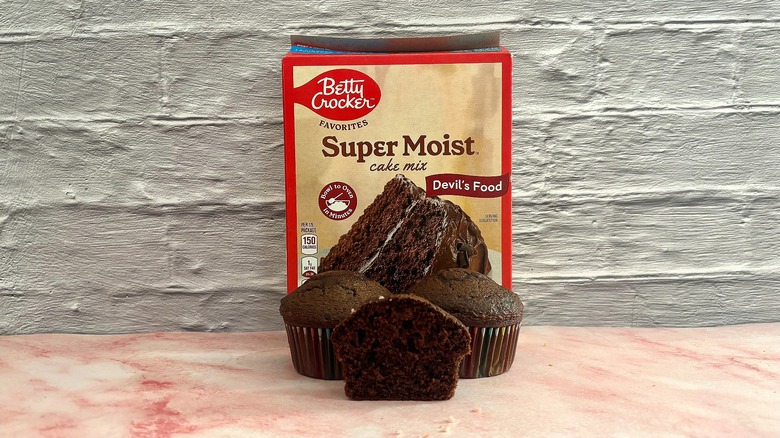
The two devil's food cake mixes were identical in terms of what they called for: Betty Crocker's also required a cup of water, three eggs, and ½ cup of vegetable oil. This makes the chocolate cakes the only two mixes that took the exact same ingredients in the same proportions, which could be why the resulting products were so similar.
Other than getting a more even dome shape on top, Betty Crocker's devil's food cake mix was virtually identical to the previous one in texture. Flavor-wise, there were minimal differences between the two, though I'd still give a slight edge to Betty Crocker's, which was darker with a less bitter quality. Again, it tasted more "natural" than Duncan Hines', but I can't put my finger on why. I'd say the devil's food flavor was the most similar between the two brands; the next flavor, however, was so different that it made my determination an easy one.
Duncan Hines Strawberry Supreme
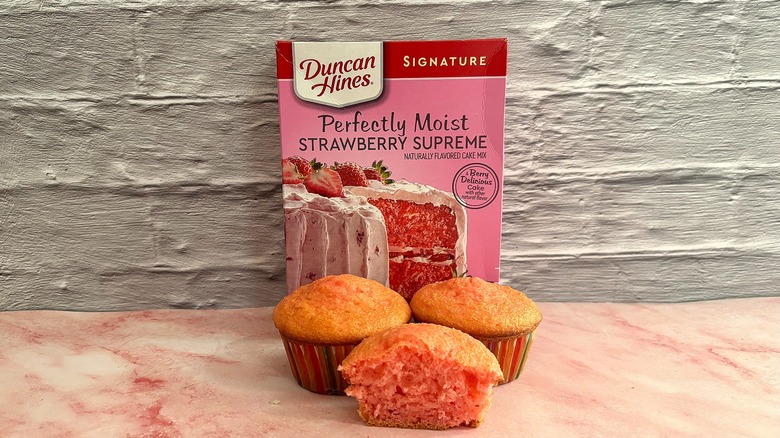
Admittedly, I don't know that I've ever made a strawberry cake mix before. Strawberries seem to be something I reserve for garnish or filling purposes, rather than flavoring an entire bake, so I didn't quite know what to expect from the two strawberry cake mixes. Duncan Hines' yet again called for a cup of water, three eggs, and ½ cup of vegetable oil. Out of curiosity (and an admitted lack of self-control), I tasted the batter before baking the cupcakes, and it definitely had a "fake" strawberry flavor.
The fluorescent resulting bake above did actually fare better than the batter, but not for a great reason: It was just flavorless. I got no strawberry flavor to speak of, and for such a bright bake, this was the blandest of the bunch. Texturally, it was fine — it didn't rise as much as some other flavors, but it still had that light, moist crumb that I like in cupcakes. Other than that, it was blah. I'd be fine using this for the undiscerning palate of a child who'll be more than satisfied by its bright hue, but on the whole, I can't recommend this mix.
Betty Crocker Strawberry
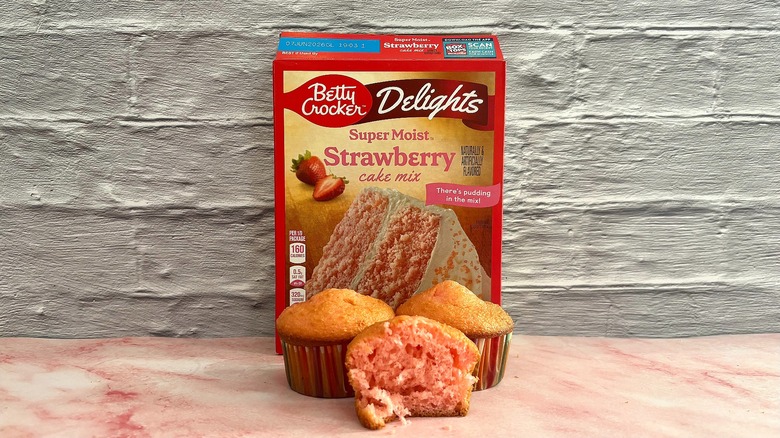
Betty Crocker's strawberry cake mix called for a cup of water, ⅓ cup oil, and three eggs — slightly different from the previous, but not by too much. However, the end result gave a night-and-day difference to Duncan Hines' strawberry cupcake. Betty Crocker was undoubtedly the superior brand when it came to strawberry mixes.
The flavor here still isn't wildly punchy, but you can absolutely taste the strawberry. With Duncan Hines', I initially questioned my own palate — maybe it was supposed to be subtle? Maybe I just wasn't tasting it right? But Betty Crocker put my worries to bed. The bright, fruity, slightly candy-like strawberry appeal here was very apparent, and I didn't have to search for it at all. The texture was denser, more moist, and slightly "stickier," which I'll attribute to the inclusion of pudding in the cake mix (definitely a smart decision on the brand's part). There's no contest between the two strawberry mixes, and I'd recommend Betty Crocker's over Duncan Hines' every time.
Which brand is better?
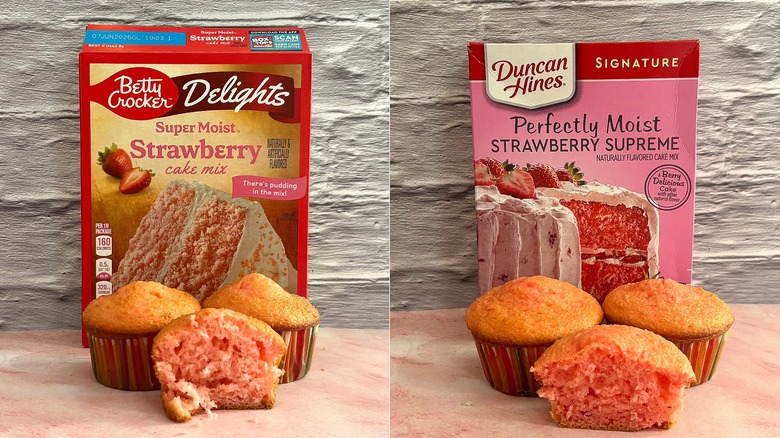
The indisputable winner of this taste test was Betty Crocker. I liked each of Betty Crocker's flavors more than Duncan Hines' version of the same. While the differences between brands was subtle for some flavors, it was incredibly striking with the strawberry cupcakes, and all of Duncan Hines' flavors had a more artificial quality than Betty Crocker's. Any potential third factors were mitigated by the similarities between the brands — each had pretty much the same ingredients and baking instructions, so difficulty and ingredient expense/availability weren't taken into consideration.
I'll also say, I noticed these differences because I was looking for them, and you'd probably only notice them if you were intentionally comparing the two brands as well. Not to mention, I tasted each sans frosting — a component likely to mask many qualities of the actual cake. Nevertheless, I feel comfortable claiming that Betty Crocker is the winning brand.
Methodology
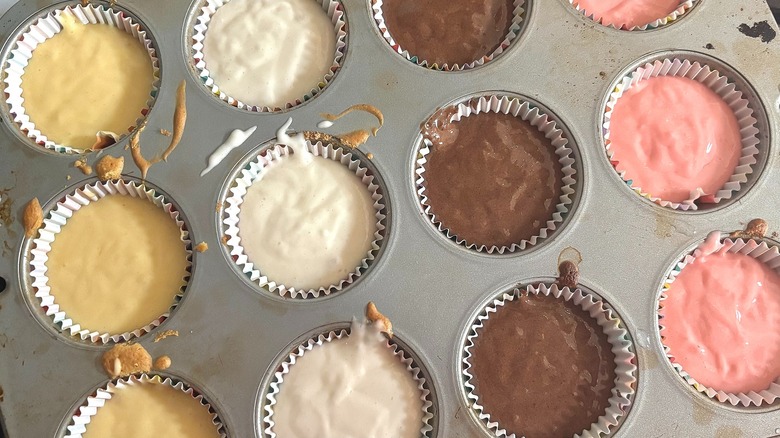
To do as accurate a comparison as possible, I chose four comparable flavors from each brand and made each according to the package's instructions. The only mix that allows the baker some flexibility is Betty Crocker's white cake mix — you can choose to add three eggs or four egg whites. I chose to add whites, as that's what I used for Duncan's mix, and that's the standard for white cakes anyway.
Fortunately for me, each brand's mixes recommended basically the same baking temperature and time, so I was able to bake all the Betty Crocker mixes at once and all the Duncan Hines mixes at once. From there, I tasted each back to back and judged them based on their overall texture and flavor before crowning Betty Crocker as the superior brand, well worth the extra couple of bucks you might spend on it.