

The Type Of Knife Beginner Cooks Should Avoid Altogether
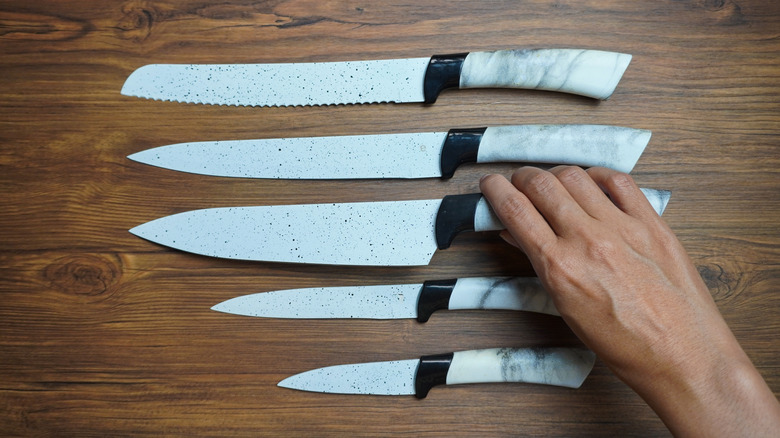
No matter what level you consider your cooking to be, if you're getting into the kitchen, you've got to get really familiar with holding and using a kitchen knife. But, if you're first starting out, here are some words to the wise: steer clear of carbon steel knives. Despite being extremely popular among professional chefs, there's a good reason why carbon steel knives aren't exactly beginner-friendly.
The bare metal on carbon steel knives can rust very easily, and a lot quicker, than you'd think. If you don't clean them immediately after cutting something acidic like a tomato, you'll find rust forming on the blade in just a couple of hours. Since these knives need a lot of baby sitting, we highly recommend sticking with an inexpensive set of stainless steel knives if you're just starting out.
Stainless steel knives tend to resist rust and corrosion very well, since the iron is alloyed with a bit of chromium. Simply give them a fast rinse after use and wipe them down with a dry towel, and you can put them back in your knife holder without a single worry. It's stressful enough to learn basic knife skills without getting hurt — you don't need the additional pressure of worrying about them turning into a rusty mess as well!
How to care for carbon steel knives
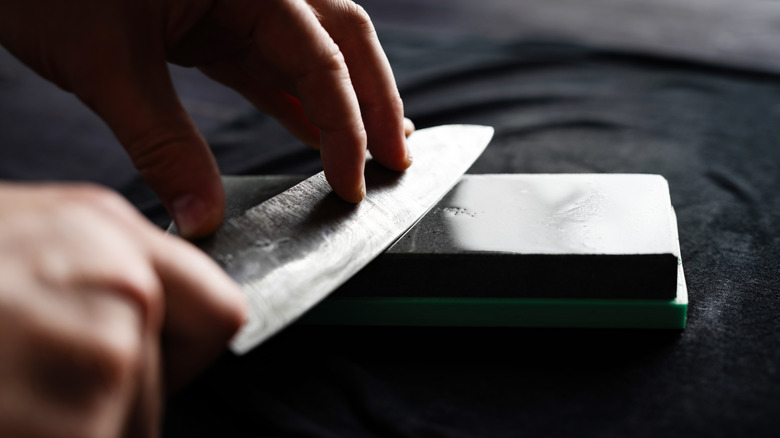
While not the preferred type of knife for beginners, there's no need to panic if, for whatever reason, you are a proud owner of a carbon-steel knife. While rust-prone, it's not impossible to learn how to use and take care of them. In fact, your number one priority should be to form a good knife-care routine. This will involve washing the knives thoroughly after every use, and cleaning them immediately with a dry towel to avoid rusting. Then, before you put them away, make sure you store the knives somewhere cool and dry. This will further limit the chances of the knives rusting.
To make carbon-steel, iron is mixed with about 2% carbon (hence the name). What you get is an alloy that's far stronger than stainless steel and, as a result, can hold an edge for far longer than stainless steel knives. This not only means they can be sharpened fine enough to cut through anything like butter, but also that you won't have to sharpen them as often — which is one of the biggest reasons why professional chefs like Julia Child swear by carbon steel knives in spite of the other extra hassles.
One pro-tip before you go: While this step isn't exactly required, slathering the blade with a food-safe oil after every use will help protect the knives from moisture and, by extension, rust. Followed day in and day out, your carbon-steel knives can easily last for generations.