

Do You Really Need A Matcha Whisk Holder?
We may receive a commission on purchases made from links.
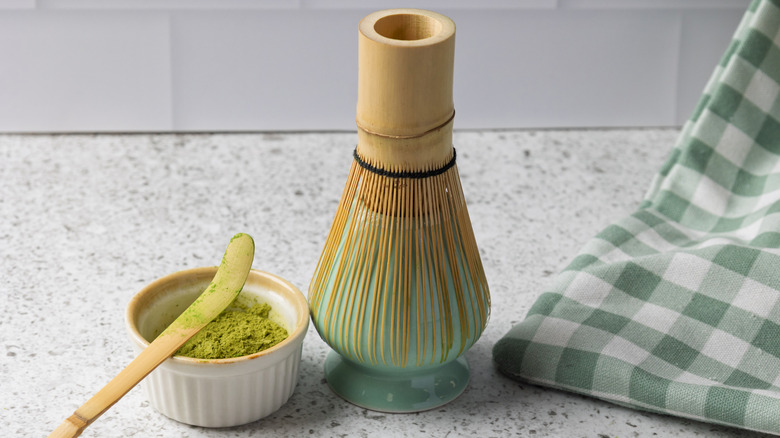
Making matcha at home can bring serenity and the pleasures of the Japanese ceremonial tea to your morning routine. But preparing matcha can seem daunting at first, with the different types of matcha and specific tools you need, including a bamboo whisk called a matcha chasen. While this type of flexible, multi-pronged whisk (or an electric metal whisk) is key for aerating and properly dissolving matcha in water without it clumping, some also recommend a traditional bamboo or ceramic matcha whisk holder (kuse naoshi) to dry, store, and retain the whisk's shape. However, Jee Choe, tea sommelier for the tea and coffee blog Oh, How Civilized, says you don't really need a matcha whisk holder if you have the right bamboo utensil storage know-how.
"If you don't have a stand, put the whisk with the handle side down after washing," the tea expert tells Tasting Table. Additionally, Choe advises us to avoid placing the whisk prong-side down because the prongs "are the most important part of a whisk." A matcha whisk holder allows the bamboo material to breathe as it dries, which prevents molding and warping. But you can easily store the whisk without the holder, like Chloe says. Just don't face it downwards or on its side, since that could put weight on the relatively delicate prongs or cause moisture to accumulate if they are in contact with wet kitchen surfaces. Instead, store the whisk prongs up by resting the flat handle edge on the counter.
More tips for keeping your maintaining your matcha whisk
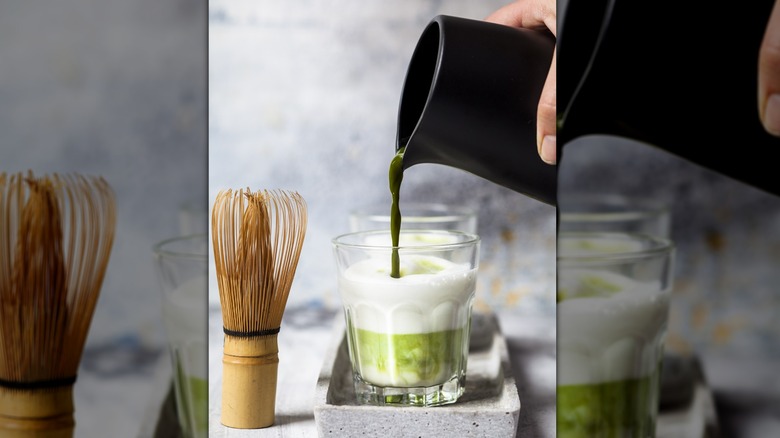
According to Chloe, while aesthetic damage like cracks in the handle is nothing to worry about, "if the prongs or tips get damaged or broken, it's time to replace the whisk." Storing your matcha whisk handle side down on the counter or in a dry shallow matcha bowl (chawan) is an easy way to dry and maintain the prongs. This ensures that they stay in excellent condition to sustain the utensil's quality — and to make a perfect cup of matcha every time.
For best maintenance, after making your own DIY matcha latte that stacks up to the best cafe versions, clean your matcha whisk properly and promptly by submerging it in warm water and rinsing it to remove any green tea residue. Then, let the whisk dry in a sunny spot in the kitchen, prongs up.
Since the whisk's prongs can be delicate, it also helps to soak the matcha whisk before using it to make a hot or cold cup of the satisfying beverage. That way, the bamboo pieces will soften and become less rigid, making them more apt for whisking matcha vigorously without breaking. While even the tea master says that a matcha whisk holder is not absolutely needed, if you're still curious about trying one out in your kitchen, you can find porcelain matcha whisk stands in shops or check out this Jade Leaf Matcha Traditional Porcelain Whisk Holder on Amazon.