

Why Draining Your Pasta In The Sink Is A Big Mistake
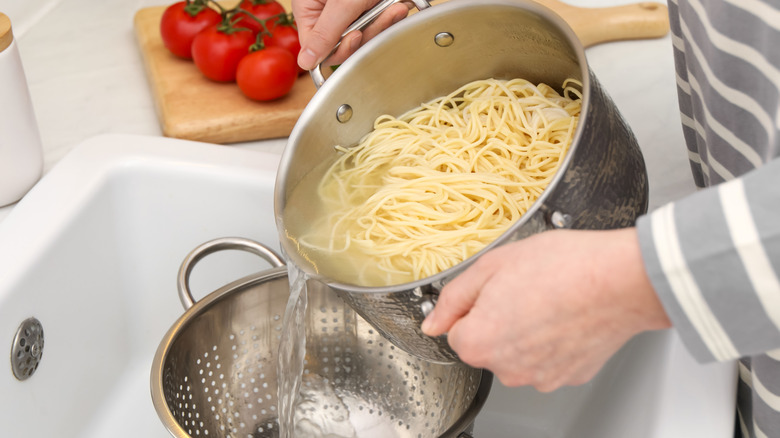
If you're one of those cooks who drains their pasta straight into the sink without a second thought, you're not alone. But, did you know that you're letting liquid gold swirl away? Yup, that cloudy water you're tossing out is far more valuable than it looks. Pasta water is loaded with starch, and it can transform your sauce from flat and watery to silky and restaurant-quality, so it's a secret weapon in your culinary armory.
When pasta cooks, it releases starch into the boiling water. This starchy water becomes thick and cloudy, which might not look appealing, but it's exactly what your sauce needs. It acts as a natural emulsifier, helping oil and water-based ingredients like butter, olive oil, tomatoes, and cheese, bind together. This gives your sauce a luxurious texture without having to add flour, cream, or thickeners. In short, it turns a collection of ingredients into one cohesive, velvety sauce. For this reason, you can also use pasta water for better beans in soups and stews.
Beyond texture, pasta water also helps flavor cling to the noodles. Have you ever had pasta where the sauce just slides off, leaving a pool at the bottom of the bowl? That's often because there's no binder to bring everything together. A splash of starchy water in your sauce helps it stick to every noodle, from spaghetti to penne. It's the difference between eating plain pasta with sauce and a true Italian-style dish where every bite is infused with flavor.
How to use pasta water like a pro
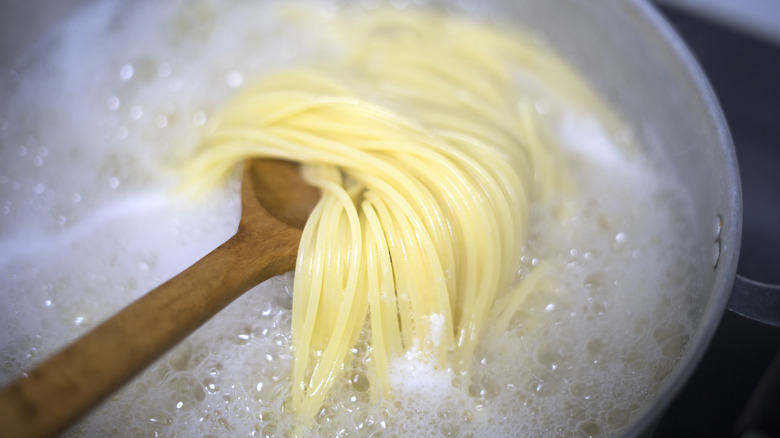
To make the most of pasta water, the key is to reserve a cup or two before draining your pot. A heatproof measuring jug or mug works well for scooping it out right before the noodles are fully cooked. Then, when you're ready to mix the pasta with your sauce — whether it's a special Italian Sunday sauce, a creamy Alfredo sauce, or just garlic and olive oil — add a little of the water and stir vigorously. The starch will allow the noodles to soak up the rich flavor of the sauce. Start with just a splash and add more as needed until the sauce is silky and smooth.
Even a few tablespoons of pasta water can loosen a thick sauce or help deglaze a pan without dulling the flavor. If you're tossing pasta in a skillet with sauce, add the water gradually over medium heat, stirring until it reaches your desired consistency. The starchy water also balances the seasoning — because it's slightly salted and full of flavor, it can enhance your dish without needing extra salt or additives.
Seasoned cooks even save excess pasta water in the fridge for a day or two, or freeze it in small portions for future use. It's great for reviving leftover pasta, adding depth to soups, or enriching risottos and pan sauces. You can even use pasta water to bake homemade bread. So ditch the colander-over-the-sink routine, and keep the starchy water right where it belongs — in your kitchen arsenal, not down the drain.