

You've Probably Been Eating Ramen Wrong This Whole Time
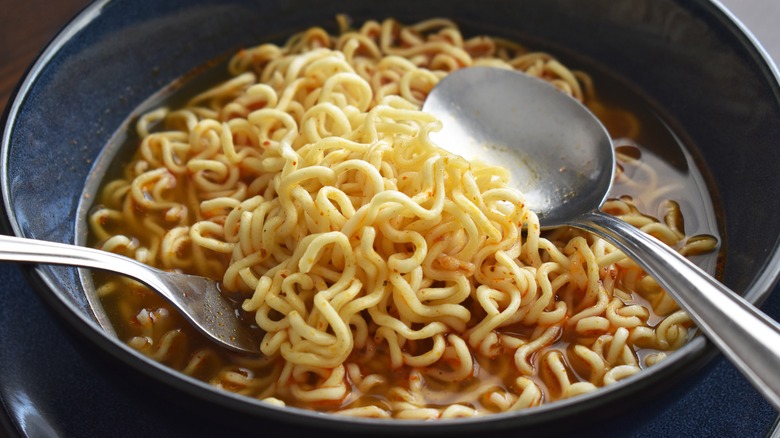
Ah ramen — those soft and moreish noodles that are a match made in heaven with a delicious flavor-filled broth, or topped with yummy sliced eggs or meat, fried veg, marinated braised pork, corn, seaweed, or finely sliced green onions. More than likely, when this steaming hot dish is placed in front of you, you give it a good mix and get in with a fork and spoon, Italian-style. But here's the rub: You've probably been eating ramen incorrectly all this time.
To begin, it's customary to taste the broth before touching the noodles. In Japan, the soup is the heart of the dish, crafted with care and precision over hours of simmering. Tasting it first lets you appreciate its depth and flavor before it's diluted by the noodles and toppings. After the initial sip, dive into the noodles, but don't wait too long — ramen is best eaten hot and fresh. If you let your bowl of fragrant, soupy noodles sit too long, they can become soggy and lose their springy texture.
And forget those accusatory eyes fixing on you when you slurp up all that deliciousness, as tends to happen in more Westernized eating customs. Slurping is not only acceptable in Japan — it's encouraged. A hearty slurp helps cool down the hot noodles, enhances flavor through aeration, and indicates that you're thoroughly enjoying your meal. Unlike Western table manners, where slurping might be frowned upon, in Japan, it's a sign of respect to the chef and appreciation for the meal.
Ramen etiquette: what to do and what to avoid
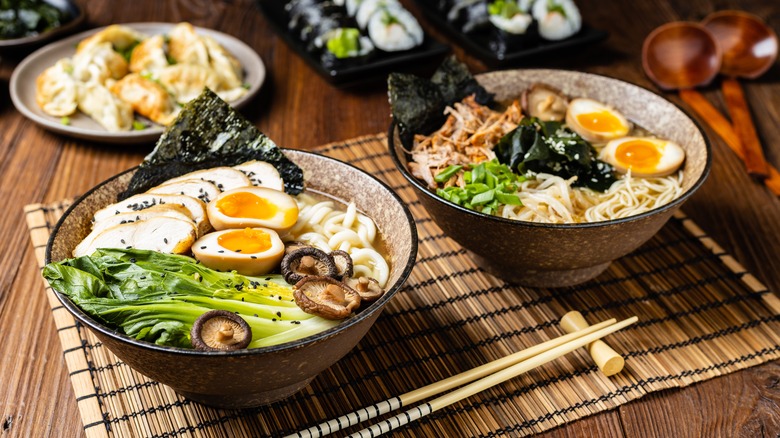
Another key point of ramen etiquette is the use of condiments. Many stores or restaurants where you'll find ramen noodles will also offer extras like sesame seeds, garlic, chili oil, or vinegar. While these can enhance the dish, it's important to first taste the ramen as the chef intended. Adding too many condiments right away can be seen as disrespectful to the careful balance of flavors the chef has created. Use them sparingly and only after you've tried the original broth and components.
Chopstick etiquette also plays a role. It's fine to use chopsticks to pick up noodles, toppings, and even sip a bit of broth. However, avoid using chopsticks to stab at food or pass items between chopsticks, as this is considered bad manners in Japanese culture. It is perfectly acceptable to use a ramen ladle called a renge to scoop up broth and small toppings like corn or bamboo shoots. Just don't use it as a substitute for eating the noodles. And avoid the temptation of using a fork to twirl the noodles like one tends to do in an Italian pasta dish like spaghetti bolognese.
Finally, it's customary in Japan to finish your bowl completely. This is seen as a sign of satisfaction and respect. Leaving broth behind is acceptable, especially if it's too salty or rich for your taste, but finishing the noodles and most of the soup shows your appreciation for the effort that went into the dish.