

The Most Iconic Soft Drinks Of Every Decade
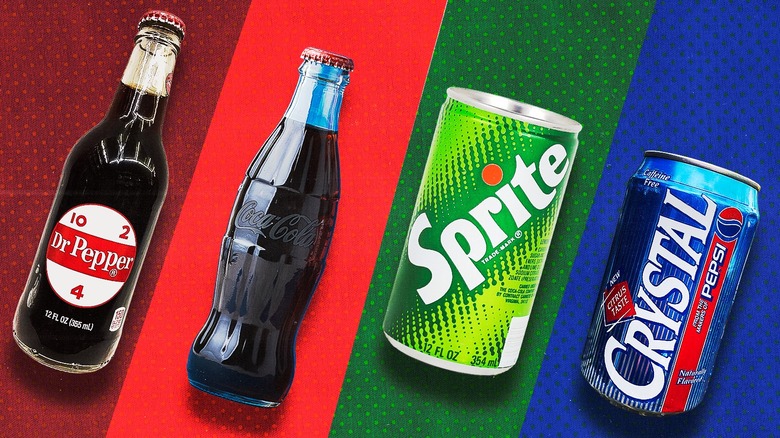
Soda is one of the most recognizable drinks in modern culture, offering a variety of flavors in a bubbly liquid form. For over a century, it's been quenching people's thirst with an effervescent flair and has become a huge part of our everyday life, from fast food outings to debates about a healthy diet. You can spot sodain movies, magazines, and, of course, in commercials on TV or streaming services. A whopping 80% of households in the United States purchase soda or similar sugary drinks every single week, highlighting the significant role soft drinks play in the daily lives of millions of Americans.
With soft drinks being so prevalent, it's no wonder that they've become inextricably tied to cultural events and specific periods of time. No matter where you live or how old you are, there's probably a soft drink that feels like an iconic symbol of your favorite decade. Perhaps the drink evokes a nostalgic memory, or maybe it represents the opinions and lifestyles of a previous generation. Either way, certain soft drinks will always be associated with a particular time and place, and below we're going to take a look at some of the quintessential sodas of the 20th century.
1900s – Dr. Pepper
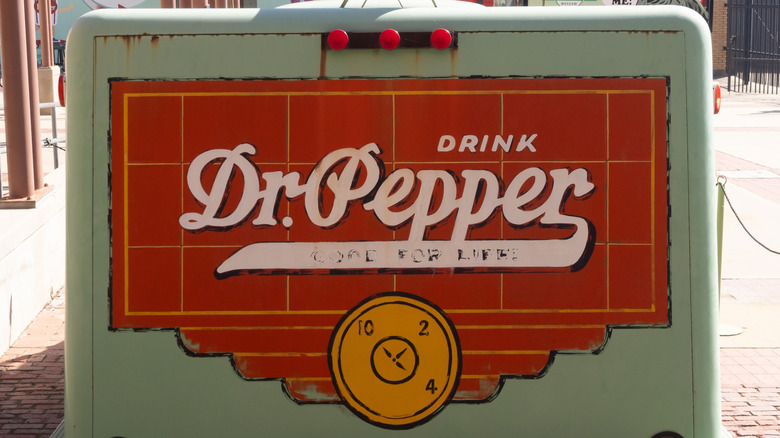
Few sodas have an origin story that's as well-known as it is mysterious. That's the case for Dr. Pepper, however, a soda brand that started out as a real pharmaceutical drink. Of course, it didn't have any medicinal properties when Charles Alderton created it in 1885; it was the result of his obsession with trying to capture the fragrances of the fruit syrups that permeated his medicine shop. While the reason for the "doctor" part of the name might be obvious, it's still unclear whether Dr Pepper was a real person. Even though he didn't care to market the drink, by 1891, the store owner, Wade Morrison, and a beverage chemist named Robert S. Lazenby formed the Dr. Pepper Company.
Dr. Pepper was one of the very first flavored sodas ever created, and it soon became a popular drink in Waco, Texas. In 1904, Dr. Pepper was taken to the St. Louis World's Fair, where 20 million attendees got the chance to give it a taste test. It was almost instantly a success. Dr. Pepper's ties to early pharmacies may never fully fade, largely thanks to the unofficial title in its name. However, many people today consider it an iconic southern drink.
1910s – Pepsi Cola
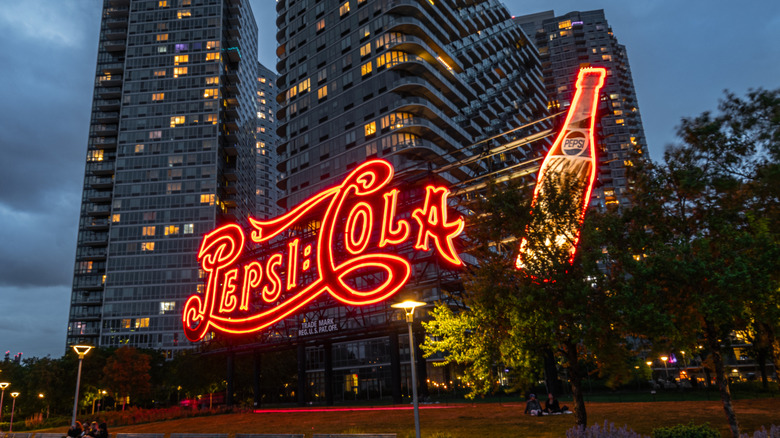
By the 1910s, soda was becoming increasingly popular, though the industry was still very young. Change arrived with the newly formed FDA and the Pure Food and Drug Act of 1906, which prohibited dangerous ingredients that were commonplace in food and drink, like arsenic, lead, barium, and even uranium.
Many soda brands, including Coca-Cola, were forced to adjust their recipes, but Pepsi was one of the few sodas that needed no changes. Being one of the first mass-produced colas, the change in regulations that tripped up its competitors allowed Pepsi to thrive. Pepsi was able to expand its bottling network from 15 facilities in 1906 to 40 within the year, increasing syrup sales from 38,605 gallons to over 100,000 gallons during the same period. Pepsi also registered its trademark in Mexico in 1907, creating international fans of the soft drink.
By 1908, Pepsi had 250 bottlers in 24 states, and in 1910, the first Pepsi-Cola bottlers' convention was held in North Carolina. Between the increase in availability and the cultural significance of the soda, Pepsi continued to experience a decade of explosive popularity while other brands were still recuperating from their regulation-driven flavor changes. The 1910s were one of Pepsi's strongest decades; however, the economic disruption of World War I led to the company declaring bankruptcy in 1923, resulting in a few decades of turmoil for the brand.
1920s – Canada Dry Ginger Ale
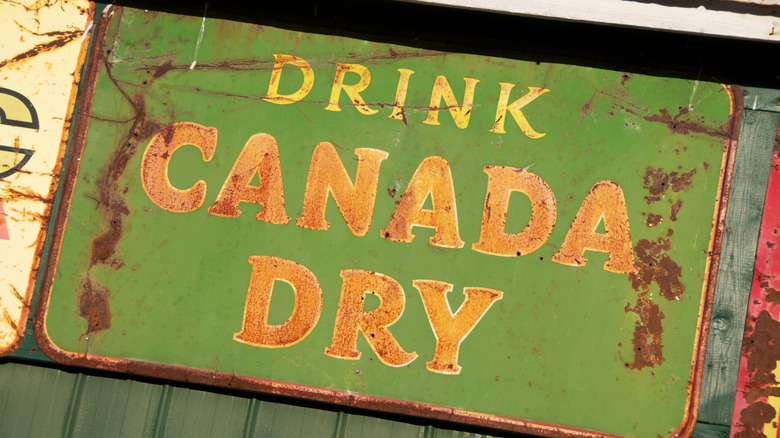
Soft drinks have long been the antithesis of alcoholic drinks, but in the 1920s, this was much more of a selling point than it is today. That's because in 1920, Prohibition went into effect, banning the sale of alcohol within the United States until 1933.
While some drinkers turned to bootleg and gangster-imported alcohol, many others decided to move on to soft drinks. After it began importing its ginger ale to the U.S. in 1919, Canada Dry decided to take advantage of the ban by promoting a drink that could serve as both a soft drink and a mixer to mask the harsh taste of bootleg alcohol. Once Prohibition began, Canada Dry's popularity intensified.
The bubbly beverage continued to be associated with alcohol during the Prohibition years. As late as 1924, Canada Dry was slyly suggesting that its ginger ale could be used as a mixer, printing ads that promoted the drink as one that "blends delightfully with other beverages." Canada Dry is still extremely popular today and considered one of the best ginger ales around.
1930s – Nehi
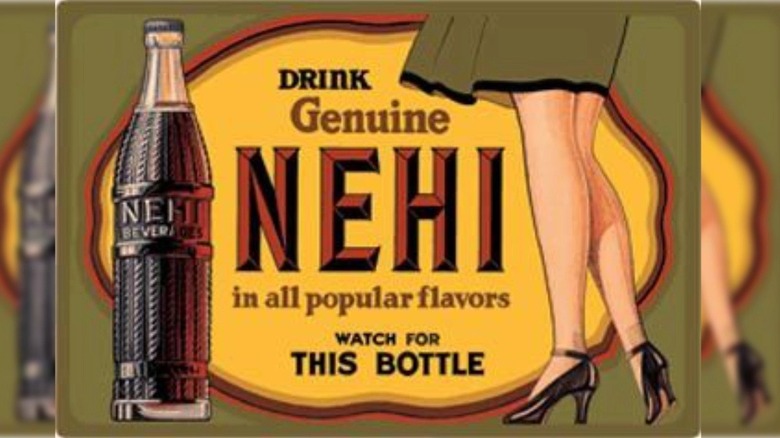
The Great Depression meant the 1930s were a tumultuous period, but in the soda world, things were just heating up. The iconic Nehi soft drink became hugely popular in the late '20s, in part due to its wide selection of flavors, which included orange, grape, root beer, peach, and cola. In 1928, the company that owned Nehi, Chero-Cola/Union Bottle Works, changed its name to the Nehi Corporation due to the immediate popularity of the fruity soft drinks.
The success of Nehi continued to grow as the uniquely tall bottle became more readily available around the country. A robust advertising campaign also helped Nehi get a leg up on the competition, as did a controversial logo that played on the soda's name by showing a scandalous image of a woman's leg in knee-high stockings. The soda was featured on radio shows like "Ripley's Believe It or Not" and was promoted by silver screen movie stars.
By the 1970s, TV audiences strongly associated Nehi with the TV series "M*A*S*H," in which the character Radar is known to love the brand's grape-flavored soda. Nehi was eventually sold to the Dr. Pepper Snapple Group in 2008, but you can still find it in grocery stores today.
1940s – Coca-Cola
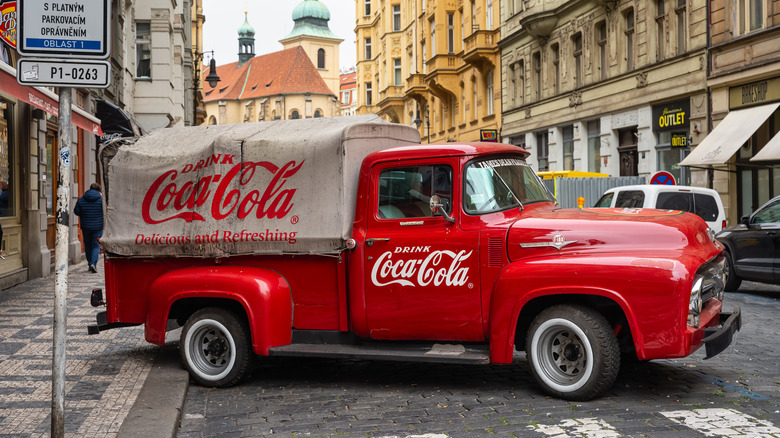
Coca-Cola may be one of the most recognized soft drinks in the entire world. According to Coca-Cola, 1.9 billion servings of its drinks are consumed by people across 200 countries every single day. That staggering statistic just goes to show how far the Atlanta-based company has come since its 1886 inception. While it's clear that Coca-Cola has been a very popular beverage for a long time, the 1940s were arguably the soft drink's most iconic era due to World War II.
The war elevated Coca-Cola from a simple American treat to a worldwide phenomenon after the soldiers popularized it. World War I had already made Coke a favorite among American troops, but in 1941, Coca-Cola President Robert Woodruff announced that "every man in uniform gets a bottle of Coca-Cola for five cents, wherever he is and whatever it costs the company" (via the Museum of the American G.I.). The company established bottling plants in 44 countries during WWII, and when President Dwight D. Eisenhower recognized the importance of Coca-Cola to the troops, he sent a telegram directly requesting portable Coca-Cola factories to keep up with the soldiers' demand. This had lasting effects, not only because those soldiers came home and continued drinking Coca-Cola, but also because many films set during WWII featured Coca-Cola bottles, cementing it as a favorite wartime drink.
1950s – RC Cola
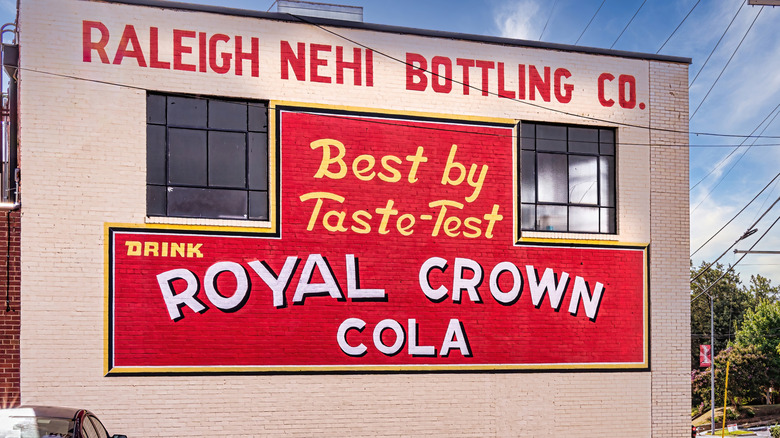
From Pepsi to Kroger's Big K cola, there are many copycat brands that have tried to unseat Coca-Cola from its top-rated spot. Although few succeed, there are still plenty of people who are interested in a slightly different cola flavor, and one competing brand became especially popular in the 1950s. RC Cola was originally called Chero-Cola when it was created in 1905, forming part of what would eventually become the Nehi Corporation. In 1933, the soda was revamped and renamed to match its original company name: Royal Crown, or RC. The cola was seen as an affordable alternative to Coke and was referred to as part of a "working man's lunch" in the South.
Throughout the 1950s, RC Cola was very innovative in a number of ways. First and foremost, in 1954, it was the first soft drink to be nationally distributed in cans. Then, in 1955, RC Cola became the first company to release a diet cola, called Diet Rite. Throughout the '50s, RC Cola only got more popular as it gained endorsements from household names like Lucille Ball, Shirley Temple, and even Ronald Reagan. It certainly seemed like everyone was enjoying RC Cola at the time, making it a truly iconic 1950s soft drink.
1960s – Fanta
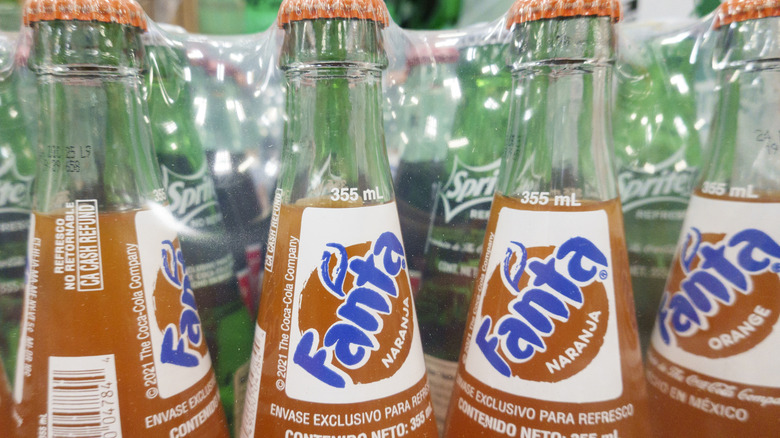
Fanta is best known today for its fruity flavors, most notably orange. However, Fanta had a troubled past, as it was originally sold as an alternative to Coke in Germany during the Second World War, which almost ensured its demise. However, clever marketing rocketed Fanta to the forefront of culture when it was revamped in 1955 and subsequently released in the United States. By the 1960s, Fanta had become popular around the world, with advertising campaigns that capitalized on the soft drink's "bright orange flavor."
It wasn't just advertising that made the soda special, though. Fanta's re-invention in the '50s transformed the drink from a carbonated, apple and whey-flavored beverage to one that used real oranges from the Mediterranean, perfect for marketing the soda in post-war Italy. Once introduced to the U.S. in 1958with the power of the Coca-Cola company behind it, Fanta was an instant hit among fruit soda fans. Of course, being a new and vibrant soft drink helped make Fanta an icon of the '60s.
1970s – TaB
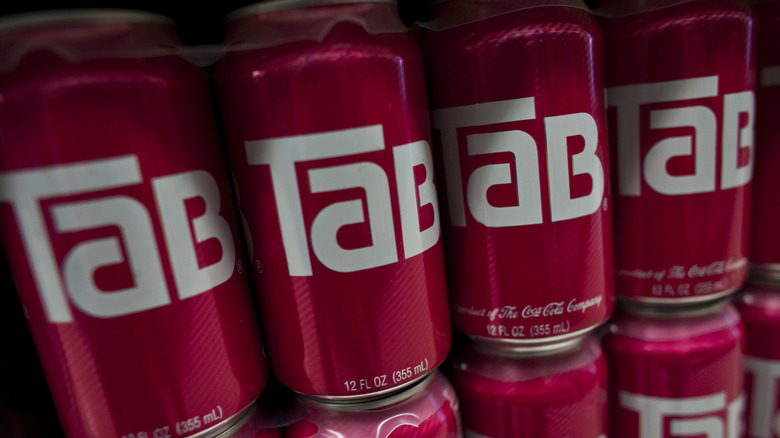
The 1970s were a time of big cultural shifts, and diet culture was quickly on the rise. In response to people's desire to be more trim while still enjoying delicious food and drink, Coca-Cola created its first diet soda, which it called TaB. Although the name is stylized with interesting capitalization, it isn't an acronym. Instead, all of its charm and allure comes directly from its low-calorie recipe. TaB was further popularized in media such as "Magnum P.I." (1980), "The Jerk" (1979), and some early "SNL" (1965) skits.
Unfortunately, a few setbacks related to regulations on artificial sweeteners made times tough for TaB in the '80s, but it managed to stay on store shelves until 2020, when it was discontinued. Today, it's often seen as nostalgic by millions of soda drinkers, and the Wall Street Journal called TaB "a '70s icon." It certainly made a huge impact on many people's lives, as thousands of fans are still demanding the soda be re-released through a group called Save TaB Soda. The group's efforts haven't borne fruit, but its members aren't ready to give up the fight just yet.
1980s – Sprite
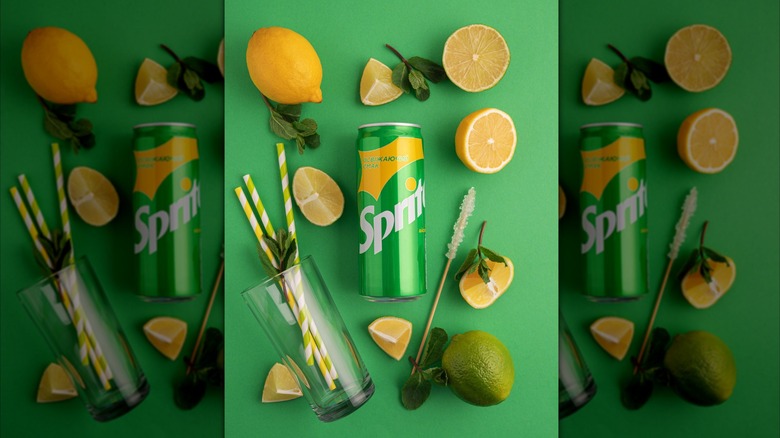
Sprite is one of the most popular lemon-lime sodas on the planet, though the brand has expanded with a number of different flavors, including some seasonal ones that are only released at certain times of the year. Owned by Coca-Cola, Sprite is a powerhouse in its own right. How did such a simple flavor rise to be the third-best-selling soft drink in the world? The soda was instantly popular when it was released in 1961, spreading to 39 countries by 1967. However, one community connection made all the difference for Sprite.
In 1986, Sprite featured rapper Kurtis Blow in its "Now More Than Ever" ad, making him one of the very first hip-hop artists to be featured in a national advertising campaign. In subsequent years, as hip-hop grew more popular, Sprite tied itself to many artists, including LL Cool J and Kris Kross. Plus, its caffeine-free recipe made it a popular choice for those who wanted to avoid the stimulant. Sprite was definitely an iconic part of the 1980s soft drink world, but it's still majorly popular today, and continues to tie itself not only to hip-hop, but to the NBA as well.
1990s – Crystal Pepsi
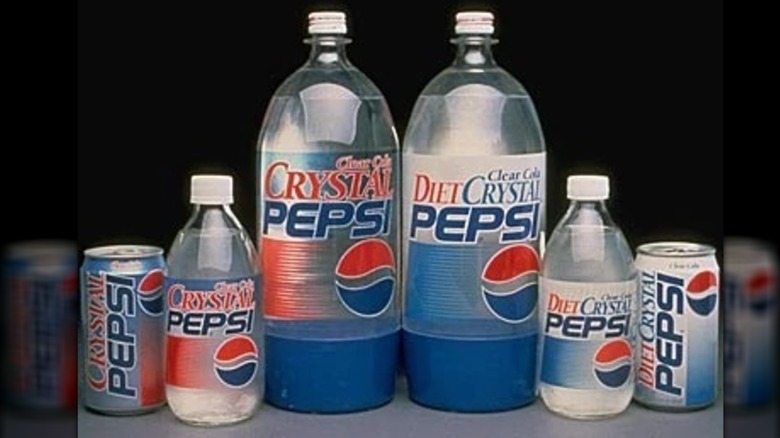
Not everything that feels nostalgic was necessarily good, and there are plenty of gaffes throughout history that people still love to discuss and examine. Anyone who lived through the '90s can probably think of a special soft drink that largely fell flat: Crystal Pepsi.
A new version of Pepsi, Crystal Pepsi was the company's attempt to enter the healthy soda market. It advertised no preservatives, replaced the caramel color with modified cornstarch, and had 20 fewer calories than standard Pepsi. The video ads also focused on the future, implying that Crystal Pepsi was the way forward. There wasn't much of a future for Crystal Pepsi, though, as it launched in 1992 and was discontinued about a year later.
Despite the short-lived reign of Crystal Pepsi, it continues to be an interesting soft drink talking point. Vogue called it an "iconic '90s beverage" when it was set to be re-released temporarily in 2017. So why did it fail? Apparently, the taste was awful. Even the creator of Crystal Pepsi, David C. Novak, admitted in a 2007 interview with Fast Company that, "It would have been nice if I made sure the product tasted good." It wasn't the last time Pepsi would experiment with unusual flavors, but it's by far the most memorable.
2000s – Mountain Dew
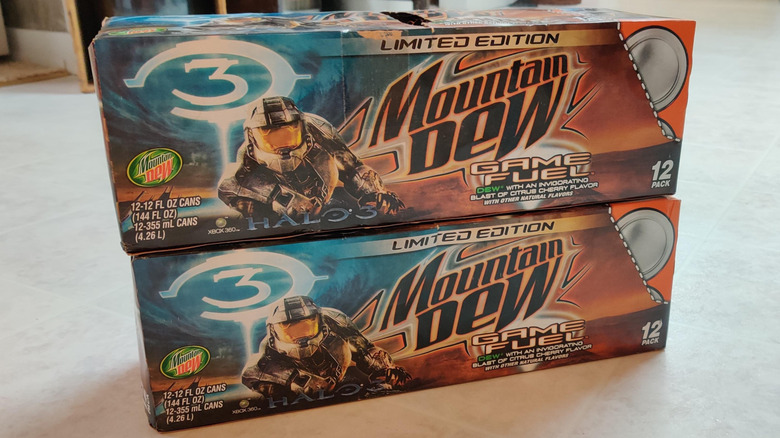
There are plenty of different types of soda fans, but few groups are referred to as a cult quite as often as those who love Mountain Dew. Mountain Dew has acquired quite the devout following over the past few years, and much of the soda's fame can be traced back to the early 2000s. A lot was going on for the company at this time, but two new flavors pushed the soft drink into a new spotlight. Mountain Dew's marketing shifted to target specific demographics, namely, young men. This led to two major partnerships: a first-of-its-kind deal with Taco Bell and a cross-promotion with Microsoft's gaming console, the Xbox 360.
Baja Blast, one of the most popular Dew flavors ever, debuted in 2004. This citrus-flavored soda continues to have a cult following, and new variations are frequently released. Most fans of Taco Bell agree that Baja Blast is the only drink worthy of accompanying basically anything on the menu. Mountain Dew then partnered with the release of Halo 3 on Xbox 360 in 2007, expanding its grip on thirsty gamers. Dubbed "Game Fuel," the special Mountain Dew flavor has become a revered drink that even earned a eulogy from Polygon in 2021.
2010s – La Croix
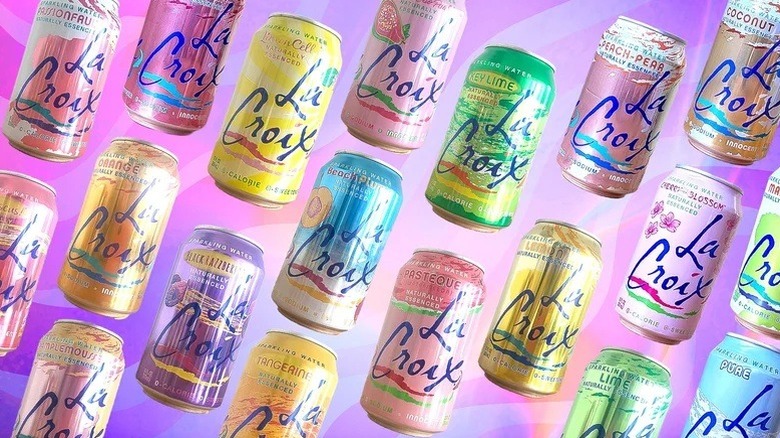
La Croix is one of the most recent soda crazes, and while many people still remember its inception as a light soda for moms watching their waistline, its resurgence in the 2010s made it positively trendy among teens and young adults. Part of the reason La Croix exploded in popularity is the fact that it greatly expanded its flavor choices. In 2004, they had just six flavors, but by 2015, there were a whopping 20 La Croix options. The light and refreshing sparkling water had simple infusions of flavors, like lemon and lime, which were later joined by more exotic fruit flavors, such as passionfruit and kiwi sandia. This made it easy for people to find a favorite, or at least never get bored with the soft drink.
Another helpful factor was La Croix's adherence to fad diets of the time. La Croix is considered suitable for paleo diets, and in 2015, it was named a partner in health by the Whole 30 diet. The drinks were also a huge part of pop culture in the 2010s, with The New York Times writing a recommendation for the drink, and TV shows like "Parks and Rec" featuring the soft drink frequently. Sure, there were plenty of jokes and memes about La Croix's extremely light flavor, but it's hard to deny its iconic presence throughout the last decade.