

Easily Reduce Plastic Waste In Your Kitchen With One Utensil Swap
We may receive a commission on purchases made from links.
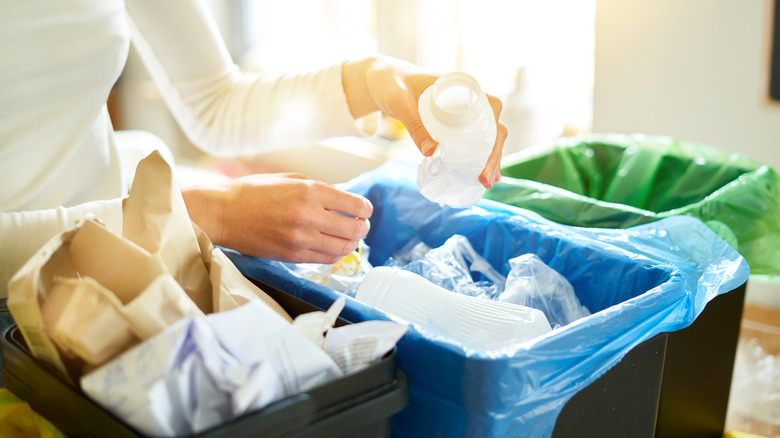
Anyone who's taken time to reroute plastics from the trash can to the recycling bin will undoubtedly be discouraged by the mounting evidence about these products: We cannot recycle our way out of our pollution crisis. If you assumed that all of the containers you'd been placing curbside were being reprocessed, unfortunately, that's not the case because those items are either too difficult to recycle (certain plastics cannot be melted and reshaped) or contaminated with food waste. So how much plastic waste in the U.S. is actually recycled? Only about 5% as of 2019, according to the Department of Energy. It's a statistic that can make the plastic problem sound too daunting for one individual to tackle. But there actually are ways consumers can make a difference in their kitchens, and one of the easiest is by ditching plastic straws in favor of a reusable glass version.
Why start with straws? Those plastic hollow cylinders are clogging oceans worldwide. A 2016 report by International Coastal Cleanup found that straws were one of the top 10 forms of ocean debris. Opting for a product you don't need to toss is an obvious step toward sustainability. And, let's face it: No one is saving their plastic straws in the hopes they won't crack to eke out one or two more uses. These days, glass straws can be thrown in the dishwasher alongside silverware. Some companies even make versions that stand up to extreme temperatures, from below freezing to 1,500 degrees Fahrenheit. And if you're into it for the cuteness factor, glass straws are just as festive (if not more so) than traditional plastic thanks to their unique patterns and shapes.
Last straw
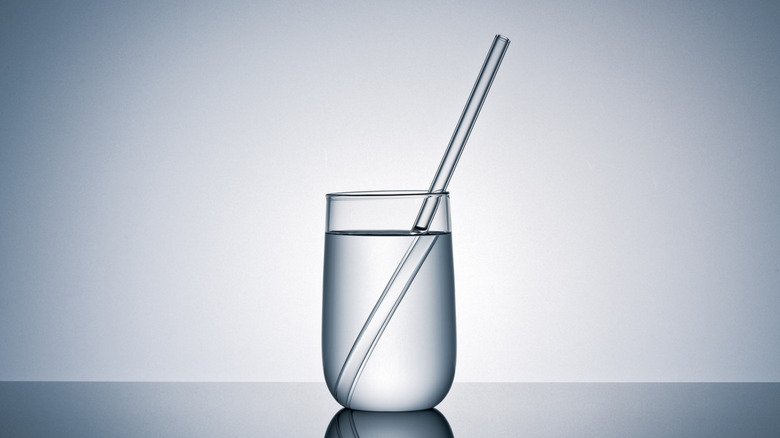
A glass straw exists for pretty much any need or taste. Looking for a replacement for your Stanley Cup? There's a colorful shatter-resistant six-pack sold by YINCL that comes with two cleaning brushes. Want to impress guests with a unique sipper? There are stylish squiggly glass straws from brands like Yutrenn. You can also find flower charm straws blown by a glass artist, courtesy of the DUMING-IN Store on Amazon. And you don't need to be concerned about the price point. A set of six non-disposable straws can cost as little as $8 to $10. That's close to the amount you might spend for a box of 100-to-200 plastic straws, which, again, are destined for the landfill (or the ocean). Just be sure you're washing glass straws frequently enough, and get into the habit of taking them with you if they come with a carrying case to help reduce waste while dining out.
As far as utensils go, straws have ridden an unusually choppy wave through the cultural zeitgeist. In 2015, an unforgettable video of a sea turtle with a straw lodged in its nostril became the symbol of the antiplastics movement, inspiring a crusade against single-use tubes that included bans in at least eight states and even more sweeping restrictions on single-use plastics in more than 30 countries. However, backlash followed in the U.S., leading to an executive order that ended the promotion of paper straws. Many people criticized the common substitute's tendency to dissolve mid-drink. There is some merit to the flimsiness claim. Happily, glass straws might satisfy both camps.