

What's The Best Type Of Honey For Mead?
We may receive a commission on purchases made from links.
Whether you're up on your assorted types of fermented beverages or just beginning to explore, mead is a fascinating and delicious journey of discovery. Mead is the world's oldest alcoholic beverage. At its core, it's made from honey, water, and yeast — but varieties, flavors, levels of alcohol, and variations in carbonation abound. The best way to learn about this category, how the ingredients' flavors transform, and what you like from your mead is to make your own. Author of the upcoming book "Three Cheers: Cocktails Three Ways: Classic, Riffs, and Zero-Proof Sips," Kaitlyn Stewart is an expert who spilled the fundamentals of DIY mead to Tasting Table. Chief among them, naturally, is what kind of honey to use.
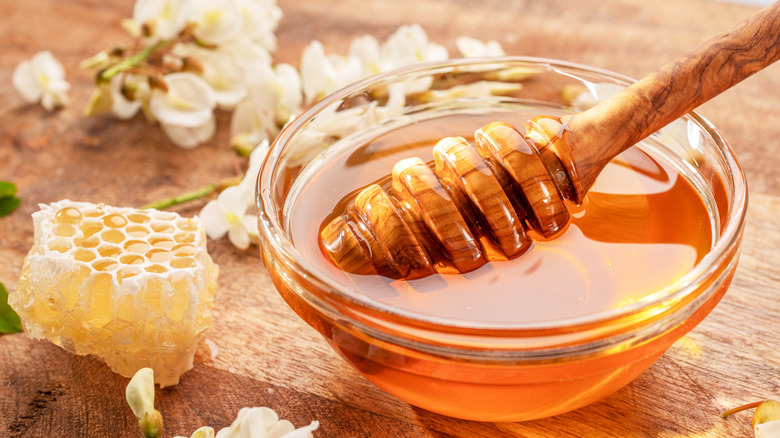
"Always go for a natural, raw honey when you can," Stewart says. "That way you know exactly what is going into your mead. Using a local honey is a nice touch too. Especially if it is a wildflower honey, such as an orange blossom honey. This will give your mead a slightly citrusy finish." Having total control over your ingredients is another perk of making your own mead. You can refrain from using artificial ingredients and keep things natural and local. You've got room to play, too: There are many types of honey, mainly distinguished by their nectar sources. Wildflower honey would result in more floral mead, acacia honey a more vanilla-sweet mead, clover honey a more fresh, grassy mead, orange blossom a more citrusy mead sage honey a more herbaceous mead, and so on.
The buzz on further mead-making tips
Once you've picked your honey, you'll need water, yeast — like this Capybara Distributors Lalvin D47 wine yeast – and a food-grade glass or plastic vessel. "[Make] sure the container that you are using has been sterilized and can be fitted with an airlock, to allow carbon dioxide to escape during the fermentation process," Stewart advises. After sanitizing your container, warm your honey and then fill your vessel halfway with water, and the rest of the way with honey. Mix it up, let it cool, add your yeast, and seal the container with that airlock for necessary oxygen flow. Store this upright somewhere cool, dry, and dark, Stewart notes.
How will you know when the mead is ready? "The best way to tell if your mead is done fermenting is by taking a hydrometer reading. Once you see the bubbles starting to slow, that generally indicates that the yeast has eaten all of the available sugars. A gravity reading will confirm this." You can find a hydrometer like this Soligt triple-scale hydrometer for under $20. After a few weeks, transfer the fermented mead to another clean container to clear up, then enjoy.
Learn about other types of mead to keep this tasty hobby going with new experiments. With traditional meads, you can play with honey types. With "melomels," you can add your favorite fruits — while mead is different from cider, fruit can be incorporated. And with "metheglins," you can add spices and herbs.