

Never Microwave Water For Your Tea — Why Scientists And Enthusiasts Say This Ruins It
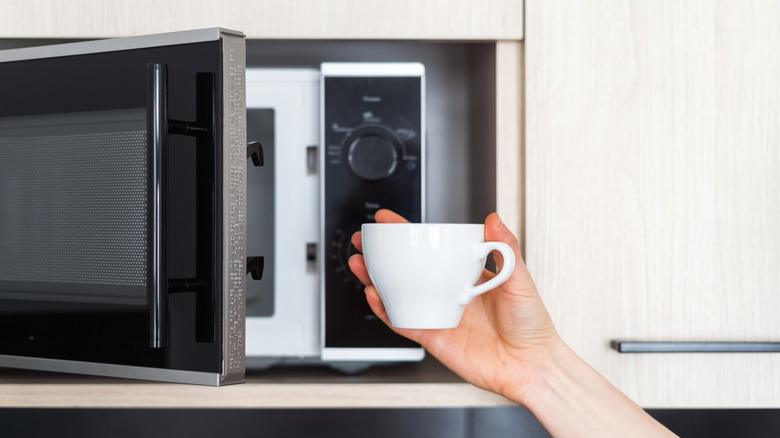
Taking the time to relax, sip, and savor a cup of hot tea is a worthy indulgence. One of the most crucial steps to prepping a cup of tea begins with the water you use and how you heat it. Though using the microwave to heat your water might seem like a simple way to streamline the process, it's a poor choice that won't produce a satisfying cup. The difference between boiling water and microwaving it is rather stark. Unlike the convection of a kettle, where the heat starts from the bottom and rises to the top (essentially rolling the water through an even heating process), microwaves are much more wayward.
When warming a dish or cup of food or drink in the microwave, the appliance's electromagnetic waves absorb into the water molecules, causing them to vibrate and creating heat. While this approach can be effective for quickly reheating food, it fails to do the same for water in which to steep tea. Much like warming a frozen dinner and finding sporadic frozen spots throughout your food, the same goes for a mug of water, which will heat unevenly in the microwave. What's more, the risk of water overheating or superheating and becoming a scald or burn hazard is why tea is one of the many things you should never put in the microwave.
Creating the most satisfying cup of tea
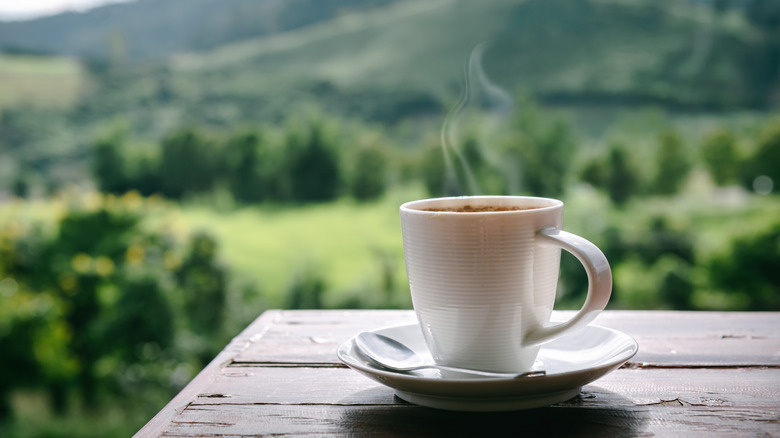
To get the most flavorful cup of tea, start by bringing fresh, cold water to a boil and let the just-boiled water rest for a couple of minutes before pouring it over your tea bag or infuser of loose leaf tea. Using new water each time provides optimal oxygenation to get the best taste out of your tea. It's important not to reheat water that has already been boiled, as the reduced oxygenation of the water will make your tea taste flat.
Properly heating your water is one of the best tips you need to brew the perfect cup of tea. No matter what kind of tea you choose to use, the right cup should be fully flavored and robust. Save your microwave for warming up complementary appetizers or sides to accompany your tea rather than for heating the water to brew it.
Be judicious with sweeteners and add them while your tea is still hot to give them time to dissolve. If you plan to add milk, make this the last addition to your cup before mixing it and enjoying it. Keeping your process simple and effective is the best way to brew a fulfilling cup of tea. Though it's more time-consuming to boil water in a kettle than a microwave, the tasty tea makes the time spent worthwhile.