

Stop Losing Pie Filling Through Crust Cracks With This Simple Trick
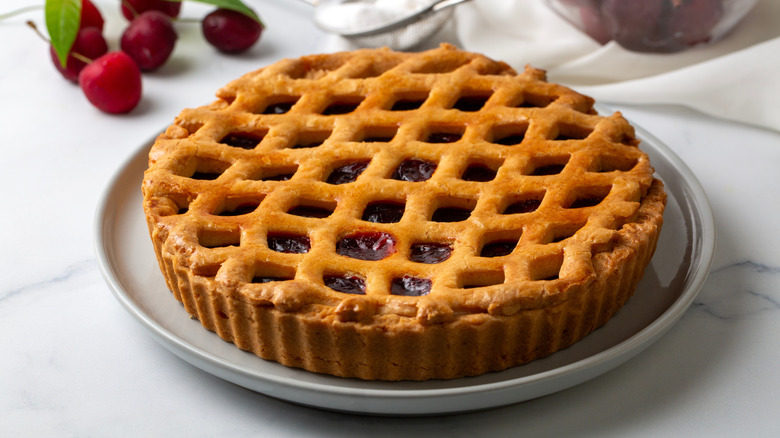
If you've ever baked a pie and had the filling leak out of a hole in the crust, you're not alone. This is a common problem, and many people have complained of it on forums like Reddit. While there are ways to fix a cracked pie crust after it happens, you can also prevent it in the first place with a simple method. All you need is a pastry brush and an egg.
This method is best implemented when blind baking the crust, which means cooking the crust before adding the filling. It's an important technique for certain pies, but it does mean that cracks can't form when rolling out and cooking the dough. Before adding the filling to a blind-baked pie crust, simply beat an egg white and brush it over the entire thing. The egg white will fall into any small cracks and heat up thanks to the crust already being hot, forming a seal. This means small cracks are repaired immediately, rather than being weighed down and becoming bigger cracks when adding the filling.
The egg white method is particularly helpful for custards and pies with more liquid fillings, as these are more likely to leak even when small holes are in the crust. It won't be necessary when your pie crust isn't blind-baked, as more solid fillings are less likely to leak through small cracks in the crust.
Other ways to prevent cracked crust
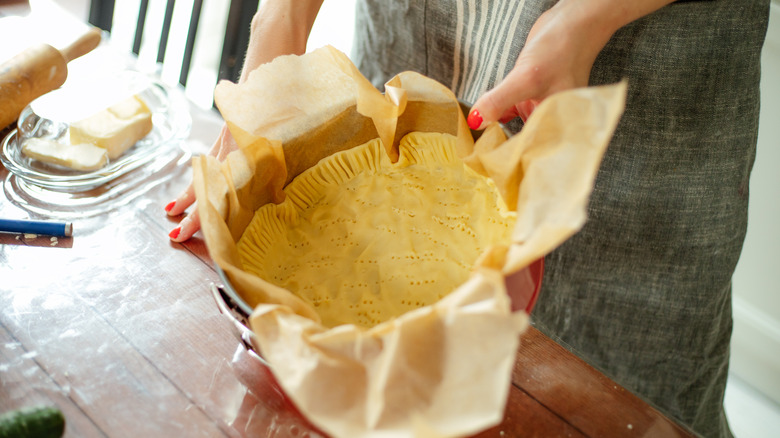
While the egg white method is a simple solution to a cracked crust after it's already been cooked, if you're making your crust from scratch, there are other methods you can employ to make sure the dough doesn't crack. For starters, be sure the fat (which typically comes in the form of butter, such as in this pie crust recipe) is thoroughly incorporated. Chunks of fat in your dough will keep everything from mixing properly and give you air pockets that turn into cracks. Cut in the butter thoroughly, making sure all the other ingredients are properly mixed with it. Even if you use larger chunks of butter for a flakier crust, you'll still want to thoroughly mix in some of the butter so the dough sticks to itself properly.
In addition, you'll want to knead your dough thoroughly, working out all the kinks. This may seem self-explanatory, but it's easy to think your dough is properly kneaded when it really could have used a bit more tender loving care. If you're making the dough ahead of time, always store it properly, as dough tossed carelessly into the fridge is more likely to form kinks and crack. With these methods and a few other tips for flawless homemade pie crust, you'll be ready to make a pie crust that holds any filling in with no trouble.