

How To Turn Wine Into A Wine Cooler Like It's The '80s
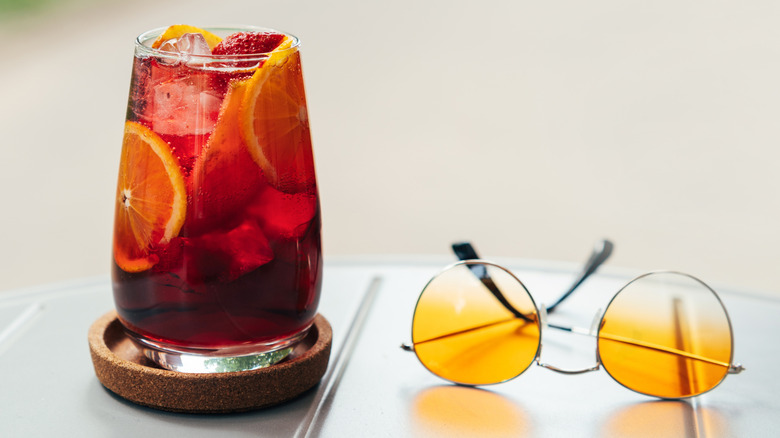
If you lived through the 1980s, you probably remember wine coolers, cheap wine mixed with soda and fruit flavors. While they were made at home before this, they became a commercial success in the '80s, with brands like Seagram's selling tons of them at grocery stores around the country. While wine coolers are still sold in stores today, they aren't having the moment they were back when the radio was playing new Van Halen music. But if you want a sweet drink with a little bit of buzz, a wine cooler is the perfect fit, and they're quite easy to make at home.
All you need for a wine cooler is a cheap wine, liqueur, and some soda or another source of carbonation. Combine two parts wine, two parts soda, and one part liqueur with ice. It's simple and easy to batch (so long as you avoid common batch cocktail mistakes), making it perfect for serving at gatherings or simply making ahead of time to sip on later in the day. The added ingredients give it more flavor and more of an alcoholic kick, which means it's a great way to utilize a cheaper wine that's not great for sipping on its own. The soda can mask the burn with its sugar, while the liqueur can add some extra buzz if the wine isn't very strong on its own.
Ideas for wine cooler combinations
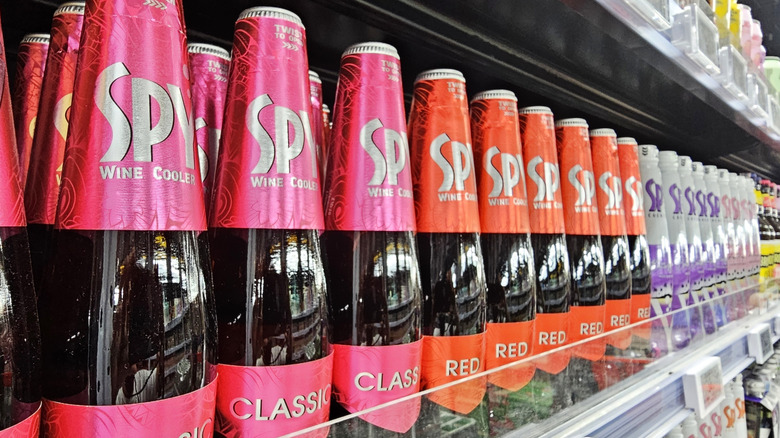
When making wine coolers, simply start with any cheap wine and add any flavors that compliment or even mask it, if you don't quite enjoy some aspect of its taste. There are some general guidelines for combining wines and liqueurs, however: liqueurs flavored like red or purple fruits, such as apple, go best with red wines, citrus or stone fruits, like peach, go best with white wines, and champagne goes well with herbal liqueurs that give it a more complex bite.
For instance, a budget-friendly red wine like a tempranillo or Chinon would go perfectly with something like Heering cherry liqueur or raspberry Chambord. White wines like Sauvignon blanc and Chardonnay can be paired with Limoncello, passion fruit, or even pineapple liqueur. For champagne, almost any kind of amari would work great, such as aperitivo or Fernet.
You can then add a soda to each of these pairings, depending on the flavor profile you want. To keep things light and buzzy, club soda works to add carbonation without extra sugar or taste. A Chinon wine with raspberry Chambord and club soda would be pleasantly fruity yet still have some kick. If you're trying to mask the bitter taste of a cheap wine, however, you'll be better served with an actual soda. Common choices are lemon-lime sodas like 7-Up or Sprite, which would work great with Chardonnay and Limoncello. You could up the fruity flavor by using grape or orange sodas if they suit the rest of your ingredients. For instance, the sugary kick of grape soda might make a cooler with cheap champagne and Fernet less bitter. The sky is the limit, so play around with your favorite flavors.