

What Happens If You Microwave A Non-Microwave-Safe Dish?
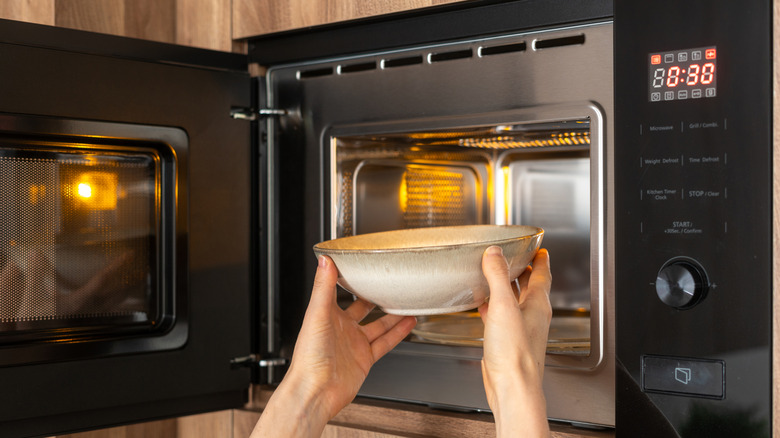
A microwave's main purpose is convenience. It boils the meal-prep process down to the least amount of time and steps possible: Simply heat and eat. While we hate to potentially burst this bubble, nothing is more important than safety. You might want to add just one step back into this routine by switching whatever you're microwaving into a different dish or bowl if you're not 100% sure that a container is, in fact, microwave-safe.
We know it's tempting to just pop things into the microwave — what's the worst that can happen, right? As it turns out, there are enough consequences for using a non-microwave-safe dish in the microwave that you'll likely feel it's worth replating things. Not taking the microwave-safety status of different materials seriously is one of the biggest mistakes you can make when using a microwave.
Let's run down different materials and their risks: Metal and paper dishes are fire risks, potentially sparking or combusting, respectively. Plastic dishes can actually leak chemicals into whatever you're cooking, posing both short- and long-term health risks. Some glazes on ceramics can have a similar effect with toxic substances, and for the same reason, you should not microwave styrofoam takeout containers — they can seep styrene, a material that may lead to cancer, into your food, and also pose a fire risk. Thinner glass can crack, and any material if not proven microwave-safe can become too hot to touch or even melt or become damaged.
How to ensure you're using a microwave-safe dish
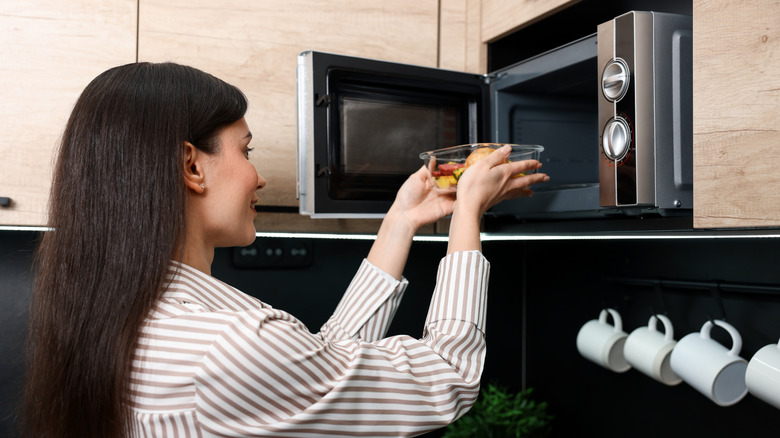
It seems obvious enough that any container not labeled as microwave-safe is one of the things you should never microwave. But what about when something does, in fact, have that safety stamp, which can literally be the words "microwave safe," or "05," or "PP" for polypropylene (a typically microwave-safe kind of plastic), or wavy lines — but can you trust microwave-safe labels?
These stamps signal to us that the producer of a dish has engineered it and successfully tested it to not melt, release chemicals or other harmful substances, warp, become too scalding to handle, or, of course, ignite a fire. However, this testing isn't standardized across materials, microwaves of varying power levels, and various foods and liquids being heated. It's smart, therefore, to combine both a microwave-safe label with some other research. Check your microwave's manual to find out what materials it does and does not recommend heating. Test a "microwave safe" stamped dish by cooking water for one minute — if the dish stays cool, it should be safe.
In general, sturdy glassware and ceramic free of glazes, paints, and metallic embellishment are safer bets than plastics. Take special care with secondhand dishware. For example, how do you know if vintage Pyrex dishes are microwave-safe when older designs predate testing and stamping? It's made to be heat-resistant, so it should be safe, but it's always worth doing your own testing. Also avoid any vintage dishware with paints, metals, chips, and cracks.