

The Miso-To-Broth Ratio That Makes Perfect Soup Every Time
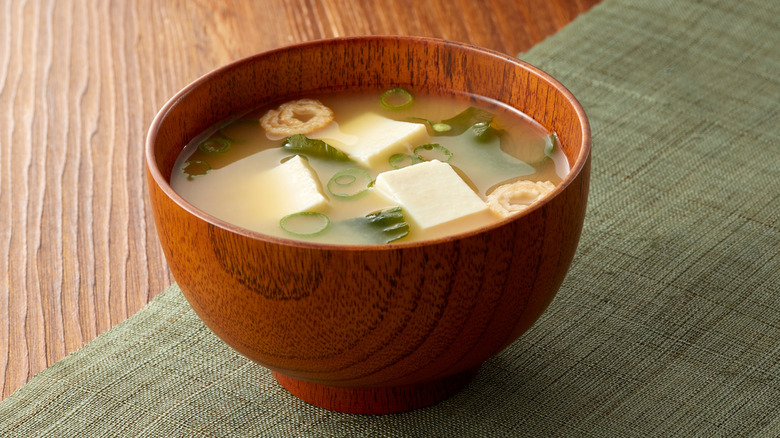
Miso soup is one of the best comfort foods out there. It's light, easy to digest, and has tons of health benefits. It's also incredibly easy to make. The only ingredients you really need are miso paste and stock, though dried seaweed, tofu, and scallions can be added to the mix too. Everyone has their own preference for how much miso paste to add, but a good rule of thumb is to use about one tablespoon for every cup.
A lot of miso soup recipes follow these guidelines, but some cooks have their own variations. Another common measurement is 1 tablespoon per every 200ml (a little less than a cup), which would make for a slightly stronger soup, or ½ tablespoon per cup for a milder flavor.
Kimono Mom, a Japanese home cooking influencer and entrepreneur, likes to dissolve the miso at a ratio of 1:10. "The salt concentration most people find delicious is about 0.8–1%," she said in an interview with our sister site The Takeout. "A typical miso soup cup holds about 160 ml, so 1 tablespoon (or 15 to 16 grams) of miso makes a well-balanced soup." But a lot of it really is up to your personal taste and the other ingredients you're using, so the best thing to do is experiment.
Different types of miso have varying strengths
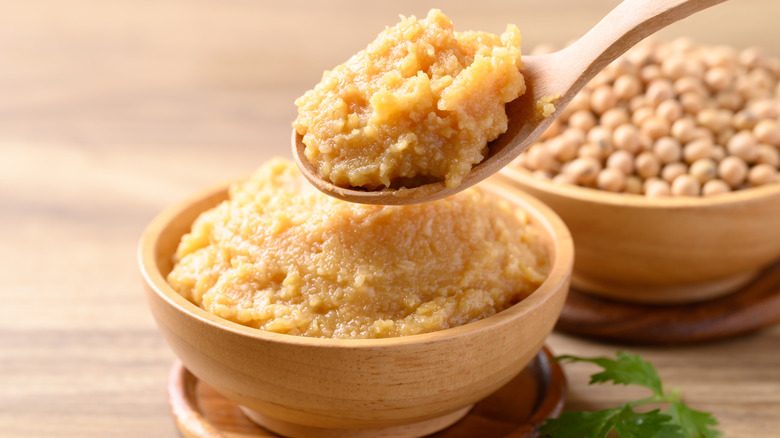
If you're making a big pot of miso soup, start by adding just a few spoons of paste to the broth, or dashi as it's known in Japan, to taste. If it seems too watery, just stir in some extra miso little by little until you're satisfied. If it's too potent, add more broth or water.
There are also different types of miso paste and each has a different strength. White miso is milder, while red miso has a stronger, more robust flavor. The best one to pick is all based on preference (though white miso is usually thought to be better for soup). Just keep in mind during cooking that you might want to adjust your measurements depending on the type you're using. Some people find that the tastes can vary between brands as well, which adds to the confusion.
Another thing to remember is there's one major mistake to avoid. You never want to add the miso while the heat is still on. The miso shouldn't be mixed in until right before serving, as it can lose some of its flavor when boiled. The most important thing to remember is that it's always easier to add more of something to a dish, rather than try to figure out how to fix it when too much goes in. But here's what to do if you add too much miso to a dish, just in case.