

The Popular Produce-Washing Method That May Not Work As Well As You Think

While some produce is washed before it hits supermarket shelves, it's generally recommended that you give it another rinse before eating it, as it can harbor anything from dirt to germs, and possibly traces of pesticides. So, the question really isn't whether you're going to wash your produce — because that's a yes — but rather how you're going to do it. One longtime popular method is to use baking soda, but is this even necessary? And more importantly, does it actually work? Or are there any downsides to it?
Baking soda is an effective cleaning solution for many kitchen needs because it's an alkaline salt. That's why, when you combine it with acidic vinegar, it causes a chemical reaction that can cut through pretty much any grime. It is also relatively abrasive and can really get in there, scrubbing dirt and anything else off of a surface.
As such, it's not hard to understand why people have been using baking soda to clean the surfaces of their produce, too. In fact, when Consumer Reports posted a TikTok video about washing produce, some commenters asked why the suggestion didn't include using a solution made with baking soda and water. The answer is that, according to a 2019 study, baking soda isn't that much more effective than water considering the minimal levels of pesticides found on most produce anyway. Beyond that, it also involves a lengthier process, and can even prematurely soften produce, since the soaking process can break down not just dirt, but also peels and skins.
Water is the best way to wash fruits and veggies
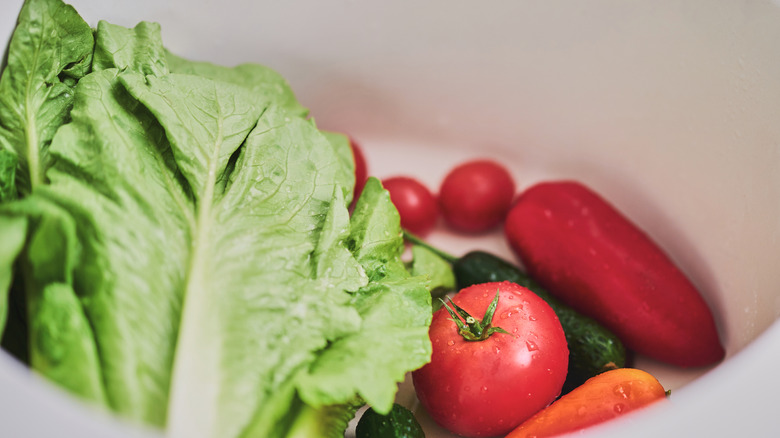
You know you need a reliable way to wash fruits and vegetables. After all, some produce is treated with pesticides. This means it's always a good idea to wash your fruits and vegetables before you eat them, even if the traces of these chemicals that tend to linger on fruits and vegetables are reportedly too low to be considered harmful (via U.S. Environmental Protection Agency).
More importantly, fresh produce also comes with dirt, dust, and germs. However, in cases like these, good old-fashioned water reigns supreme as a method for combating that. We've even looked into veggie wash spray, only to conclude that it's no more effective than a homemade solution of water, lemon juice, and vinegar. Oh, and as a warning: you should never use soap to clean produce, or any other cleaning chemicals for that matter. The reason is that these products can get absorbed into fruits' and vegetables' pores, which can then cause you to become sick.
At the end of the day, the most effective and safest way to wash your produce boils down to simply running it under tap water. The ideal water temperature for washing should range from cool to lukewarm, depending on the fruit or vegetable. Additionally, don't wash produce just to store it; instead, give it a good rinse right before you're going to prep and eat. That way, you can prevent any moisture from causing premature spoilage.