

10 Ingredients To Elevate Simple Syrup For Cocktails
A staple behind every bar, simple syrup is one of those magic ingredients capable of bringing out the best in every drink without the fancy parlor tricks or sacrificing on refinement. This I know from industry experience, two decades' worth to be exact, where I cut my teeth as a bartender in craft cocktail establishments from basement enotecas to après-ski taverns. While preparing the straightforward elixir may require a modicum of effort and some extra time behind the scenes, there's little else in the way of sweeteners that'll make for a quicker, easier, and more consistent route to crafting the perfect cocktail when the hour calls for it.
The standard simple syrup formula consists of one part white sugar to one part water, left to simmer until fully dissolved, and then to sit until fully cooled. I've made it hundreds of times over the years, utilizing too many ingredients to list here, and sometimes to catastrophic results — like adding two too many habaneros, or vigorously shaking a quickie batch only to lose my grip and see the Mason jar soar over the bar floor before it shattered and let the syrup loose all over the floor, resigned to a fate of interminable mopping and sticky soles. But I digress ... Whether substituting one type of sugar for another, as does this demerara sugar old fashioned, there's no shortage of ways to elevate the standard syrup recipe.
Make it rich
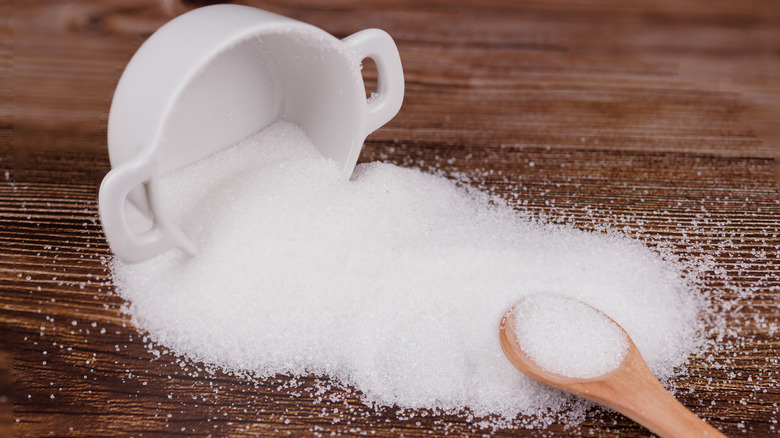
While the name "rich simple syrup" has an oxymoronic air to it, it's an apt title to describe both the process and the end result. That's because the process of making rich simple syrup is just as simple as the original, more modest version. Still, it's twice as nice as the entry-level sugar syrup. "How can this be?" you may be asking yourself. With a higher sugar-to-water ratio, that's how.
Simply put, rich simple syrup distinguishes itself from all others as the sweeter, thicker, and more viscous version because of a minor yet crucial difference in sugar levels. While the standard recipe for simple syrup is the easy-to-remember one-to-one ratio of sugar and water, a "rich" simple syrup calls for a doubling up on sugar, resulting in a decadent, concentrated syrup that's fit for a variety of culinary uses, from sweetening desserts to mixing drinks.
Rich simple syrup works especially well for mixing cocktails because its higher sugar content yields less dilution than standard simple syrup, which contains more water. Better still, rich simple syrup makes for a more precise drink, as it's easy to achieve exact levels of sweetness while utilizing smaller amounts of syrup.
Play with flavor combinations and ratios
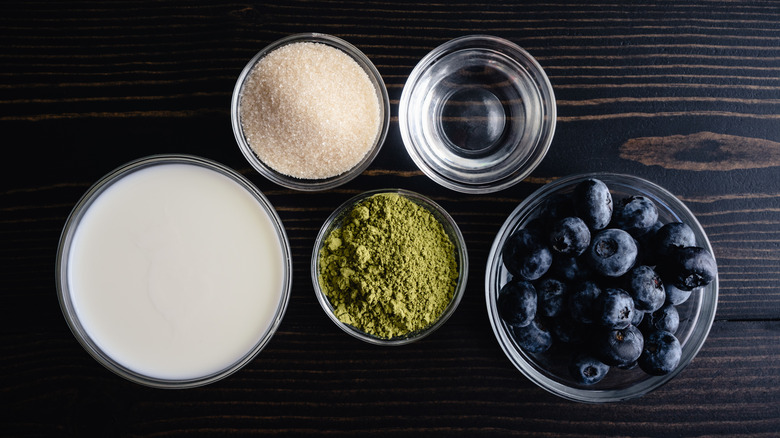
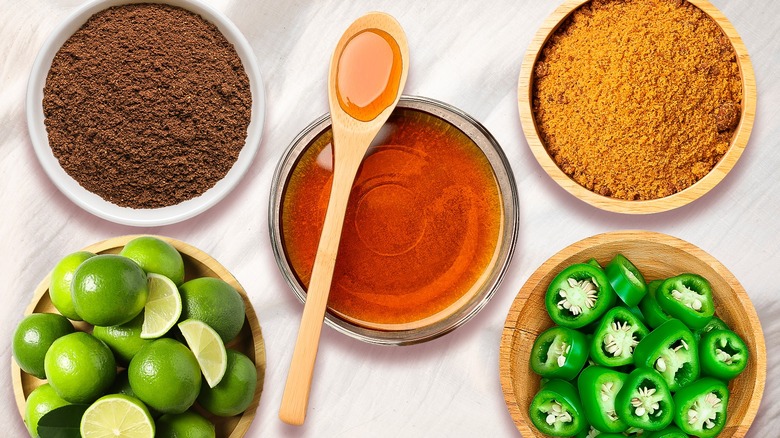
Since the two-ingredient recipe for simple syrup is so, well, simple, it's the perfect foundation for playing around with flavor combinations. Whether leaning toward the savory side, as per this butter pecan-infused syrup, or adding in a layer of heat, simple syrups are a versatile ingredient that can be modified for a variety of applications. Have an abundance of fresh mint? Throw it in the mix. Is that watermelon too mealy to eat on its own? Cut it up, rind and all, and let it infuse.
Better still, combine the mint and watermelon into one batch and let the cool herbal notes harmonize with the juicy melon flavors. In need of a top note? Well, go grab a jalapeño pepper, et voila: You have a winning combination of flavors preserved as a shelf-stable syrup ready and waiting for you. No matter the time of year, a few dashes of the syrupy concoction will have you thinking that it's peak summer after just one sip of your upgraded margarita.
Not your preferred flavor profile? Don't fret! With an endless supply of ingredients at the ready and ample room for experimentation, simple syrups are designed to be customized to your heart's delight. Playing with the ratios of base ingredients will bring about changes in texture (and sweetness), but the exciting part boils down to the flavors you infuse.
Infuse with herbs and spices
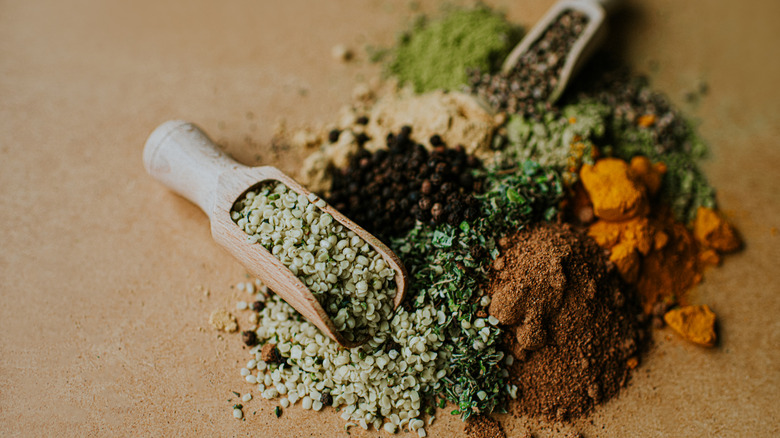
As is true of many liqueurs, the infusion of herbs, spices, flowers, and roots in the distillate creates deliciously complex sippers, both on their own but especially so when mixed with other spirits. That logic also holds true for simple syrups. While I wouldn't recommend sipping sugar syrup as is, infusing simple syrup with botanicals is a direct route to elevating your sweetening and flavoring capacity in cocktails without having to use any artificial agents or buying expensive bottles you'll hardly open twice.
Flavoring simple syrup is a straightforward process — as long as you've decided on your ingredients. That's because whatever you use to flavor your syrup will ultimately inform how you'll incorporate said ingredient(s) in the "cooking" stage. For instance, delicate, freshly plucked Thai basil needs only to steep for 30 minutes off-heat; any longer and the syrup can turn tannic. Conversely, if using dried spices and hardy fruits like cinnamon bark and gooseberry, leave the mixture to simmer for 15 to 20 minutes.
Switch up the sweetener
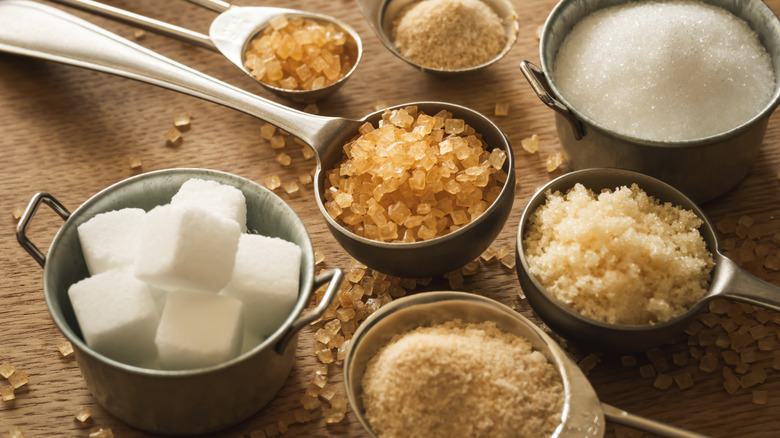
Changing the type of sweetener is a surefire way to transform the taste of simple syrup from ordinary to otherworldly without adding extra ingredients. While white sugar is the industry-standard for making simple syrup, common substitutes include brown, demerara, and turbinado. Often distinguished by subtleties in color and texture, these different types of sugar differ in how they're processed, and of course, how they taste. Brown sugar is the most reminiscent of molasses and boasts toasted notes of toffee that's good for bold spirits with some age. Demerara and turbinado are more or less interchangeable with one another; both are less-refined than white sugar and characterized by light brown sugar crystals with sweet, caramel tones and added depth of flavor.
Other veritable sweeteners are honey and agave. While they make for terrible cocktail ingredients on their own, when made into a syrup, they're vital components that can transform cocktails. Known for its higher levels of fructose, agave syrup is a go-to sweetener for acid-forward cocktails where the spirit is centered. When shaken in cocktails, honey syrup creates a delicate head on top while enlivening honey-based drinks with its floral aroma.
Use the cold infusion method
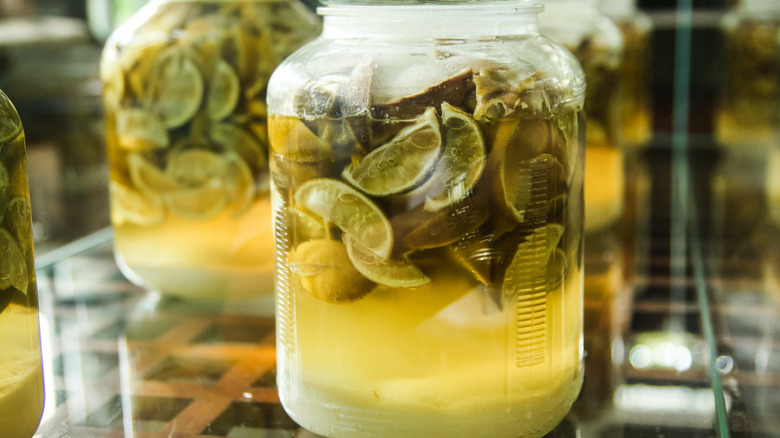
While it's hard to abandon the stove-top method for making simple syrup, a no-cook simple syrup has its place in the hierarchy of sweeteners. Aside from heat, sugar dissolves in water with agitation, so if you need only a small batch, shaking things up in a tightly sealed jar is the fastest way of getting that syrup in a mixing glass. While this method requires a bit of brute strength, it'll save you a lot of time.
Another reason to opt for a no-cook simple syrup recipe is when you're working with delicate ingredients like herbs and flowers that struggle to hold up to high temperatures. While sugar dissolves quickly with the element of heat, heat also draws out the natural sugars in fruit and vegetables, and can drastically alter the taste as a result. A benefit to the cold-infusion method is that these syrups honor the freshness of the ingredients in their natural state, evincing brighter flavors without the jamminess of cooked fruits.
Infuse with fruits and vegetables
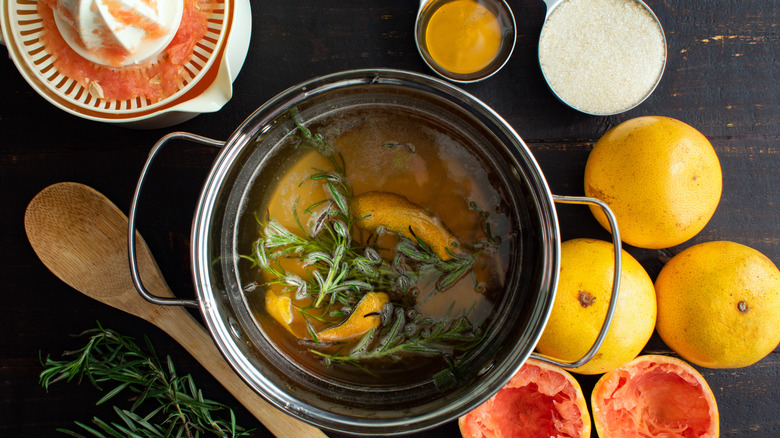
It's possible to taste the freshness of ripe fruit no matter the season — so long as it's been infused in syrup and bottled to be shelf-stable. If you want to impart a big flavor into a small volume of simple syrup, utilizing fresh fruit, especially citrus, is an effective way to get there without much fuss. You need only ditch the stove-top method and opt for a cold-infusion, as it's the best way to retain the essence of vine-ripe fruit at peak freshness in your fruit-forward simple syrup. Beyond cocktails, citrus-infused simple syrups are also complementary additions to espresso-based drinks.
For a richly textured fruit-infused syrup, using a juicer will allow you to puree fruits and vegetables whole. After straining the pulpy liquid through a fine sieve, the leftover juice is added to the sugar-water mixture, resulting in a thicker syrup with a concentrated fruit flavor.
Add extra heat
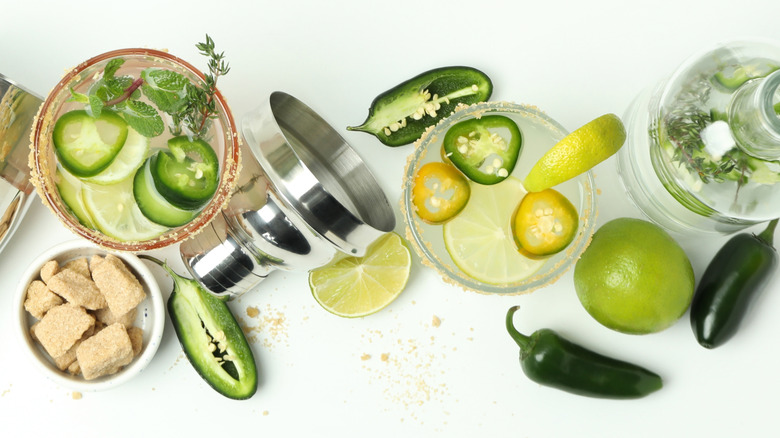
As simple syrup is pretty much all about the sugar, incorporating a spicy element in its overall profile is a surefire way to elevate the flavor. Dried ingredients like peppercorns can do wonders for simple syrup recipes with Christmas spices by adding a subtle warmth to the aromatic profile. For summertime cocktail staples, such as the margarita or the mojito, spicy pepper-infused syrups can balance out the acid-forward flavors and sweet citrus notes.
Jalapeños are perfect gateway peppers for those still navigating spicy foods, and if you're still a little nervous about such a hotly contested ingredient, remember where it's going ... which is into a jar of sugar water ... which is another way of saying, it'll still be nice and sweet. Of course, don't let me push you past your palate's comfort zone, although the idea here is to elevate. And a jalapeño-infused simple syrup — hotter still, habanero — is one way to achieve transformation. Another is to try out this simple syrup recipe with spicy ginger root.
Infuse with flowers
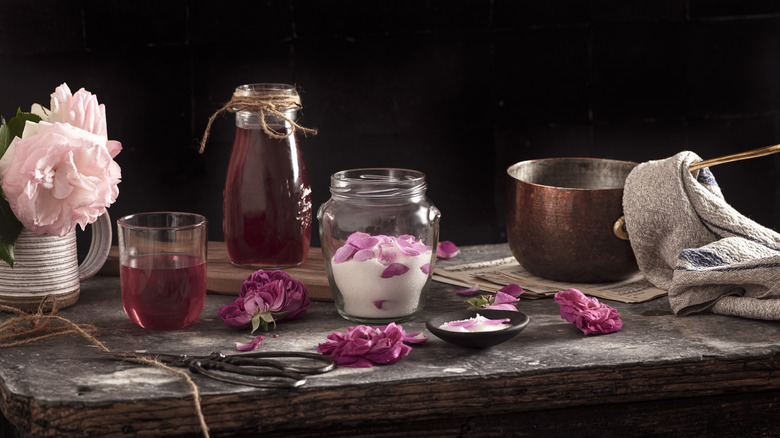
Scented sugar, also known as simple syrup infused with flowers, is a complementary cocktail ingredient for any spirit with a botanical structure. A subtle way to elevate the standard syrup, the floral essence isn't overpowering in texture or taste, but rather lends cocktails with an air of elegance (or should I say fragrance?), which is just heavenly.
Rose and hibiscus are the most suitable flowers for infusing, although the edible variety of begonia known as wax begonia is a perfect choice — if you can find it. Whichever petals you end up plucking, each option marries well with herbs like lavender, rosemary, mint, and thyme. While the floral aromatics are what lend these syrups the name "scented sugars," each flower imparts its distinct taste, as well. The softest of the three in regard to flavor, rose-infused simple syrup is rather delicate and therefore easily diversified, making for a great addition to both a classic old fashioned and a glass of prosecco. Hibiscus and begonia yield a bolder overall character, with bright, tangy flavors, a deep red hue, and spicy herbal aromas.
Add extracts
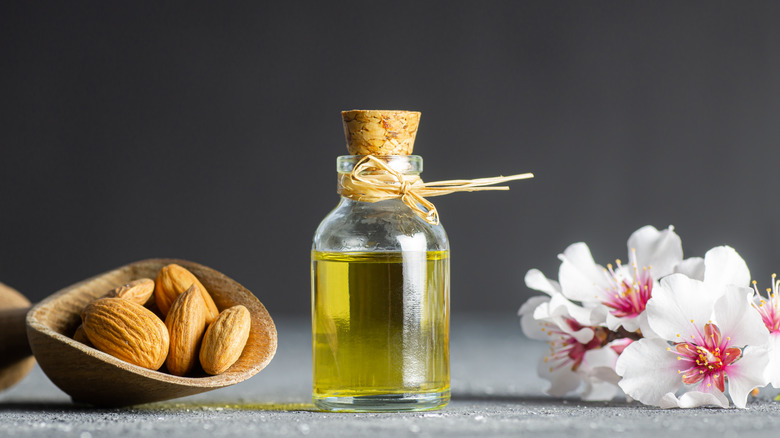
Adding extract to elevate the flavor of simple syrup may seem like cheating to some, but in certain situations, it can be your only, and best, option. I'm not advocating the use of peppermint extract over garden-fresh leaves of the stuff, but when a recipe calls for a full-flavored nut-based syrup, I'm reaching beyond the bag of raw hazelnuts and grabbing the little brown tincture bottle instead.
Beyond the sphere of cocktails, flavored syrups are big in coffee land, too, and for the full suite of flavored sweeteners, from almond to amaretto, look no further than the extract aisle. Once you're back in your kitchen, these extract-infused syrups are ridiculously easy to make, which also means they're ridiculously easy to mess up. That's because you only need very little extract, so after the sugar has fully dissolved, add sparingly, say about one and a half teaspoons per 1 cup of syrup. If you add too much, well, your batch just got bigger.
Make it shelf-stable
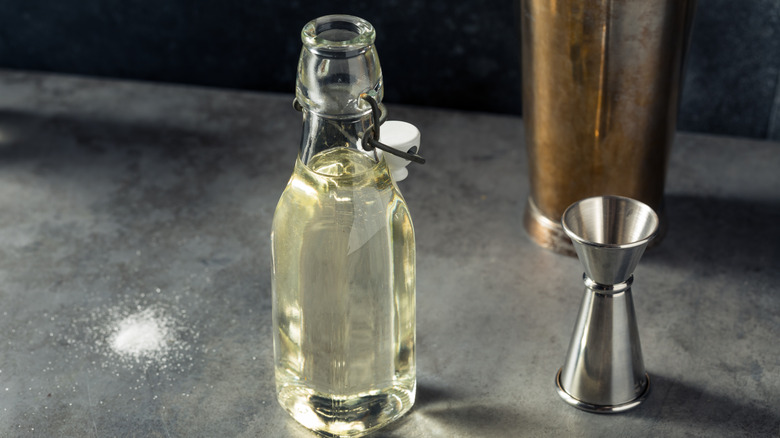
There's more than one way to stabilize sugar syrup, but ensuring the bottled result is shelf-stable is the original way to elevate simple syrup. Making sure you always have it on hand, however, is how you stabilize and elevate your entire cocktail hour. The key to making a shelf-stable simple syrup is to follow these three rules: Let the mixture cool completely, sterilize the storage container, and seal it with an airtight lid.
One trick to stabilizing simple syrup is a no-brainer for people who plan to use it in cocktails, since the stabilizing ingredient is booze. I suggest using a neutral spirit such as vodka, although flavored liqueurs like Benedictine or orange curaçao, in moderation, would impart an added depth of flavor. A non-alcoholic option is corn syrup, which locks in moisture and keeps the syrup from crystallizing. Stored in the refrigerator, simple syrup can last for up to a month, and since it doesn't freeze, with or without the aid of alcohol, you can also keep it in the freezer.