

Stop Storing Tomatoes And Cucumbers Together — Here's Why
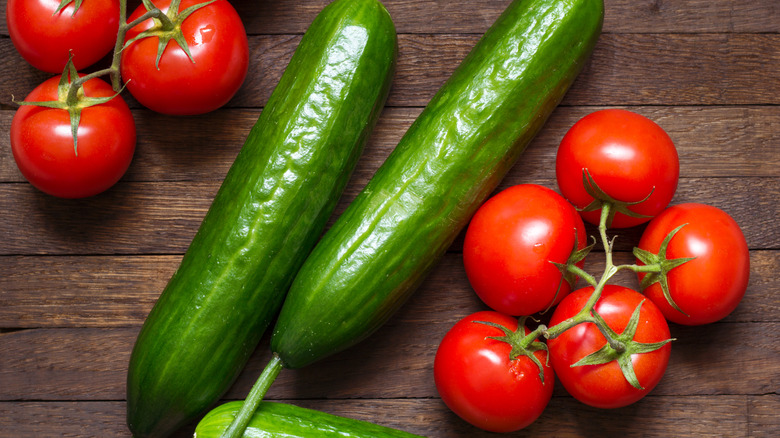
Cucumbers and tomatoes are an ideal match in a salad or on a snack plate. So, it may surprise you that these two natural partners should never be stored next to each other. If they get to hang out together much before being served and eaten, you may find your cucumbers have rotted much sooner than they should have. The reason is a gas called ethylene. It's a plant hormone that some fruits and vegetables give off in their ripening process. The reason some fruits ripen after they're picked is because they're what's called climacteric, meaning they keep releasing ethylene post-harvest — non-climacteric produce keeps its ethylene stable after it's picked.
As you may have guessed, tomatoes are climacteric and actually give off quite a bit of ethylene as they ripen in your kitchen. Cucumbers, on the other hand, are especially sensitive to ethylene. When they sit next to tomatoes, all of that ethylene ripens cucumbers to the point of spoiling. They'll become soft, and their green will fade to yellow, telltale signs of rotting alongside wrinkling and, eventually, a sour smell.
To see ethylene in action, try a foolproof trick to ripen fruits faster: place your fruit in a bag or container so it's trapped with its ethylene, and watch climacteric produce like potatoes, grapes, apples, plums, avocados, peaches, bananas, tomatoes, and blueberries quickly become ripe. This is the same reason storing cucumbers in their original packaging is a mistake. Despite being sensitive to the gas, cucumbers produce small amounts of ethylene, which then ripens and rots from inside the packaging.
How to store tomatoes and cucumbers for maximum freshness

While you're improving your fruit and veggie storage methods, it's good to know what other produce is especially sensitive to ethylene, including watermelon, sweet potatoes, kale, broccoli, blackberries, strawberries, asparagus, carrots, cabbage, cauliflower, spinach, and Brussels sprouts. You should keep any climacteric veggies away from garlic too, as it is also quite ethylene-sensitive and will spoil faster. Of course, sometimes it's helpful to pair up fruits or vegetables for some ethylene contact. Avocados, for example, are notoriously tough to buy at the right level of ripeness, and you can speed them along by placing them in a paper bag with bananas. Do this with anything that ripens and then spoils more quickly, though, like cucumbers, and you'll see why separate storage is smart.
To best store tomatoes and cucumbers (and get the longest windows of freshness from each), keep them apart. Tomatoes do best at room temperature, as refrigeration can degrade their flavor intensity and can break down their cell walls, resulting in a mushy texture. Cucumbers are not among the veggies that do best in the low-humidity crisper drawer, as they like a bit of moisture. Remove them from their packaging and wrap them in paper towels before placing them in airtight bags with excess air pushed out. Keep them in warmer parts of the fridge, like the door, as too-low temperatures can spoil them faster.