

Why Seafood And Lemon Have Been Paired For Centuries
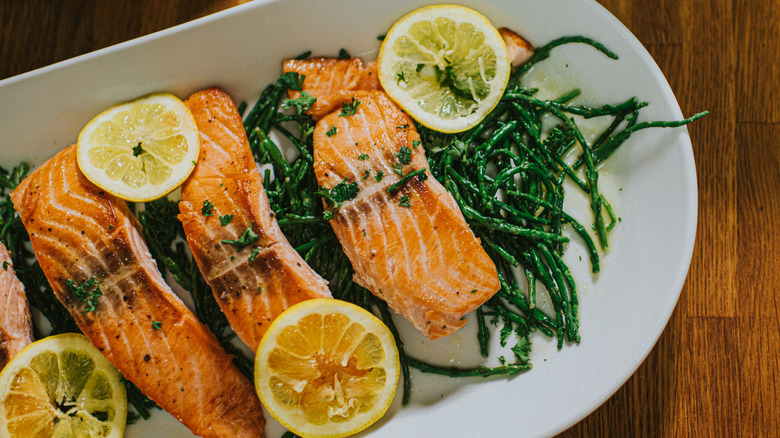
One of the first things you might do when you plate your grilled salmon, or the server delivers your shrimp cocktail, is squeeze a bright, beautiful lemon wedge all over that sweet, briny seafood. It might feel like an instinct after years of enjoying different fish dishes, but have you ever stopped to wonder why seafood and lemon specifically? Turns out, lemon and seafood have been a combo as iconic as peanut butter and jelly since the Middle Ages.
You know you love a good pan-seared lemon caper mahi mahi dinner, but centuries ago, people thought beyond flavor. They believed the acid of lemon juice would prevent choking because it would break down any fish bones accidentally swallowed. While that might have later proved to be superstition, one can assume something as intensely acidic and flavorful as lemon would have improved the experience of eating fish pre-refrigeration (and other safety and preservation methods). To this day, if someone doesn't like seafood when it's a bit "fishier," lemon's brightness would counteract that characteristic. The tradition of lemon and seafood spread to different cultures and carried on over time. It's a natural match in the Mediterranean region, where seafood and lemons are both abundant and a regular part of the cuisine. Similar habits prevail in other coastal regions and riffs have developed in countries where similar forms of citrus are more available, such as yuzu with fish in Japan or lime in Peru.
Today, lemon plus seafood equals flavor
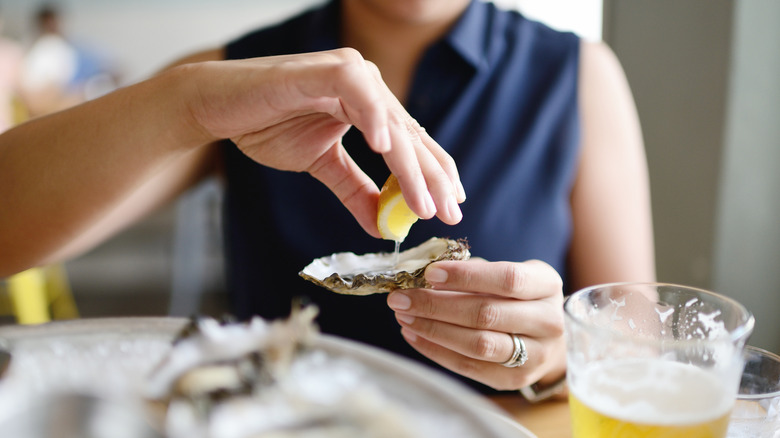
Today, we no longer believe we need lemon juice as a guard against unintentionally swallowed bones. But we should, perhaps, be grateful for that long-ago concern; it gave us a naturally delicious combination. Have you ever wondered why a classic shrimp cocktail or a dozen raw oysters just sing with a squeeze of fresh lemon? Much of it has to do with balance. Most seafood dishes have a sweetness, fattiness, and richness. Lemon's acidity cuts right through that. You get a perfect blend of all of those qualities, and the lemon keeps richer fish refreshing so you want to keep eating. It also amplifies more subtle characteristics in the seafood.
Lemon juice even impacts seafood's texture. Its acid breaks down protein structures in the fish, which creates a less tough, more tender consistency. Consider, after all, that the secret ingredient for ceviche is the acid of a citrus such as lemon. It's what actually "cooks" the fish instead of heat; as it gets into the fish's proteins, they bond and firm up but still retain their moisture and tenderness for a softer finish than you'd get from straightforward cooking with heat. Whether you use lemon juice to cook your ceviche or just like it as a condiment of sorts, the harmony of seafood and this citrus fruit is undeniable. Let lemon perfectly lighten fried seafood or take things a step further by whipping up a dreamy lemon butter sauce for pan-seared swordfish.