

9 Old-School Salad Dressings We Don't See People Eating Anymore
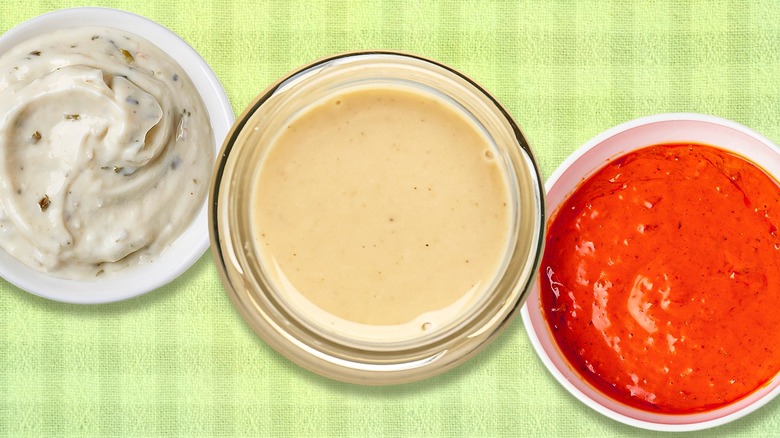
All good things must come to an end. Or so the saying goes. Some might say that about beloved salad dressings that seem to have disappeared for no apparent reason. There are entire internet threads dedicated to finding old-timey dressings — either the store-bought ones in bottles and jars, or the ones grandma made for every potluck. To no avail. These dressings weren't just tasty for many people; thinking about them conjures warm, wonderful memories. Sadly, they're simply not available in stores anymore. And finding granny's recipes is usually difficult. The following lineup of salad dressings might not be readily available these days, but they certainly haven't been forgotten.
The good news is you might be able to recreate your favorite antiquated dressings in your own kitchen. Many of the blends below are quite similar to dressings we currently enjoy. Perhaps these vintage dressings were inspiration, a springboard for future salad dressing creations. Today's cherished salad dressings use comparable ingredients to those from the past, which means they clearly stood the test of time. But if you want to create more original versions and bring back some sweet memories, grab a few pantry staples, throw on your bell-bottoms and some classic tunes, and you'll be whisked straight back to yesteryear.
Celery seed dressing
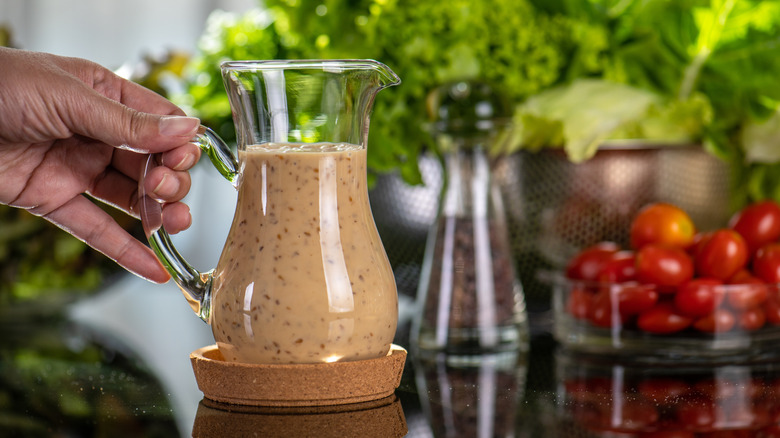
Although often called "creamy" celery seed dressing, this emulsion is more like a vinaigrette than a creamy sauce. The main components of the dressing are oil, vinegar, sugar, dry mustard, onion, and, of course, celery seeds. The mixture is both tangy and sweet, with little specks of celery seeds in every bite. The celery seeds not only add earthy, grassy notes, but they're slightly bitter — more reminiscent of the aromatic celery leaves than the milder stalks. The seeds also add texture and a delightful crunch.
Vintage recipes vary — some add fresh garlic, some use grated fresh onion instead of onion powder — but it doesn't get crazier than that. All recipes you'll find for this recipe stick with the classic marriage mentioned above. There are some store-bought variations on the market, from sweet and sour dressing with celery seeds to champagne celery seed dressing, but there's nothing quite like the old-fashioned version folks whipped up at home. If you want to bring zing to your favorite mixed greens, baked chicken, or delicious roasted vegetables, I highly recommend you whip up an easy batch of this classic dressing; it'll last a week in your fridge.
Sour cream dressing
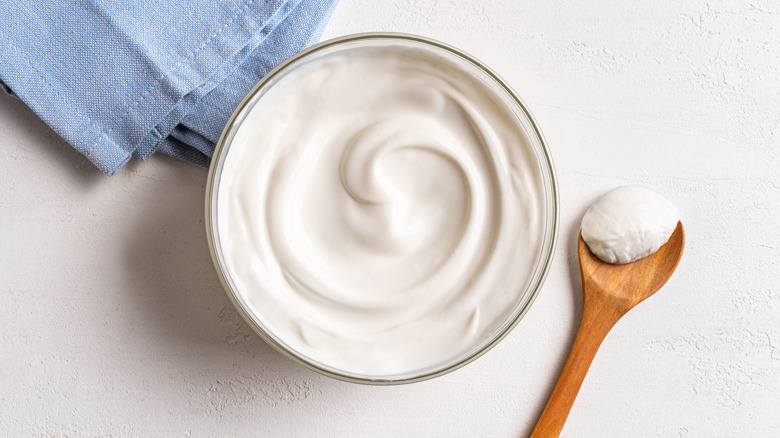
Not surprisingly, sour cream dressing is decidedly tart. Since sour cream is made by fermenting cream until it's "sour", it's got some tang. Now take that thickened cream, add lemon juice, vinegar, and Dijon mustard, and you have one seriously sharp salad dressing. The classic sour cream dressing incorporated sugar to balance the acidity, but not enough to fully suppress the bite. Many recipes also included a pinch of paprika, which added sweetness and a pink hue. And that's what people loved about it; it was tangy and robust and excellent when tossed with boiled potatoes and hard-boiled eggs.
You likely won't find any variety of sour cream dressing at your local grocery store, so if you've got a hankering for a creamy, tangy dressing, you'll have to make it yourself. The good news is, you need a handful of pantry staples, and it's ready in about five minutes. For homemade and store-bought dressings with similar flavor profiles, try a classic tzatziki sauce or raita, the Indian yogurt sauce with onion, cucumber, and cilantro.
Bacon and tomato dressing
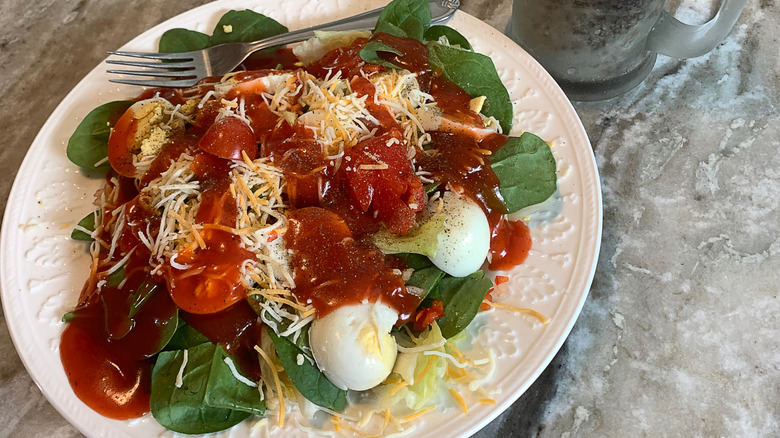
There's no shortage of disgruntled bacon and tomato dressing fans on the web; it seems nobody has been able to get their hands on a bottle since the 1980s. The dressing featured a tangy tomato vinaigrette spiked with mayo, bacon, onion, and garlic. It was so popular that in 2018, an eBay listing of "Vintage 1986 Full Unopened Kraft Salad Dressing Glass Bottle" sold for $8.50, plus $7.69 shipping. I'm going to assume the buyer didn't actually use the 32-year-old dressing on fresh greens, but rather showcased it on a wall in their salad dressing museum.
Some recipe developer sleuths have recreated the dressing by blending vine-ripened tomatoes with vinegar, Dijon mustard, fresh onion, garlic powder, and mayo. Crispy bacon is folded into the smooth mixture, and the classic bacon and tomato dressing is resurrected. There are some rumors that Catalina with bacon is reasonably close to the original bacon and tomato, so if you've got the craving, feel free to hunt that one down.
Boiled dressing
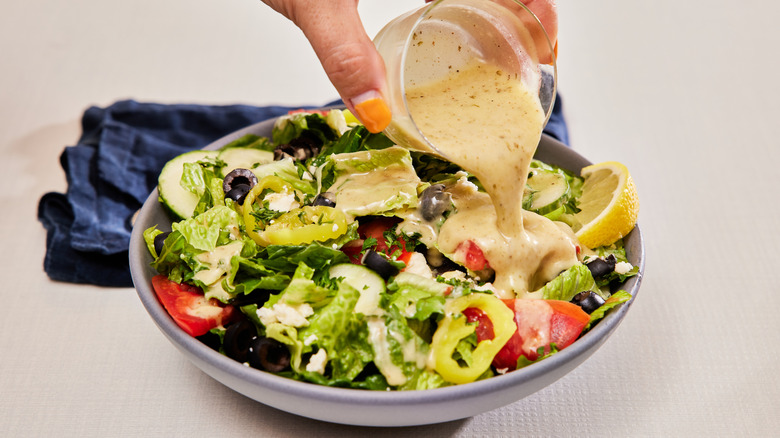
Despite its look, this thick, rich dressing isn't made with mayonnaise or sour cream. Boiled dressing is actually more reminiscent of Caesar dressing (sans anchovies) as egg yolks are used for thickening. And unlike pretty much every other recipe for salad dressing, the ingredients are boiled together in a double-boiler like a custard. The traditional ingredients (after eggs) include flour, cream, butter, vinegar, dry mustard, celery seeds, black pepper, and a little granulated sugar. There's a decent amount of both celery seeds and black pepper, so the dressing is pungent and peppery. It's also incredibly rich thanks to the egg yolks, heavy cream, and butter. This is definitely not a light vinaigrette salad dressing.
Another variation (likely another nanna) similarly uses egg yolks, but instead of flour as an additional thickener, the recipe calls for cornstarch and water. Unlike flour, a cornstarch-water slurry thickens the dressing without making it cloudy. If you like thick, rich, peppery dressings for your cole slaw, potato salad, egg salad, tuna salad, and chicken salad recipes, boiled dressing is your huckleberry.
Union Pacific dressing
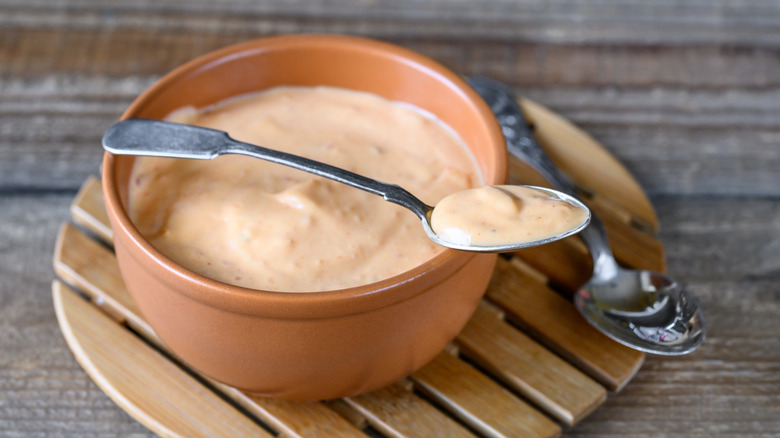
Although it may resemble Thousand Island and Russian, Union Pacific salad dressing is unlike both of those dressings. The original dressing, served on the Union Pacific Railway in the early to mid-1900s, contained vinegar, oil, egg, dry mustard, paprika, and sweet chili sauce. It's the sweet chili sauce that gave the dressing its pink color, not ketchup, which is used in Thousand Island and Russian dressings. Since chili sauce is made with fiery chilies, the dressing also had a little kick.
Southern Pacific Railway had its signature dressing, too. Their creamy dressing for the "Chef's Combination Salad" was reminiscent of French dressing and featured a blend of oil, vinegar, English mustard, mayonnaise, ketchup, and currant jelly. The current jelly added sweetness and color while balancing the acidity of the vinegar and mustard. In the early to mid-1900s, refrigerated boxcars gave chefs the ability to serve fresh, crisp vegetables with unique dressings. Serving fresh salads was something to celebrate, and celebrate they did — salads were featured prominently at the top of the menu, for about the same price as the most expensive entrée.
Southern buttermilk
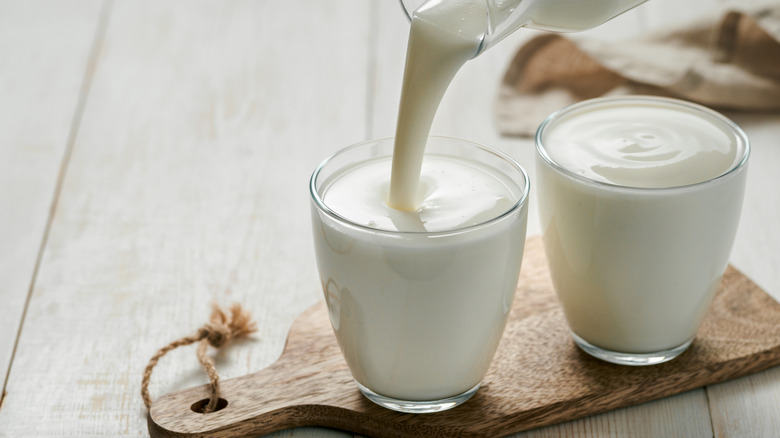
Take note, we are not talking about buttermilk ranch dressing here. Southern buttermilk dressing is a simple marriage of tangy buttermilk, mayonnaise, garlic, herbs (usually chives), and lemon juice. A classic buttermilk ranch dressing is similar, but often contains more ingredients, including sour cream, onion, and a variety of herbs. For that reason, buttermilk ranch dressing is often thicker than old-fashioned Southern buttermilk dressing, which can be as thin as a milky vinaigrette.
Thanks to the combination of two tangy ingredients — buttermilk and fresh lemon — Southern buttermilk dressing is unquestionably tart. Unlike many of the other dressings on this list, there's no addition of granulated sugar, so the tanginess shines through in every creamy spoonful. If you want to enjoy a true, Southern-style buttermilk dressing, simply whisk together good-quality, whole milk buttermilk, mayonnaise, chopped fresh chives, lemon juice, and a pressed garlic clove. Season with salt and black pepper and enjoy over your favorite mixed greens and fresh vegetables.
Louis dressing
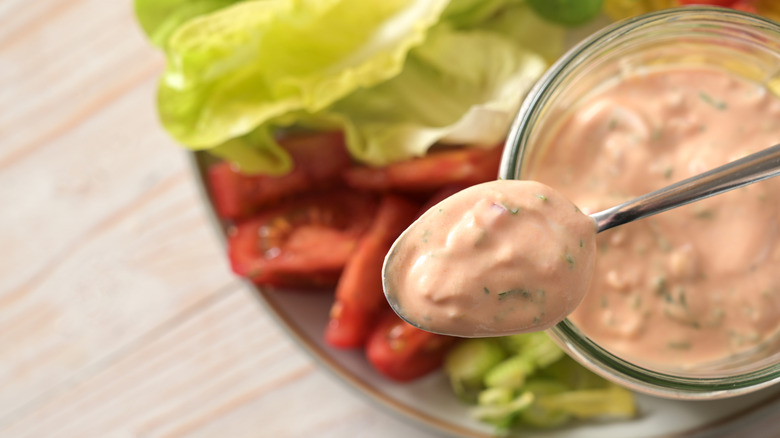
Louis dressing is another pink, creamy medley that looks like thousand island and/or Russian dressing at first glance. You can thank the mayonnaise, ketchup, and pickle relish for that. But that's where the similarities end. Louis dressing starts with mayo, ketchup, and relish, but it's then spiked with Worcestershire sauce, lemon juice, horseradish, and hot sauce. Imagine a marriage of thousand island dressing and cocktail sauce. Louis dressing is slightly fiery from the horseradish and sweet from the relish, just not as sweet as thousand island dressing. If you like creamy, slightly spicy dressings with little tidbits of texture, Louis dressing fits the bill; it's pleasantly lumpy.
Louis dressing is the classic choice for crab Louie and shrimp Louie salad, chilled seafood dishes topped with plenty of spirited dressing. Since Louie dressing delivers nuances of horseradish, lemon juice, and hot sauce, it's particularly delicious with seafood. When searching for retro recipes, you'll find that some recipes swap in chili sauce for ketchup, and/or add cayenne pepper, which give the dressing even more heat. And some recipes add heavy cream for a thinner consistency. No matter how you like your dressing — thick or thin, smooth or lumpy, mild or spicy — Louis dressing makes an excellent option, far beyond seafood salads.
Buccaneer dressing
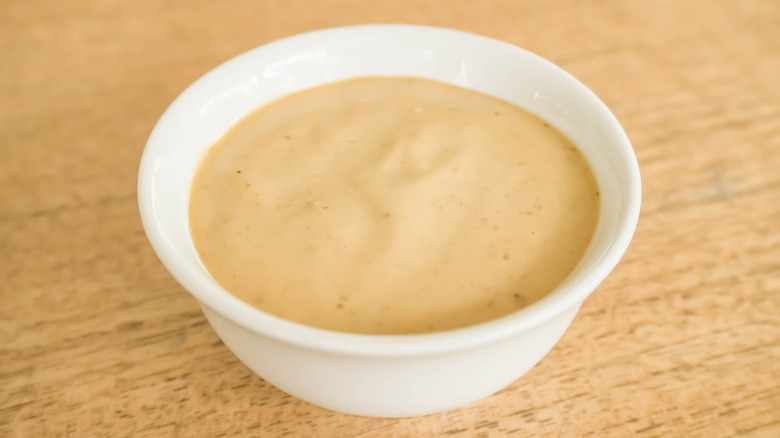
Buccaneer dressing is often described as a creamy honey mustard dressing, but the flavors were much more complex than that. The bottled dressing featured a velvety blend of sweet mayonnaise, tangy-sweet honey mustard, garlic, and paprika. Some copycat recipes marry olive oil, vinegar, honey, Dijon mustard, garlic, soy sauce, and Worcestershire sauce to achieve a close replication of the dressing. In fact, creating an emulsion with the vinegar, mustard, and oil transforms the vinaigrette into a creamy dressing similar to mayonnaise. The original Buccaneer dressing was apparently tangy, savory, and had hints of umami. Adding soy sauce and Worcestershire sauce introduces that same umami quality and helps cooks reproduce the dressing at home.
Buccaneer dressing was wildly popular until the 1970s, when it was discontinued by Louis Milani Foods (now Kent Precision Foods). The ingredient list was seemingly simple (we can't know because the recipe was proprietary), but the sweet and tangy elements commingled magically, and flavors soared on the palate.
Mayfair dressing
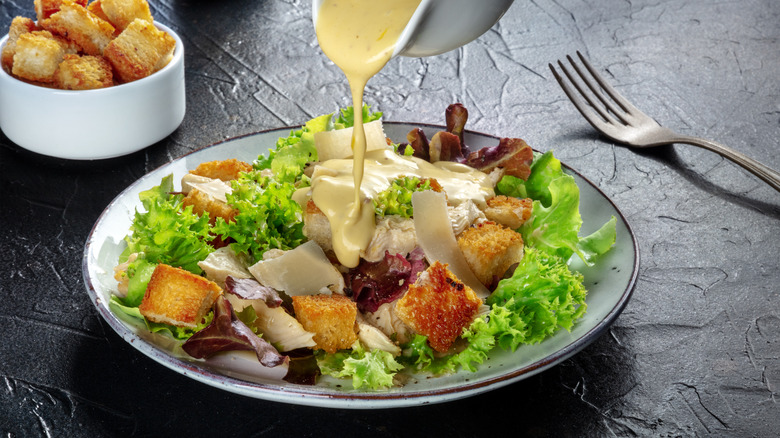
Mayfair dressing hails from the Mayfair Hotel in downtown St. Louis, Missouri. The Mayfair Salad, a staple on the menu of the Mayfair Hotel in the early 1900s, featured crisp romaine lettuce topped with ham, Swiss cheese, croutons, and a pureed dressing of mayonnaise (house-made with raw eggs), anchovies, onion, garlic, Dijon mustard, lemon juice, and black pepper. If you think that sounds a bit like a classic Caesar salad dressing, you're not wrong — the dressing was creamy and tangy, with umami notes from the anchovies. But unlike Caesar dressing, Mayfair dressing had no Parmesan cheese, was seasoned with fresh celery, and was served over something akin to a classic cobb salad.
The Mayfair Salad was a featured, original recipe from the St. Louis World's Fair exhibition in 1904. So while some may suggest that the Mayfair dressing got its roots from the classic Caesar salad dressing, Mayfair came first; Caesar salad originated closer to 1924.