

18 Tuscan Dishes You Need To Try At Least Once
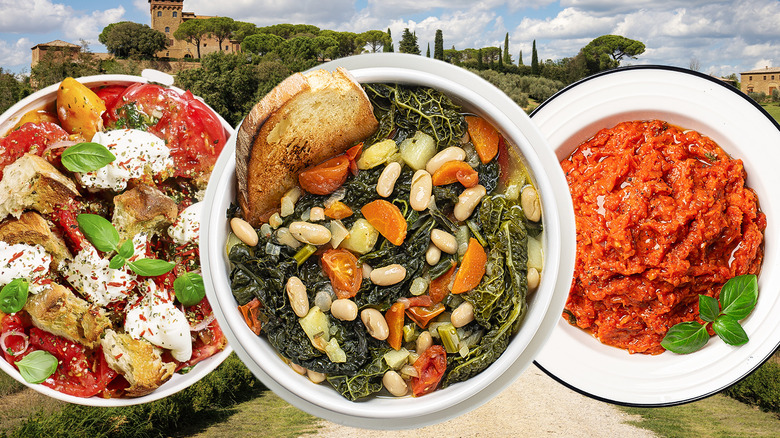
When you think of Italian cuisine, we'll hazard a guess that two things pop straight into your mind: pasta and pizza. After that, it's probably gelato, or maybe tiramisu. But one of the best things about Italy and its food is how incredibly diverse it is.
Each region in Italy has its own range of signature dishes. Sicily is famous for its arancini and cannoli, for example, while Lazio (home to the capital of Rome) is synonymous with carbonara and cacio e pepe, and Calabria is renowned for 'nduja. But here, we're looking specifically at the incredible variety of Tuscan cuisine.
Tuscany, known for its history, rolling hills, and vineyards, has given the world some truly delicious food. In fact, from traditional panzanella to gnudi to spiced panforte, we guarantee this region has something for everyone. Intrigued? Find some of the best Tuscan dishes that everyone needs to try at least once, below.
Panzanella
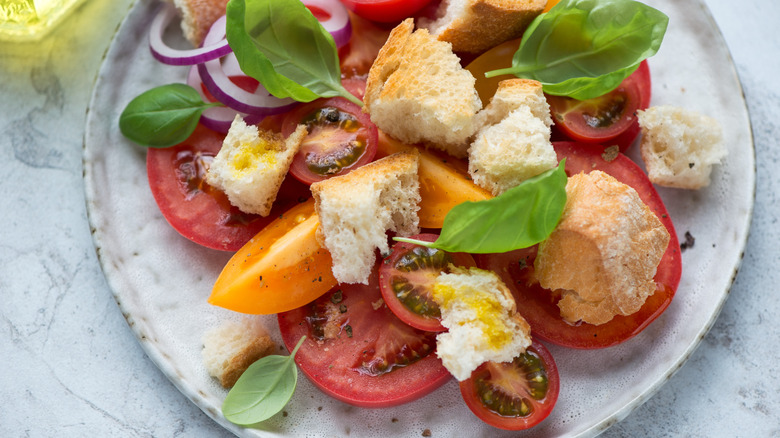
Like many dishes from the Tuscan region, panzanella is an example of cucina povera. This style of cooking, which translates to "poor kitchen," originated with the Italian peasant population, and is defined by making the best of simple, local ingredients and leftovers. That's why the star of this famous Italian salad is stale, dry bread. When that bread is combined with ingredients like olive oil, vinegar, basil, onions, cucumbers, salt, pepper, and lots of juicy fresh tomatoes, it becomes a soft, hearty vehicle for lots of rich, delicious flavor.
Panzanella originated in Florence. There, you'll usually find it served in restaurants across the city in the summer months. Fun fact: Panzanella wasn't always made with tomatoes. It was actually created long before tomatoes became a staple of Italian cooking, back in the 14th century. Then, alongside the stale bread, onions and a type of weed called purslane were likely the focus.
Pappa al pomodoro
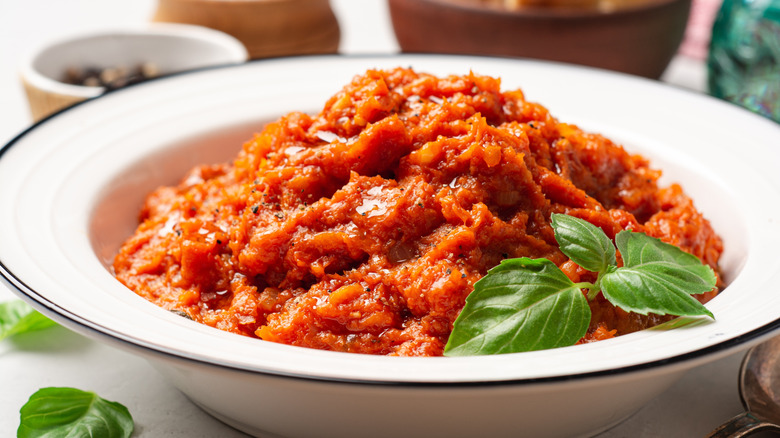
Pappa al pomodoro is another example of how the Tuscans are masters of taking simple ingredients and transforming them into flavor-packed, nourishing dishes. The dish doesn't have the most appealing name (in Italian, pappa means "mush" or "baby food"), but don't let that put you off giving it a go.
Originating from Siena, pappa al pomodoro is a comforting, thick tomato and bread soup, kind of like porridge. All the flavor comes from the tomatoes (tinned or fresh), while the stale bread brings that signature hearty consistency and texture. Basil and garlic are also usually added for a little extra flavor.
The best pappa al pomodoro is, of course, found in restaurants across Tuscany. There, it's usually offered as the primo (first course), after the appetizers and before the main event, the secondo (which is usually something heartier and meatier).
Pici pasta
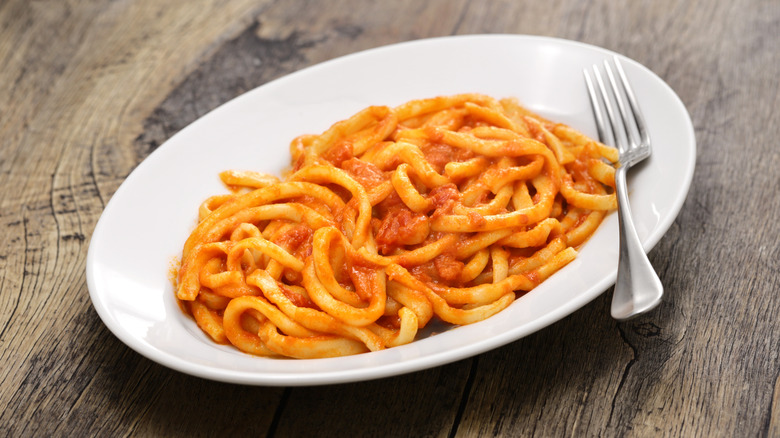
Italy is synonymous with pasta, but different regions have their own takes on this classic dish. Long, fresh egg pasta, like tagliatelle, for example, comes from Emilia-Romagna, while thin linguine comes from Liguria. Tuscany's contribution? Pici, a spaghetti-like pasta made with a combination of flour and water. Unlike many other pastas, it doesn't usually contain eggs (this makes it a great choice for anyone who suffers with an egg allergy, but make sure to double check before you order pici, as some modern chefs may add eggs to the recipe).
Pici has been eaten across Tuscany for centuries. In fact, the first record of the simple pasta recipe dates all the way back to the fifth century BC, when it was likely invented in Siena by the Etruscans. Today, pici is served in many different pasta dishes, but one of the most common is pici all'aglione, which is a combination of pici pasta and garlic tomato sauce.
Bistecca alla Fiorentina
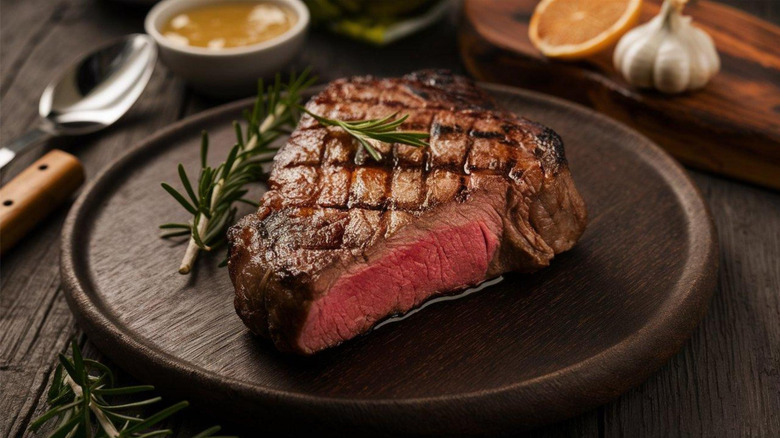
Valdichiana, in southeast Tuscany, is known for its picturesque views, winemaking, and its fields of gigantic garlic, known as aglione della valdichiana. But another thing it's famous for is its cows; specifically, a large, muscly, white breed of cow known as Chianina. This cow is unique to the region, and it's the key ingredient in traditional bistecca alla Fiorentina (Florentine steak) recipes.
Usually, bistecca alla Fiorentina is made with a T-bone steak from a young Chianina. It's served rare on the inside, brown on the outside, with very little seasoning. In fact, traditional recipes just season the steak with salt, extra-virgin olive oil, pepper, and maybe some herbs, like rosemary and sage.
You'll find bistecca alla Fiorentina served in most restaurants in Florence. But, for the optimal experience, it's best to avoid the tourist hotspots. Instead, look for smaller, historic restaurants with years of experience in perfecting their Florentine steak recipes.
Ribollita
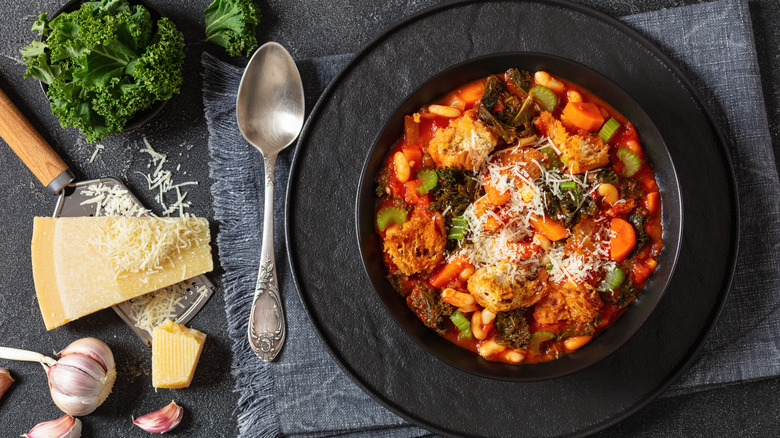
Not everyone wants to eat steak, or animal products at all. If you're searching for top-quality Italian plant-based cuisine, Tuscany is an excellent destination. Many of its traditional dishes are vegetarian by default, and we've already covered a few of them: panzanella, pappa al pomodoro, and pici pasta. Another one to add to the list is ribollita.
This thick, white bean soup is usually made with stale unsalted bread and Tuscan kale or black cabbage, but many different variations exist. Some chefs and home cooks prefer to make it with zucchini or potatoes, for example.
The name ribollita means "re-boiled" in Italian, because, once again, this dish came from the Tuscan poor, who needed innovative, tasty ways to use up old ingredients. It would also usually be reheated several times over a period of a few days. Unlike many of the other dishes on this list, ribollita is a hearty winter recipe. It's warming, comforting, and incredibly nourishing, making it perfect for chilly Tuscany winters.
Gnudi
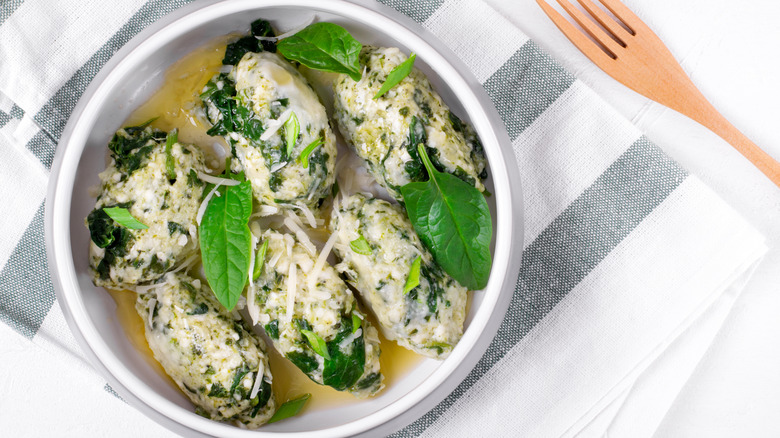
Another vegetarian favorite in Tuscany is gnudi, which means "naked" in Italian. It's called that because, while it looks like gnocchi or ravioli, gnudi is actually pasta-free. In fact, gnudi is just fresh ricotta cheese rolled into balls, coated in flour, and then boiled. Some prefer their gnudi in its simplest form, with just a bit of brown butter and sage sauce and some Parmigiano cheese. Others prefer to combine the ricotta with fresh spinach and a very simple tomato sauce. Some like to make gnudi with Tuscan kale or even leeks, too.
One of the best places to try gnudi is in Maremma, in South Tuscany, which is likely where the dish first originated. This makes sense, considering the region is best known for its sheep's ricotta. If you're in Siena and you're looking for gnudi, you'll likely see it referred to as malfatti on the menu, but it's still the same dish.
Fagioli all'uccelletto
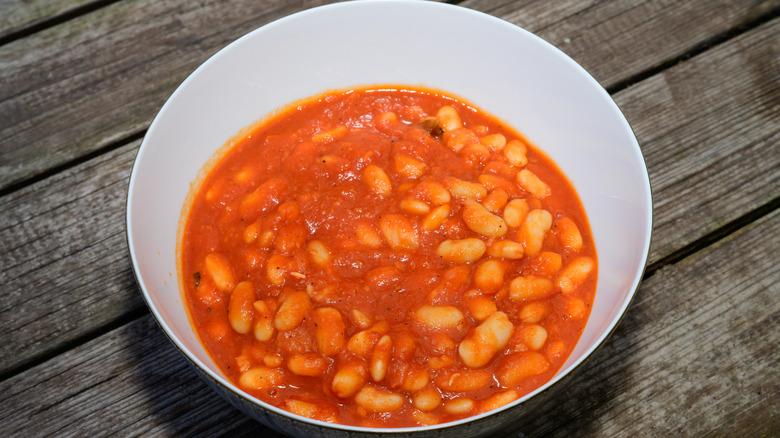
In Italy, Tuscans have a nickname: mangiafagioli. In English? Bean-eaters. They earned this nickname for one very simple reason: They love beans. It's not surprising, considering that a number of different bean varieties are native to Tuscany, including cannellini, zolfino, Sorana, and schiaccione.
One way that the Tuscans like to eat beans is in fagioli all'uccelletto. The simple casserole has been prepared in the region for more than a century at least (it was mentioned in an 1891 cookbook by Pellegrino Artusi, commonly referred to as the "father of modern Italian cooking") and consists of just cannellini beans, tomatoes, onions, garlic, olive oil, and sage.
You'll find fagioli all'uccelletto (which means bird-style beans, probably because it is usually served with game meat, or because it requires the same seasoning as bird meat) in many trattorias across Tuscany. Often, it's served with barbecued pork sausages on the side.
Panforte
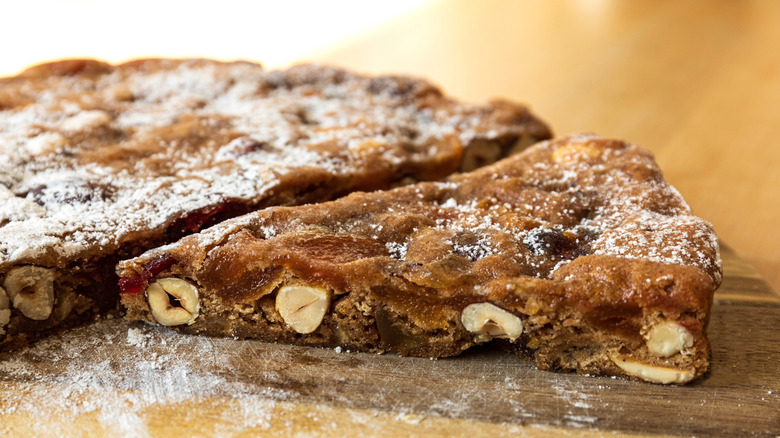
Another Tuscan treat from Siena is panforte. Eaten during the festive period, panforte is a type of fruitcake, usually made with spices, nuts, chocolate, and honey. But recipes vary from restaurant to restaurant. Some make white panforte, which consists of wheat flour, sweet almonds, and candied fruit. There's also black panforte, which is usually made with pepper and candied melon and without the honey. Both dishes have protected status, and to meet the requirements, they must be made with specific ingredient ratios.
The best place to try panforte has to be Siena, where it has been prepared since the Middle Ages. Today, it's loved by tourists and locals alike, but back in the 14th century, it was likely reserved for rich religious aristocrats and royalty. It stayed that way for a long time; In fact, Queen Margherita influenced the recipe for white panforte when she visited Siena in the 1870s, which is why the dessert is sometimes known as panforte Margherita.
Schiacciata all'uva
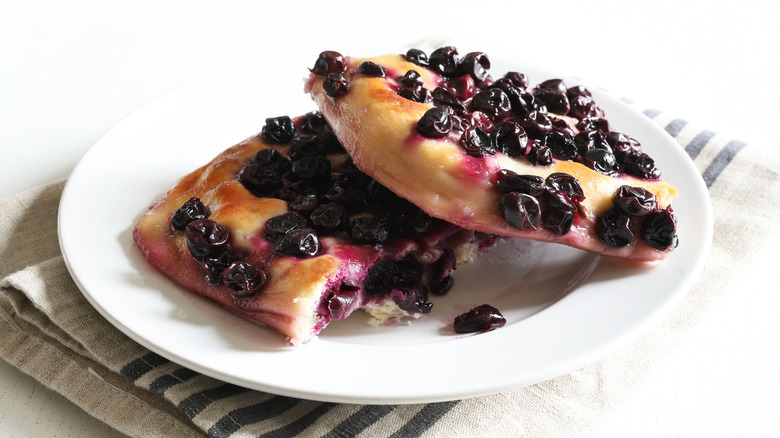
If you want to sample authentic schiacciata all'uva, the best time to visit Tuscany is in the early fall, usually September, after the wine grape harvest. This is because the dish (which is bread with grapes) is traditionally made in Tuscan bakeries to use up any leftover grapes. But this is not just any bread; in fact, it's more of a dessert. Thin sheets of dough are layered between sweet, juicy grapes and then seasoned with ingredients like powdered sugar, anise, and rosemary.
The dish can be made with any kind of grape, of course, but just standard white grapes probably won't taste quite the same. Most bakeries opt for sweet local wine grapes like canaiolo, for example, which is grown across Tuscany for the production of local red wines. They're not wine grapes, but uva fragola grapes (also known as strawberry grapes for their sweet berry-like flavor) are another common ingredient.
Torta della nonna
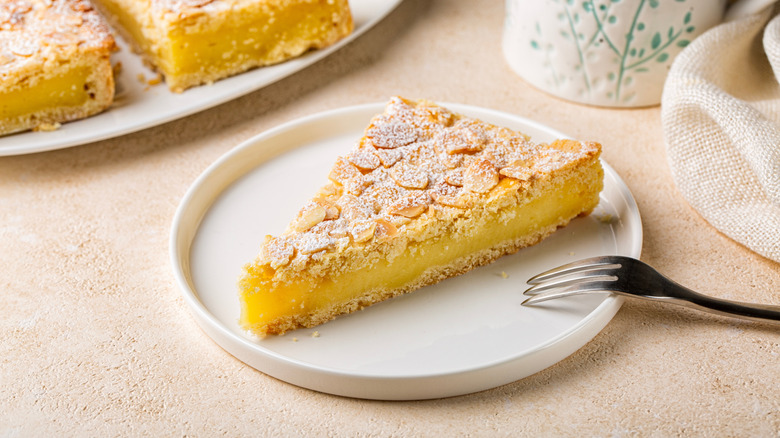
You'll find torta della nonna on menus across Italy, but this popular dessert actually originated in Tuscany. The cake (which is more of a custard tart) is made with crumbly shortbread, filled with lemon and vanilla custard, and topped with nuts and icing sugar, making it a creamy, indulgent treat, typically reserved for Sundays in Tuscan families.
The name (which translates to grandma's cake) is a bit of a red herring. Torta della nonna wasn't actually created by someone's beloved grandmother, but instead, it was likely invented by a chef in Florence in the early 1900s. There are also some claims that it originated in a restaurant kitchen in nearby Aruzzo, but either way, it's a uniquely Tuscan creation. Torta della nonna was probably put on the menu to jazz up the dessert section a little bit with new flavors, while the name was likely designed to evoke feelings of comfort and satisfaction.
Rosticciana
As we've touched on already, Tuscan cuisine is all about keeping things simple. Whether they're made with beans, pasta, or meat, dishes are uncomplicated, but they are still full of delicious Italian flavor.
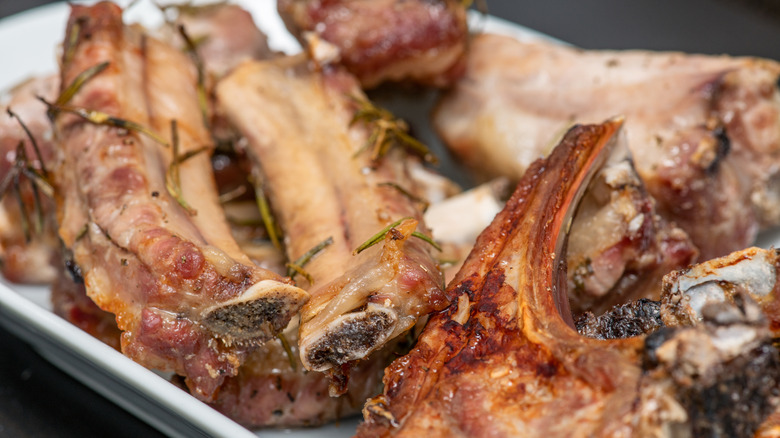
Another example of simple Tuscan cooking is rosticciana, which is basically just pork ribs cooked over a fire (or in the oven, if an open fire is not accessible) for a long time and then lightly seasoned with salt and pepper before serving. Some prefer to marinate the pork with lemon juice before cooking, while others opt for traditional Tuscan herbs, like rosemary and sage.
The grill helps to impart a smoky, fatty flavor to the pork, which is usually served alongside other barbecue classics, like sausages and steak, as well as sides like beans and roast potatoes. Rosticciana is also known as rostinciana, and in other regions, it may be known as costoleccio. Whatever the name, the dish is largely the same.
Necci
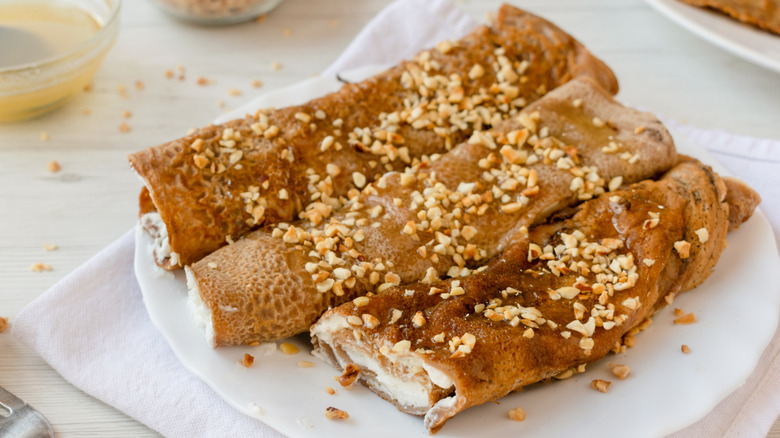
If you're a fan of cannoli, another dish that deserves your attention is necci. The ricotta pancake treat originates from Tuscan's mountainous region in the north, but it's particularly popular in Garfagnana, Lucca, which sits on the border between Tuscany and Emilia-Romagna and is covered in dense forest. The trees in that forest are the key source of necci's main ingredient: chestnuts.
Traditionally, the chestnuts are harvested in the fall, dried for 40 days, and then ground into flour. That flour is then combined with water to make a batter, and then cooked between two heavy cast-iron plates, known as a testi. The necci is then usually rolled into a cannoli-like shape and stuffed with creamy ricotta cheese.
Necci is often sold as a street food, and you'll usually find them served in the fall (when chestnut season is at its peak) at festivals and markets. Sometimes, they're filled with sausage or pancetta instead of ricotta.
Minestra di farro
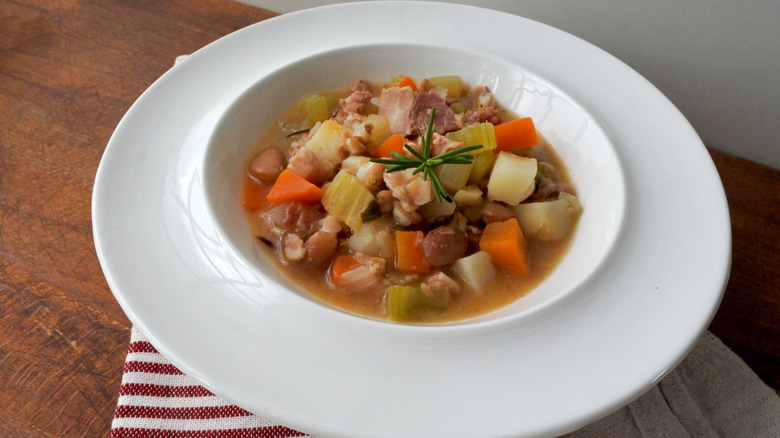
Another popular dish to come from Garfagnana is minestra di farro. The dish is a mix of local white beans, like scritto and bianco, which are simmered with farro grains, potatoes, vegetables, and pancetta to make a hearty, nourishing, thick, almost stew-like soup.
Farro is a staple in Italian cuisine, and it has been for centuries. In fact, the ancient grain was probably eaten as far back as ancient Rome. It's particularly loved in Tuscany, and as well as minestra di farro, it appears in traditional recipes like farroto (farro risotto). That said, the farro grains used in Garfagnana are different to regular farro grains; they're known as emmer, and they're easy to add to recipes because they don't require soaking beforehand and they tend to cook quickly, too.
The best way to enjoy minestra di farro? With a glass of wine, extra virgin olive oil, and lots of crusty bread, of course.
Crespelle alla Fiorentina
Crêpes are French, right? It turns out, they're as French as bechamel sauce, onion soup, and duck a l'orange, which, actually, might not be that French at all. We'll pause for the gasp.
It turns out, these dishes may have been influenced by Florentine cooks, not French ones, and they may have been brought to France by Catherine de Medici, the Italian-born Queen Consort of Henry II of France. That said, there is some debate over the true origin of these dishes. Anyway, we're not here to debate, we're here to talk about crespelle alla Fiorentina (which may or may not have been the precursor to French crêpes).
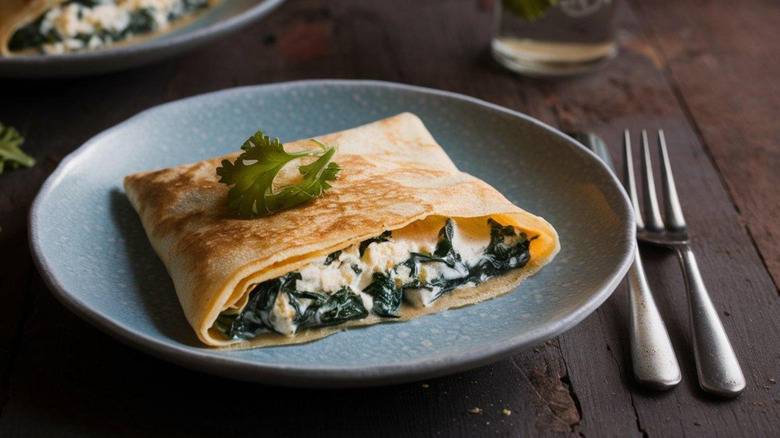
Crespelle alla Fiorentina often looks kind of like a lasagna, but instead of sheets of pasta, it's layered with thin pancakes, a filling of ingredients like spinach, ricotta, garlic, and cheese, and bechamel sauce. It's creamy, it's indulgent, and it's full of delicious, comforting Italian flavor. The dish isn't always layered; in fact, it can be presented in many different ways. Sometimes it's rolled up and other times it's folded, but usually the key ingredients are much the same.
Tuscan ragu
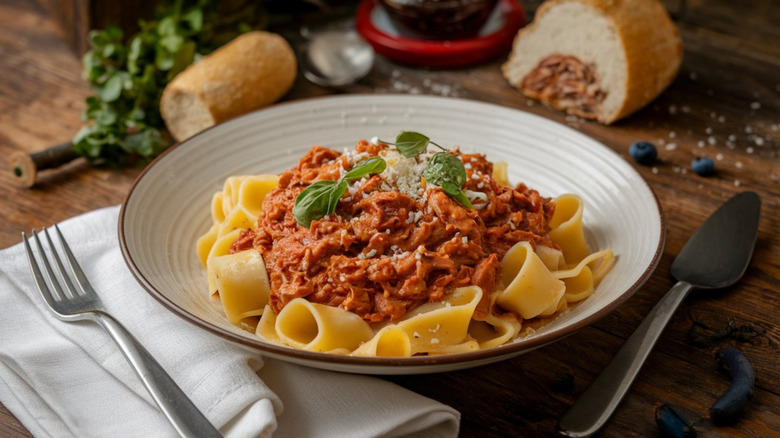
Ragu is one of the most well-known Italian sauces. Traditionally a staple of cucina povera, ragu often consists of a meat sauce with tomatoes, often served with pasta. The most famous ragu is Bolognese, which comes from the city of Bologna in Emilia-Romagna, and is often made with beef.
Lesser-known ragu recipes include Venetian ragu, which is made with duck meat, and Puglian ragu, which is sometimes made with horse meat. And then, of course, there is the Tuscan rendition. Like all of the other ragus mentioned, Tuscany's version is made with meat (usually pork and beef), which is combined with tomatoes, red wine, onions, carrots, celery, garlic, and bay leaves, to create a rich, flavorful sauce that goes beautifully with pasta.
Another type of ragu that's popular in Tuscany is wild boar ragu. To make it, chopped wild boar is combined with ingredients like dark chocolate and red wine to create deep, rich, unique flavors. Both types of ragu are often paired with the region's own egg pasta specialty: pappardelle.
Cacciucco alla Livornese
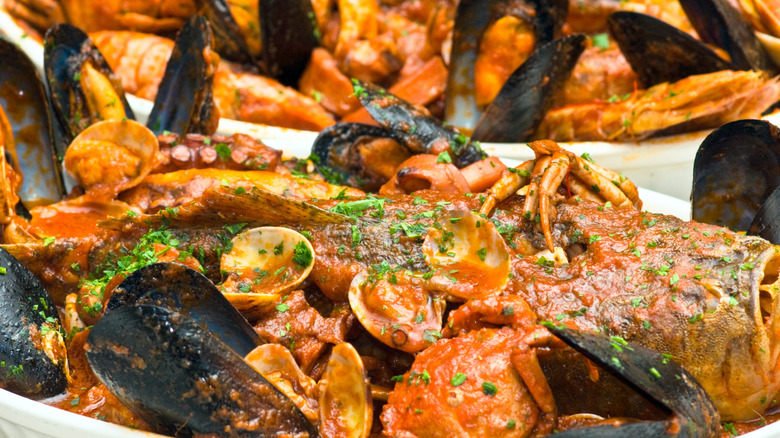
Livorno is one of Tuscany's most important cities. Thanks to its location on the coast, it has helped to defend the region from external threats on several occasions, and it has also served as an important hub for trade and tourism. It is also responsible for creating one of Tuscany's most iconic seafood dishes: cacciucco alla Livornese.
The dish, which likely dates back to at least the 1600s, was not designed to be fancy. It's a simple fish stew, which, just like most Tuscan dishes, was created to use up leftovers and scraps. That's why traditionally, it's made with various different types of seafood (from cuttlefish to angler to octopus), which are combined with classic regional ingredients, like tomatoes, garlic, white wine, and fresh herbs.
The best place to try cacciucco alla Livornese is, of course, in Livorno itself. Every September, it hosts Cacciucco Pride, a city-wide festival dedicated to celebrating the iconic fish dish.
Cacciucco di ceci
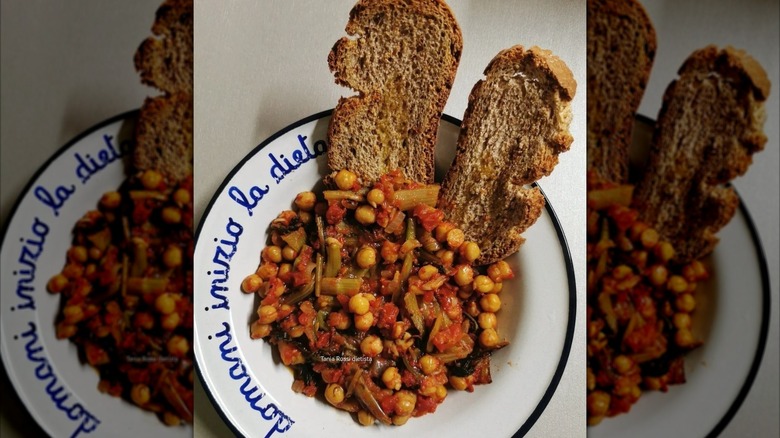
Cacciucco doesn't have to be made with seafood. Another version of the iconic soup, called cacciucco de ceci, also hails from Tuscany, and it's often made with a mix of tomatoes, chickpeas, Swiss chard, onions, garlic, red pepper flakes, salt and pepper.
The dish is rustic, simple, and pretty affordable to pull together, which makes sense, because it's yet another example of exceptional cucina povera cooking techniques. The dish is usually plant-based, although some choose to add anchovies. That said, fish is not essential for the flavor. Instead, the salty, briny taste can come from plant-based ingredients like capers or seaweed. Just like its fishy counterparts, it's usually served with some crunchy toasted bread.
The best place to try cacciucco di ceci is, of course, where it originated. In this case, it's in the Tuscan countryside, in a commune called Bagno a Ripoli near Florence.
Caldaro
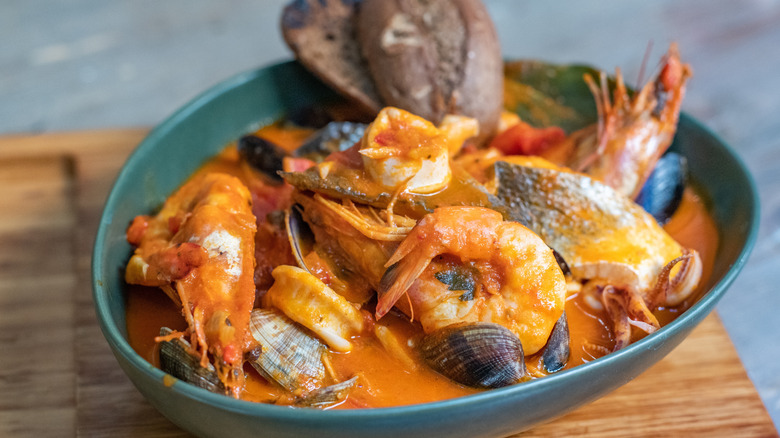
Cacciucco alla Livornese is iconic, but it's not the only flavor-packed seafood dish to come out of Tuscany. Caldaro, which hails from Argentario in the coastal province of Grosseto, may not have its own festival, but it is still just as worthy of your taste buds.
The aromatic fish soup, invented by local fishing communities, starts with a base of simple ingredients like onions, garlic, parsley, and extra virgin olive oil. Sometimes, chili is also added for a little extra kick. After that, the seafood is added, but again, this depends on what's available. Often, it's made with a combination of seafood like mackerel, monkfish, mantis shrimp, scorpion fish, cuttlefish, sea lupins, for example.
When everything is ready, the caldaro is usually served over a crispy, crunchy base of toasted garlic bread. And just like most Tuscan cuisine, it nearly always goes down best with a glass of crisp local wine.